New Release: Pieces of Blue by Liz Flaherty

At the beginning of this month, USA Today’s best selling author Liz Flaherty released Pieces of Blue. Normally a romance author, Liz has dipped her toes into women’s fiction with her latest release, and is here to share her thoughts on her recent writing and publishing journey.


Hi, everybody. Chelsey, thank you so much for having me here today. 

I’m not sure when the term women’s fiction entered my consciousness. I don’t recall whose I read first or even if I liked it. The words Woman’s Journey had been bandied about most of the years I’d been writing romance, and I thought that’s what we should do with romance and women’s fiction—just make them into one huge glorious genre known as The Woman’s Journey. 

The idea didn’t catch on. 

But I read CurtissAnn Matlock’s Lost Highways and Robyn Carr’s Deep in the Valley and Cheryl Reavis’s Blackberry Winter and Elisabeth Ogilvie’s Bennett’s Island series. I kept thinking yes, this! They’re all women’s fiction, but they’re all love stories, too. They’re all women’s journeys and I’ve read most of them more than once. While I love the relationship that grows between the heroine and hero, I also enjoy the ones between girlfriends, between sisters, between work friends who are there for each other. The romance is important, but it’s not always most important. 

Because it’s the story that’s important. The journey. How you feel when you finish reading. To a lesser degree, as a writer, how I feel when I finish writing is important, too. 

Of course, none of that was in my mind at all when I got a two-word start that wouldn’t get off my mind and stay there. Then I had a trip back a skinny, curvy road to a small lake I’d never known existed but made me type Chapter One above those initial two words. Later still, Maggie North invited me on her journey. It took her a while, and writing it took me a while, but…gosh, I loved Maggie. And Sam. And her adoptive parents. And Pastor Cari Newland. Oh, and Ellie and the dachshund named Chloe, too. 

Pieces of Blue has some romance, a setting I never wanted to leave, and, most of all, it has friends and family and community. Their dialogue was so much fun to write. The house—the Burl—is a character unto itself. 

How did I feel when I finished writing it? Oh, good. Sorry it was over and slapping back thoughts that maybe it wasn’t over…maybe there was another story at Harper Loch. Or two.

We’ll see. In the meantime, it’s a story from the “huge glorious genre” I mentioned above. I hope you like it.


For all of her adult life, loner Maggie North has worked for bestselling author Trilby Winterroad, first as his typist, then as his assistant, and finally as his ghost writer. Throughout her first marriage, widowhood, remarriage, and divorce from an abusive husband, Trilby was the constant in her life.

When he dies, she inherits not only his dachshund, Chloe, but a house she didn’t know existed on a lake she’d never heard of. On her first visit, she falls in love with both the house and the lake. Within a few weeks, she’s met most of the 85 inhabitants of Harper Loch and surprisingly, become a part of the tiny community. Her life expands as does a new kind of relationship with her friend Sam Eldridge. She finally feels not only at home, but safe.

Until her ex-husband is released from prison. The fragile threads of her new life begin to fray, and that feeling of safety is about to shatter into a thousand pieces.

The drive took me farther into the country than I’d ever been—at least that I could remember. While the temperature didn’t drop, the wind did increase, blowing snow from the roadsides across in front of me in gusty swirls of white. I was surprised that Gladys, the elegant voice of my GPS, didn’t sound either confused or disdainful even when it took me three tries to see the little green sign that indicated Harper Loch Road.

Canopied by naked February trees and lined with animal-tracked snowbanks, the road was one and a half lanes wide. I hoped it would be wider when there was no snow, but I wouldn’t bet on it. It was hilly, with serpentine curves that reminded me of a Chutes and Ladders game board minus the ladders. Gladys didn’t enlighten me as to how far it was to the lake itself, and two miles in, I was starting to wonder if it was all a bad joke. 

Trilby had been the master of bad jokes.

A barnwood sign at the side of the road encouraged me to Keep Right! I inched over, flinching when the snowbank brushed the side of my car, my pride and joy. Chloe looked my way, wide eyed.

Apparently, it was a popular meeting spot on the road, because I met a pickup immediately, going at least twice as fast as I was. The driver waved cheerfully and missed me by what I was certain was the hair’s breadth Trilby used to insist was purple prose if used in a book. I would have waved back, but my hands, white knuckled, didn’t want to let go of the steering wheel.

“Trilby,” I said, “what in the hell were you thinking?”
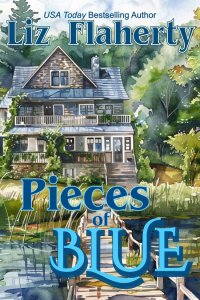
Pieces of Blue is available everywhere books are sold online:

https://books2read.com/FlahertyBlue

https://a.co/d/eyEjPDA

Liz Flaherty has spent the past several years enjoying not working a day job, making terrible crafts, and writing stories in which the people aren’t young, brilliant, or even beautiful. She’s decided (and has to re-decide most every day) that the definition of success is having a good time. Along with her husband of lo, these many years, kids, grands, friends, and the occasional cat, she’s doing just that.

She’d love to hear from you at lizkflaherty@gmail.com or please come and see her at  https://linktr.ee/LizFlaherty 

What Catches a Reader’s Eye? A Reflection on how people find and choose books.

One day, during my sophomore year in high school, a classmate grabbed my arm and said, “I just finished the most amazing book, you have to read it!” That book was Twilight  by Stephenie Meyer. I trusted this classmate’s opinion, asked my mom for the book, and it ended up being my Easter present that year. I read it in one day, bought the second one and read that in one day. Then I had to wait a couple months for the third, but I was hooked. 

Two years prior to that, in eighth grade, a friend of mine found her mom’s copy of The Notebook by Nicholas Sparks, read it, and passed it around to the rest of our group. She had us write our names inside the front cover when we finished it to make it our own “sisterhood of the traveling pants”, but with a book. From there, I sought out other Nicholas Sparks’ books (Safe Haven is my favorite). 

That same year, I checked out a copy of A Dance for Three by Louise Plummer from the school library, and recommended it to my friend. She checked it out next and loved it so much, she made her mom hunt it down so she could own a copy. (And let me tell you, that book is hard to find in a traditional bookstore. This was 2004.)

What is the common denominator in those three tales? Word of mouth. Most of the books I have read, I came across via recommendation: a friend, a family member, maybe facebook ads, etc. And according to many blogs, podcasts, and seminars; word of mouth is still the best way to sell books. 

Even so, authors are also told that online reviews are important because the algorithms on those websites recommend books that have a lot of reviews. But even though that’s what the algorithm does, is that really how potential readers find books? And do readers read reviews before deciding whether to read a book or not? 

I created a Google Forms survey, and 76 people responded. Here are the results:

What helps you learn about and choose to buy a book? 

*Note: This was a “Check all that apply” question, so all numbers together will go beyond 76

Recommendations from family and friends58
Window shopping in brick and mortar bookstores 36
Online ads (i.e.facebook, instagram, etc.)18
“Also bought” on Amazon19
“Readers also liked” on Goodreads12
Searching a preferred genre/trope on Amazon27
Other25

Surveyors got to type something if they clicked other, and here are the common “others” summarized into general categories:

  • Book influencers/reviewers on Instagram, TikTok, and blogs
  • Websites like Bookbub
  • Libraries
  • Events like festivals
  • Book clubs
  • Gifts

So, like my own experiences, most people still rely on recommendations from trusted people. But a decent number of people are also using the internet in some capacity (Amazon, social media, etc.)

Forms response chart. Question title: Do you read the reviews on sites like Goodreads or Amazon BEFORE buying a book?. Number of responses: 76 responses.
Forms response chart. Question title: If you read the reviews, do they affect whether you buy the book or not?. Number of responses: 75 responses.

These next two responses totally threw me. Because I don’t read reviews before buying a book, I erroneously assumed most people were like me. And this has completely turned my marketing world upside down. 

Forms response chart. Question title: What number of stars do you personally think is a positive review? (check all that apply). Number of responses: 76 responses.

I was not surprised by these results. For me, 3 stars means that I enjoyed the book enough to finish, and I don’t regret spending my money on it. So I consider 3 stars a positive review. But at the same time, I know on the marketing side, you don’t choose a 3 star review to highlight. You choose 5 star reviews to highlight. 

At the end of the survey, I provided space to type anything they wished to add, since I often struggle with multiple choice, because I want to explain my answer. With respect to transparency, I did use AI to help me find commonalities in the 49 responses, and come up with categories based on those commonalities. AI discovered 5 categories, and as I went through them, I deleted two of AI’s category and created a two of my own, moving some of the responses around to the following:

Category 1: Preference for Cover, Blurb, and Initial Impressions – 14 people expressed this was important to them in selecting a book.
An attractive cover and a strong blurb on the back will get my attention. I’ll read a page or two (unless it’s by an author I’m already familiar with) to see if they can get my interest. It’s rare that I will read a review first.
By far the first thing that gets me to look at a book is the blurb and a cover, and from there, I will look at reviews or recommendations before I decide to buy.
Sometimes I get recommendations from word of mouth, but not often. 95% of the time, I’ll see an ad on FB or IG. If the blurb is interesting, I’ll click on it and go to the Amazon page and read through that. If it still seems worth getting, I’ll read the sample. If it still seems good, I’ll get it on Kindle Unlimited. If I absolutely love it, I’ll buy the ebook. Even rarer, I’ll buy the physical copy. Occasionally I’ll buy books not on KU, but that’s even more rare. That only happens when an author I already trust has a new release. And right now, that’s…. one, but used to be two. But I stopped liking that author’s books, so it seemed silly to spend money on a book when it was a “maybe I’ll like it.”
I usually choose a book based on the blurb, the cover, and the genre.
Cover and genre recognition are big factors for me – the “catch your eye” thing.
I read the synopsis or hook that is on the back or inside of the cover of the book to see what it’s about most of the time and if it captures my attention then I read it. A quick little summary of the story over reviews is usually what helps my decision more than book reviews. How I find out about the book is in all sorts of ways, wandering through bookstores, Amazon, Facebook, and every other way to find new books.
Most times it’s the blurb. If it reads like it’ll be an intriguing story, I’m in.
Cover and blurb is what usually leap out at me. Also read the first pages.
Excerpts on Facebook ads and catchy stock pics or video grab my attention.
Cover art then blurb.
I read a few reviews, but they don’t carry much weight. I mostly rely on the sample pages. If they grab me, I buy, if not I pass for now.
I usually read the jacket cover before buying.
I rarely read reviews because I like to make up my own mind. I look at the cover, read the blurb, read the author’s info, and read the first couple of pages.
If a book catches my eye, I read a page or two of the preview. If it intrigues me and is not full of typos, grammatical infelicities or clunky writing, I’ll buy it.
Category 2: Number of Stars Matters – 5 people explained how they use stars and averages to help them decide whether to read a book or not.
I would select a book with four stars and above. If there are a lot of reviews, I don’t pay attention to negative ones since it may just be a personal opinion.
If there’s a few 1 or 2 star reviews but the rest are 4 and up, I usually disregard the lower reviews. It’s simply the taste of the reader. I sometimes seek out books because of something I’ve heard or read in the media about a book or author. For instance, I recently read my first Emily Henry book because of an article I read online.
Sometimes reviews affect whether I will purchase a book, but if a book has been recommended by someone I know personally, that would have more weight, even if the reviews aren’t outstanding. I’m also more likely to look at the number of reviews and the average rating than to read individual reviews.
I use book reviews, but I don’t read them. Spoilers being what they are, I don’t want anything to color my expectations. If a book has a 3.5/4+ out of 5 stars, and a number of reviews north of 10, I’ll likely pick it up.
I think any number of stars is a positive review. It really depends on what the actual review says. After all, you can give a 5 star review, but then in the post, the reviewer can list more negative things they thought about the book than positive.
Category 3: Mixed Feelings or Limited Reliance on Reviews – 7 people shared their reluctance to trust reviews 100%.
I take all reviews with a grain of salt. I usually never agree with movie reviews. I do look at the reviewer’s bio information, if any, such as age and gender. I really try to take information from multiple sources.
I read the reviews, but if the blurb and book cover attract my attention, I will make up my mind based on what I think, not what a stranger says.
I rarely read reviews because everyone has different tastes and the people who write reviews tend to be the angry rude people. I don’t like to support that kind of negativity toward someone’s art. More often than not, I have a different opinion from the reviewers, so it does me no good to read them first.
I don’t always read reviews, especially if I’m familiar with the author’s work. Reviews are just opinions, and whether or not I buy a book depends on if it sounds interesting to me, and is the type of story I like to read.
I dislike and ignore the value of 1- or 2-star reviews without text. I think Amazon does a disfavor to authors when they allows this type of review since it pulls down your score with no reason why the book was rated so low. For example : “2 star – Clear filter – 1 total rating, 0 with reviews” – Are these trolls?
Reviews are all over the map. Often the text doesn’t match the number of stars I would think it merits. Some get low stars because the Reviewer has an axe to grind like doesn’t one of the characters because they are multiracial or something that has little to do with the quality of the story. I rely a lot more on friends and family recommendations.
I’ve worked in the publishing industry as a marketer and am wary of the techniques used to sell books, many of which are hollow and baseless, including book reviews. A positive book review is practically a given to most reviewers who receive a free copy.
Category 4: Looking for specific info. in reviews – 9 people said that the purpose of reading reviews is to look for specific good or negative hints on whether the book will be worth it.
I tend to read the actual review rather than just go by the star rating. I will disregard one or two negative reviews (there is always someone who likes to destroy an author’s confidence) but if there are a lot of negative reviews saying a similar thing, I will probably pass on it.
There are certain things that really bug me when I read books, and if reviews mention any of those things, I tend to avoid the book. Sloppy prose is one of those things. Most books I read nowadays are on Libby, but I will occasionally buy a book if I want to read it sooner than it will be available to check out.
I depend heavily on reviews to decide whether to try a book by an author unfamiliar to me. A well-written review will give me a general idea of the plot and tell me whether I would probably like the book. Even if the reviewer disliked it, a good review will explain lucidly exactly what the reviewer disliked — and it may be a feature that would appeal to me. For example, if a review complains about a story being too “slow,” with too much dialogue and not enough action, I know I’ll probably enjoy it.
I like when recommendations or reviews compare the books to other popular books or series that I may have read
I’ll look at reviews depending on how I found a book. If it’s an online recommendation I don’t know anything about, I’ll always read a review. If it’s the author or a friends recommendation, I’ll never read a review.
I read the reviews to see if they tick any of the boxes of my likes and dislikes. For instance, I won’t read/buy a book with a cliffhanger ending, and I’m leery of books with poor editing.
Book reviews give me a better idea of what the book is about. Blurbs aren’t always great.
Re reading reviews, I read them sometimes, but if I’m in a physical bookstore I wouldn’t. When reading a review, I don’t take it for being 100% accurate but allow for any bias I see creeping in. I like a reviewer who spells out what sort of reader would like a particular book and what sort might not.
I often read reviews after I’ve started reading a book, particularly one I either love or hate just to see if other people thought the same.
Category 5: Reliance on Recommendations or Familiarity -11 people explained they have specific trusted sources to help pick their next book.
I often take recommendations from the Today Show.
If I have read and enjoyed something else in that author’s backlist, I will often be on the lookout for a new release. I will sign up for their Bookbub or to follow them on Amazon.
There are certain authors I follow and their books are usually the first I gravitate toward. Also, many of the books I read are the next month’s selection for my book club. Before choosing a book, I read a few of the reviews, both the good and the bad, just to get other peoples’ opinions. What the reviewers liked/disliked may not be what I look for in a book, so I won’t not read a novel based solely on someone else’s rating. I then read the blurb and the first couple of pages and give a thumbs up or down based on how I like the book’s opening.
I sometimes read reviews from instagrammers with similar taste in books.
I am more likely to read a book based off recommendations of people I know than reviews, but I do read reviews periodically, and factor them into my considerations.
Authors I follow
I choose books when I see an across the board popularity
I don’t always read reviews, especially if I’m familiar with the author’s work. Reviews are just opinions, and whether or not I buy a book depends on if it sounds interesting to me, and is the type of story I like to read.
As a former librarian, many of the patrons I talked with chose books to read based upon book cover, familiarity with the author, recommendations by library staff and viewing displays in the library. As for reviews, I am somewhat cynical about Amazon and other larger online entities because many of the reviews appear to be a trade (I will give you a good review if you give my book a good review) or manipulated by larger publishers to get their books out there–to make money, of course.
I am generally searching books by favorite authors. I also tend toward books carried by my library. Ebooks there are acquired through Amazon.

Final Reflections

To be honest, I did not get the results I wanted and thought I would get. Reviews really are just as important as all the marketing articles and webinars have been telling me. But I think I needed this wakeup call. One of my weaknesses is I can get prideful and not accept information if it doesn’t match my personal life. I’m going to have to do some soul searching for my next marketing endeavor. 😂

What responses stuck out to you or surprised you?

Anything you connected with or feel like it didn’t match you?

How do you choose books?

Let me know in the comments! 

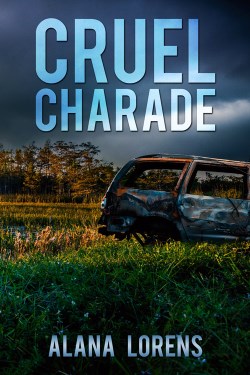
New Release: Cruel Charade by Alana Lorens

Alana Lorens’ latest Mystery-Thriller released last week: Cruel Charade.

First allow me to introduce Alana, a seasoned author by many names:

*

Alana Lorens (aka Barbara Mountjoy) has been a published writer for over 45 years, including seven years as a reporter/editor at the South Dade News Leader in Homestead, Florida, after working as a server, a pizza maker, and a floral designer. She writes non-fiction, romance, adventure, and suspense novels. She is the author of the Pittsburgh Lady Lawyers series, which draws on her years as a family law attorney in the state of Pennsylvania. One of the causes close to her heart came from those years as well–the fight against domestic violence. She volunteered for many years at women’s shelters and provided free legal services to women and children in need. Alana resides in North Carolina, and she loves her time in the smoky blue mountains. She lives with her daughter, who is the youngest of her seven children, and she is ruled by three crotchety old cats, and six kittens of various ages.

Now, on to Cruel Charade. Alana, introduce us to the story, world and characters.

Miami in the 1990s was shiny and glitzy, loud and tropical, and often dark and deadly. Star Island has as many criminal masterminds as old moneyed-families, and the average person on the street could get killed for the price of a hit of crack cocaine.

In this world, we find Bet Lenard, who until recently was a family law attorney, married to Richard Lenard, a powerful local attorney practicing criminal defense law. This couple had a home in the Redlands, enjoying the best of Dade County living with their two teenagers, Jane and Jeremy. 

But Bet has a mysterious illness that leaves her constantly in pain, which her doctors can’t identify and even attribute to her mind. Since she cannot work and cope with the pain, she turns to alcohol, which drives a wedge between her and the family. Richard files for divorce, blaming her for the break-up.

When she finds herself in the Everglades one night, she realizes her life is out of control. Reluctant to accept help, because she doesn’t know who to trust, she must peel back the layers of the onion of her life to discover who wants her dead. A sympathetic police detective may be a friend. Her long-time therapist?  Is it a knowledgeable doctor who has a lead on her sickness? Could her estranged husband and children be of support? Perhaps there is no one, and she is doomed to fail.

What inspired your story?

In this book, my daughter Bethany suggested it would be interesting to begin a scene with the Five Things—many people have become familiar with the technique as they have gotten into counseling, etc. So I wrote the first chapter, and her comment was, “Well, that got dark fast.” Haha. But she was right—it was a great place to begin.

And of course I practiced law and lived in deep south Florida for a decade (Homestead, pre-Hurricane Andrew) so I have a background in the area.

Give us a brief look at your writing process. Are you a plotter or pantser? How much time did you spend on this project? What is your writing schedule like?

I’m about half and half. Usually I begin with an idea, or a character and get about halfway through, then begin to draw out final arcs. Most of my books take about six months. This one I worked over two years before getting a contract. I polished and polished so it would be right. I’m a night writer as well, so I confess there are some nights I wrote until the wee hours and some nights I just crashed. 😊

Who are you outside of writing?

A crafter, a mom to a grown daughter on the spectrum, a warrior against autoimmune disease, and a gardener—this year we are growing 14 kinds of vegetables, from potatoes to shishitos to tomatoes, along with thyme, lemongrass and catnip to support our clowder of nine.

Follow Alana and check out Cruel Charade at https://alana-lorens.com/

Miami attorney Bet Lenard has had a rough year. She’s battling an unknown illness that drives her to drink to cope with her pain. Her lawyer husband has divorced her and taken the best part of their business, their home and their children. 

On the night of May 16, 1996, Bet finds herself in the Everglades in the middle of the night, drugged, lost and next to a burned car with a dead body in it. Hoping she’s hit bottom, Bet must drag herself out of her living hell and discover who tried to kill her. Was it her ex-husband, not satisfied with stealing everything that mattered? An angry client, unhappy with the outcome of their case? Her best friend’s husband, livid that Bet’s restraining order kicked him out of her life forever? Police officers fuming that Bet helped a client convict a dirty cop who was their friend? She has no idea. 

As she tries to sort out the motives behind her would-be killer, even more suspects come to light. The only thing keeping Bet sane is her relationship with her therapist, who encourages her to struggle and survive, despite everything that’s gone wrong. How will Bet discover the truth and bring her enemy to justice before they strike again and, this time, succeed?