February 2025 Newsletter
Subscribe to continue reading
Subscribe to get access to the rest of this post and other subscriber-only content.
Before I knew that there were more differences between a novel and a novella than just word count, a lot of my reviews of novellas read like this:
“The story ended too quickly for me.”
“I would have loved the resolution to have more details.”
“I wish the ___ plot was more drawn out.”
I read dozens like that. And then, one day, it hit me: these are meant to be short, which means the plotting is going to be structured differently than a full length novel. So, I googled “What is the difference between a novel and a novella.” Endless articles have already been written, so I’m just going to summarize three* of them:
*Sources: https://www.uobabylon.edu.iq/eprints/publication_10_21876_1383.pdf , https://kindlepreneur.com/novel-vs-novella/ , https://www.firstediting.com/blogs/difference-between-a-novel-and-a-novella/
Now that I better understand the organization of a novella, I’ve had a much better experience reading them. And those authors are also getting better reviews from me! 😉 I also really enjoy reading a couple light hearted and spicy novellas in between the longer and darker fantasies I’ve been reading (ACOWAR I’m talking about you). And I’d like to share with you my favorite Novella series and authors:

I’ve read plenty of others, but those are my top three novella authors.
And in learning more about Novellas, I decided I want to be able to write some as well. So, I tried to write one, and *sigh* it turned into a 99,000 word novel. (It was The Wolf Whisperer) But I haven’t given up. I’m going to keep working on concise writing and shorter plots. And hopefully, one day, I’ll have some Novellas under my belt.
Are you a fan of Novellas? What authors/series would you recommend? Let me know in the comments!
Subscribe to get access to the rest of this post and other subscriber-only content.
On Goodreads I read 38 books in 2024. But when I count the 16 books not registered on Goodreads and the 4 unpublished books I beta read, I read 58 books in 2024. Regardless, I didn’t meet my Goodreads goal of 76 books. But that’s okay. My Goodreads goal is always one more than I read the previous year. So, that means my 2025 goal will be 39 books.
Of those 58 books, here are my favorites:

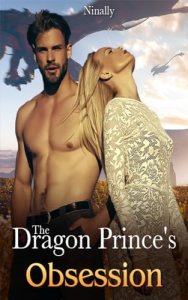
The Dragon Prince’s Obsession by Ninally is the sequel to The Dragon King’s Obsession. Both books are about dragon shifters falling in love with the enemy: humans. In this series world building, dragon shifters live high up in the mountains. Human hunters down the mountain hunt them, and have hunted female dragons almost to extinction. In the first book, dragons capture the daughter of the leader of the hunters, and the king of the dragons falls in love with her while she is their captive. Of course there’s lots of drama, witches get involved, and the final battle is epic. And then the sequel begins.
New couple. New story. One of the best enemies-to-lovers I’ve ever read. Adela is a human servant in the king’s palace. She serves the king’s sister, Princess Lucille, and the queen, Mystique. Prince Mikhail is the king’s brother. Mikhail was one of the villains of the first book. He kidnapped Mystique and tried to kill her.
Adela stumbles across Mikhail being imprisoned by witches while she is on an unwilling adventure with the spoiled Lucille. In Lucille’s inability to see anyone other than herself, she returns to the palace safe and sound without Adela. Mikhail and Adela fight their way out, and Mikhail takes Adela to his palace. Because she saved his life, his dragon now owes her. Mikhail begrudgingly takes care of her as he fights his dragon’s attraction to her. He hates humans, but he also opens Adela’s eyes to how she is treated back at the main palace. Adela is “friends” with the royal women, but yet still has to serve them and sleep in cramped quarters with the other human servants. Adela also thinks she’s in love with the king’s right hand man, Blaze. Lucille and Blaze are secretly in love and having a secret affair. The problem, is that in order to keep her secret, Lucille encourages Adela’s crush on Blaze to hide her own feelings, knowing Blaze will never look at Adela like that. So, she’s setting Adela up for romantic failure for her own selfish agenda.
When Mikhail cracks everything open for Adela, she refuses to return to the king’s palace. Mikhail keeps her in his, where she is not a servant, but an equal resident. They grow closer and have one of the most delicious slow burns I’ve ever read. During her time there, Adela also discovers she is not truly human. Her mother was human, but her father was something else (which I’m not going to give away – read the book!). Her newfound abilities call evil witches to them, and she and Mikhail will have to literally fight for their survival and love.
It’s beautiful. It’s spicy. I LOVE this story.

The Woman They Could Not Silence by Kate Moore is a biography of Elizabeth Packard, whose story takes place in the 1860s in Illinois. Elizabeth held different religious and political beliefs from her husband, who was a preacher. She vocalized them in public, and her husband responded by getting corrupted doctors to certify Elizabeth as insane, and locked her in an asylum. Kate’s research of Elizabeth’s experience teaches four main historical facts:
1. What was considered “insane” in the 1800s – Women could be diagnosed with insanity if they disagreed with their husbands, disobeyed their husbands, or stopped loving their husbands. Elizabeth was guilty of all three.
2. How deep male ownership of women was – Several doctors who “diagnosed” Elizabeth with insanity never saw her in person. They listened to her husband’s description of her, and wrote a certificate of insanity! Also, Elizabeth couldn’t divorce her husband because he would automatically get their six children if she did.
3. Treatment of patients in asylums – Elizabeth women with less money and social status than her slapped, starved, choked, and drowned. When Elizabeth disobeyed her doctor, he took her possessions and moved her from her private room into a shared room. While the employees didn’t physically abuse Elizabeth, they allowed the more violent patients to do so instead.
4. The amount of research and lobbying needed to change the law – When Elizabeth was released from the asylum, she went to work to change the law so that some of the friends she’d made could also be released, and future women didn’t go through the same thing. It took her a decade, which included a nationally followed legal battle against her husband and doctor. She was successful in getting the laws changed across the state, which would end up saving her daughter in the future when she also suffered mental health problems in her adult years.
Elizabeth Packard’s story is one that needs remembering for both mental health laws and feminist ideology. I have always enjoyed biographies about strong and powerful women, and Elizabeth makes it on that list.

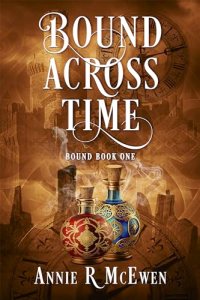
Bound Across Time by Annie R. McEwan was my first experience where an author reached out to me and offered me a free copy of their book to read and review. And it was amazing. Of course, Ms. McEwan got the royal treatment: an unboxing video, a blog post, and a YouTube review.
Bound Across Time is the first of a paranormal time-travel romance series. Patrick O’Loinsigh died in the 1700s in Wales. His ghost as been stuck in the castle he perished in. In modern days, the first living person, Cece Gowdy can see him. She’s a witch and they embark on a passionate love affair. But loving a ghost comes with risk and danger. Cece is not made for Patrick’s limbo world, and Patrick isn’t made for Cece’s living world. They are going to have to rely on the help of other witches to fight against the magic of time that is separating them.
I always find magic system world building interesting, and the rules of magic for this world were really cool. This was also the first ghost-human relationship that followed the rules of the romance genre. The sequel, Bound to Happen will be released early this year!

The Haunted Purse by Kimberly Baer is my tried and true “don’t judge a book by its cover.” I thought the title sounded juvenile and the cover didn’t pull me in. Then it ended up being the book of the month for the book club I was in. I inhaled it.
Libby is a 15-year-old high school student who lives on her own while her mom dates around, pretending she doesn’t have a daughter. Libby purchases an old purse from the secondhand store. The purse makes things disappear, and provides extra things to the purse. As Libby gets used to her purse’s abilities, she notices a connection with some of the objects that appear. They are all connected to a 20-year-old cold case. Convinced that the purse holds the ghost of the missing girl, Libby puts on her detective hat and works to solve the case.
In addition to the murder mystery plot, there are three other themes that provide great lessons for young adult readers:
The Haunted Purse is the best YA story I’ve read in a while.

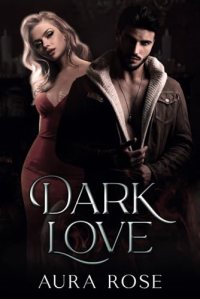
Dark Love by Aura Rose is the second in a fated mates romance trilogy. Each book features a different couple. The first book is called The Last Alpha. To be honest, I didn’t much care for the first one. Some authors who write fated mates stories use the mate bond in their plot to have a – what I call – justified cheating subplot. That is in The Last Alpha, and left a bad taste in my mouth for the rest of the book. Luckily, the end of the first book lets the reader know who the couple will be for Dark Love, and I was fully on board for their love story.
Madeline is a werewolf, Arius is a witch-vampire hybrid. Arius is not supposed to exist per the council’s rules, and they’ve been trying to kill him since he was born. Arius is also the son of the vampire king who tried to kill Madeline’s pack in the first book. So, she and Arius get a very steamy enemies-to-lovers and forbidden love arc – which, in my opinion, is the best combination of romance tropes. Trigger warning: Arius does kidnap Madeline at the beginning of the book, but he doesn’t torture or SA her.
Once Madeline and Arius accept the mate bond, they combine forces to take down the bigoted council so they can live in peace. Arius is my favorite book boyfriend.
It ends on a pretty dramatic cliff-hanger. I’m about a third of the way through the third book, His Lost Tribrid. It’s also really good. Unfortunately, the platform it’s on (Dreame) has tripled their prices over the past year. So, I won’t be able to finish it there. So, I’ve subscribed to Aura Rose’s Amazon page, and as soon as it’s available on Amazon, I’ll buy it there and finish it.
What notable books did you read in 2024? Share them in the comments!

It’s very common in fantasy and science fiction for the authors to mirror real issues that human history has gone through or is currently going through. In ACOTAR, humans used to be slaves, and once freed, became segregated from their previous masters, the fae. The First Order in Star Wars is obviously the Third Reich. Voldemort in Harry Potter is clearly Hitler. House Elves are slaves. Every single creature that isn’t a wizard are all of the colonized nations around the world. A wizard and a no-maj not being allowed to marry mirrors U.S. anti-miscegenation laws. The list goes on.
In each of those issues, the protagonist or one of the sidekicks fight against those issues. And enough progress is made that even if it’s not fully resolved by the end of the series, the reader is able to believe that it will be soon – or the main characters physically move away from the corruption to a new kingdom/world/etc.
So what happens when an author creates social injustices for their plot, but doesn’t resolve them by the end?
I recently read a series that did just that.
It was a paranormal romance series that had 10 books in it. The majority of the world-building centered around sexism. The female characters had no rights, and so their only way of a decent life is to accept a mate bond with a strong male. Children also had no rights until they shifted into their animal for the first time. And half-breeds (one human parent, one shifter parent) were the lowest of the low.
The main character for the first three books leaves her community and tries to fit into the human world because of this. She gets sucked back into her old life, where she meets her fated mate. He also doesn’t agree with the traditional way of their species, so together, they create a refuge for others like them. So, things are looking good for a traditional fight-the-corruption plot line that I love in fantasy series.
For the next three books, one of the side characters becomes the main character, and her love story commences. She and her fated mate spend three more books fighting the system, and win. They also create a second pack for outcast shifters to escape to.
The final four books take place roughly fifteen years after the sixth book ended. And this is where the plot goes in a completely different direction. There were very strong hints at the end of the sixth book that things were changing drastically. So when chapter 1 of the seventh book started and things had not only failed to improve, but even regressed beyond the first book, I was confused. However, as I continued reading, I realized it’s okay if society got worse. The Force Awakens does the exact same thing, and I enjoyed that movie. The author had to come up with something for the main character to fight. But as I got to the end of the tenth and final book, there were no hints that the corruption was going to be defeated. And sadly, it wasn’t. The two love interests got off on a technicality within the corrupted legal system, and continued to live in that evil world.
The series would have felt more complete, for me, if the corruption had truly been defeated and social and political change was evident – even if it wasn’t perfectly gone by the final sentence.
Now, I need to make a note here. I think that the author created an incredible world with relatable characters. I obviously was invested enough to read all ten books. The romance plots – which were the main plots – were well executed. And there were plenty of readers who loved the whole series. I think the author is a talented writer. They have a great imagination. I gave each individual book between 3-5 stars on Goodreads.
I also acknowledge that the end of this series is more realistic. To quote Anita Hill, “Progress isn’t measured in days. It’s measured in decades.” That being said, I don’t want fantasy to be realistic. I want the final battle to magically change everything (or put society on the first few steps of changing everything).
This is similar to what I said in my historical fiction post. Some readers don’t care if the characters are eating chocolate too early for historical accuracy, while others care very deeply. Some readers will be fine if the characters don’t take down the corrupt system, while others will want to see exactly that.
So, my opinion is simply mine. This is a decision that all writers have to make. As they build worlds and create characters, writers need to figure out which plots need to be resolved by the end – or at least a hint of a resolution.
For me, resolution is important.
I’d love to hear your thoughts. Do you think all – or close to all – the problems in a story need some type of resolution by the end? Let me know why or why not in the comments.
Subscribe to get access to the rest of this post and other subscriber-only content.
The greatest pop hits of 2006 bring me back to working in a Snowie Shack on the corner of Center Street and Geneva Road. For some reason, anything by Alanis Morisett, The Cranberries, and the Pina Colada Song remind me of working at Mervyn’s. And a catchy cha cha or samba is going to bring me back to the competition floor.
Music has always been a part of my life, and specific songs are nostalgic for different eras in my life.

Writing Bondwitch was no different, and as part of celebrating my book’s birthday, I thought it’d be fun to share what songs inspired or helped me write specific scenes.
During the second act, Annamaria meets a pair of professional ballroom dancers who are also vampires. Kylie and Tyler have a YouTube channel, and invite Annamaria to join their dance routines. The routines I spent significant word count on went with a real song to help me describe the choreography. So, here are the songs that helped with the key dances:
The last song that goes with a specific scene is “Almost Lover” by A Fine Frenzy. This song goes with Annamaria’s dark night of the soul moment. In this scene, Annamaria is heartbroken because she has been betrayed by people she cares deeply about, and she thought they cared deeply for her. She’s literally chained up and has a decision to make that could lead to fatal consequences.
Other songs I listened to while working on Bondwitch:
Music plays a huge part in most people’s lives. Certain songs have inspired decisions and creations. And sometimes, we just need the background noise while we work.
What song has been important or inspirational for you?
Let me know in the comments!
Subscribe to get access to the rest of this post and other subscriber-only content.
Joi Lesin’s debut novel The Passenger came out last month, and I am excited to introduce her and her Paranormal Historical Romance to you.
Let’s start with what is The Passenger about?
Elizabeth Reilly is twice haunted. She not only keeps the memories of her late husband, a casualty of World War II, close to her heart but she also inherited the ability to communicate with the spirits of the dead from her mother.

When she aids a dying man, Paolo Clemente, in his last moments of life, she launches on a journey that will forever change her life and the life of the family Paolo left behind. After befriending Paolo’s ghost, Elizabeth travels to California to help him find peace. There she meets his son, Giovanni, who has recently returned from the war in Europe. Gio, as he is known by those closest to him, is only just settling back into his post-war life. When Elizabeth arrives, bringing news of the father he never truly knew, Gio is suspicious of both Elizabeth and her story.
The Passenger is a historical paranormal romance that explores the themes of love, grief and discovering who we truly are. These things are set against the backdrop of paranormal historical and picturesque settings that transports the reader to another time and place. Add to that, the characters are forced navigate the challenges of long hidden family secrets, matters of the heart, and the supernatural.
For me, the setting is as much of a character as the people who populate the story. The Passenger takes place in Cana, a fictional town nestled somewhere in California’s wine country. It’s a town where there’s so much more than meets the eye.
To visit Cana, you must travel over winding roads bordered on both sides by green, rolling foothills and tall, sun filtering conifers surrounded by native plants. Along the way, the ancient trees part to reveal estates of all sizes. Here, a vineyard displays rows of grapes ripe for the picking. There, a ranch complete with cattle grazing the hillside. This is where you’ll find the vineyard Paolo Clemente bought after immigrating from Foggia, Italy to America.
History and the paranormal are my two favorite genres. What inspired this story?
The inspiration for Elizabeth, Paolo, and Gio’s story came to me when I was 16 years old. I was on the city bus on the way home from school playing the “What If” game, making up stories for random passengers.
On this particular day, I noticed a man sitting at the back of the bus who seemed a bit down on his luck. I wondered, what if he were alone in the world? What would happen if this man collapsed there on the bus? Would he die right there on that bus alone? What if I, or someone else, comforted him in his dying moments?
The tale blossomed from there until I finally sat down to write it 16 years later.
That’s amazing that such a seemingly small moment stuck with you for so long. How does that affect your writing schedule?
As a writer, I find I am a combination of a pantser and plotter—I puzzle together rather than plot my stories. For me this means I spend a significant amount of time thinking about the story. I tend to work out the story in my head like a problem that needs to be solved. This also means that part of my writing routine may look like I am just staring into the sky, but I am working hard—honestly.

All of my stories start with a single scene. Most of the time when that scene first comes to me, I don’t yet know the characters, but I see a moment in time. From there I treat it like a puzzle. I discover who the characters are by writing the opening and closing scenes. From there, I write to discover what has to happen to lead them from that opening to the single scene that birthed the story for me—and how to progress forward from that pivotal moment to the closing scene. Any plotting I do happens a scene or two at a time. It may not sound like it but it’s both organic and methodical for me.
I am, and have always been, a night owl. So, when I’ve gathered enough of the story elements together in my head, I sit down to write, usually, at night. Why? Because my creativity is most alive under the moonlight.
Welcome to the night writer’s club! When you aren’t writing, who are you?
Outside of writing, I am many things—a wife, mother, stepmother, daughter, sister, and friend. Until three years ago, I was also a Business Analyst, but now have the opportunity to focus on my writing full-time.
For grounding myself, I simply love to lose myself in books and always have—both reading and writing them.
For fun, I take pictures and share them on social media. I’m always on the lookout for a view that’s new to me. I’m also a novice ukelele player. By this I mean, I’ve been learning how to play for the last four years. My husband did restring my ukelele for lefthanded playing, so I think I should get the hang of it one day soon—maybe. Which leads me to say, aside from books, one of my biggest interests is music. I have an eclectic taste, but my favorite to listen to by far is indie rock—80s and current.
I think anyone who can play a musical instrument is awesome. What’s next in your writing career?
I am currently working on two projects at once.
The first is a story that takes up where The Passenger left off. Like its predecessor, Watch Over Me is a ghost story and answers some questions left open at the end of The Passenger. This paranormal romance takes place in 1968 and tells the continuing story of Elizabeth’s daughter, Bella. What was the inspiration? A scene of Bella running through the vineyard with someone—or something—in pursuit while the earth trembles.
I’m also working on a mermaid novel that explores the relationships between sisters, mothers, and daughters. I’m very excited about this story and cannot wait to share more about it.
First though, my ghosts are calling and want their stories told.
Minnesota-based author, Joie Lesin is a life-long fiction writer and the author of The Passenger. She has long been fascinated by anything otherworldly including ghosts. She loves to write a good ghost story—especially when it includes a touch of romance.

Originally from Massachusetts, at six years old, Joie moved to her mother’s birthplace, Minnesota. By eight, Joie lost her New England accent, however, it’s gradually returning as the years go by. She grew up in Minneapolis but now resides in St. Paul with her husband and their blended family—which includes a rambunctious grand-corgi.
Joie misses the ocean, but she often finds herself walking by one of Minnesota’s many lakes and travels to one of the coasts as often as she can. In fact, she considers California her home away from home. When she’s not writing, reading, or walking, you can find her listening to music. She absolutely loves music—especially live—and songs have sparked most of her story ideas.
Follow her at her website: https://www.jlesin.com/
She’s a 1940s ghost whisperer. He’s the son of a ghost.
Burdened with her empathic gift, Elizabeth Reilly wants to be free of it and fit in with normal people. Nevertheless, when the spirit of an old man asks for her help, she travels across the country to help him return home. Gio Clemente is still angry with his father who abandoned him as a child. To help the father pass on, Elizabeth must persuade Gio to let go of his anger. Though he resents her intrusion, they are both stunned to find themselves fighting a profound attraction. Elizabeth can accept his headstrong brand of love, but can Gio accept her gift—and believe in her?
The Passenger, a 1940s ghost story set in the California wine country, tells a tale of family connections, life-changing choices, and love—lost and found.
The Passenger is available now: https://www.jlesin.com/thepassenger