How to Put a Ghost in a Romance: Bound Across Time

Four years ago, I learned the rules of romance writing. There are two very important requirements for a story to be considered a romance:

  1. The main plot must center around the relationship between the love interests.
  2. It must end with a Happily Ever After or Happy For Now. 

I struggled with rule #2 for about a year (check out how I overcame that in a previous blog post), but once accepted, I had a big question: How do you make this work with ghosts? If one half of the couple is a living person, and the other half is a ghost, how are they going to have an HEA?

Part of my confusion came from reading an incorrectly labeled paranormal romance. First off, the main plot was not the relationship with the (ghost) love interest; that ended up being the side plot. Second, the main character is not reunited with their ghost love interest until decades after the main story ends when they die of old age (think the reunited scene of Jack and Rose in Titanic). That didn’t really feel like an HEA to me. 

So, like the emotional teenager I sometimes act like, I stayed away from ghost stories until Bound Across Time by Annie R. McEwen fell into my lap. This is a paranormal romance worth reading.

Let’s start with our living character, our female main character: Celeste Gowdie (a.k.a. CeCe). CeCe’s mother died when she was young, and she was raised by her aunts in the U.S. state of Georgia. CeCe doesn’t know who her father is (this is important for one of the reveals toward the end). She studied history in college, and is working in St. Rhydian’s castle in Wales when the story begins. CeCe wants to be taken seriously as a real historian, but she ends up being the American tour guide who gets to research and share ghost stories to the patrons. 

Patrick O’Loinsigh is the bastard son of one of the historic Lords of the castle. He was born in Ireland in the 18th Century, educated in Paris, and forced to move to his father’s castle during his early adult years. His father used him to do his dirty work since Patrick wouldn’t be inheriting the title. Patrick is murdered by his half brother, and his spirit spends the next few centuries hanging out in the in-between waiting for the living soul who matches a prophecy meant to free him.

Patrick and CeCe have a meet-cute of epic proportions. Patrick lures CeCe to the top of the tallest tower by turning on a battery operated candle. CeCe can’t lock up the castle and go home until all lights are turned off. So after a literal hike, CeCe comes across a handsome man in 1700s clothing. Patrick scares CeCe so bad that she faints. 

It takes CeCe several days to believe Patrick that he is the ghost of the handsome man in the gallery of the castle’s historic inhabitants. At first she thinks he’s a loiter pretending to be Patrick O’Loinsigh. But when she finally believes him, she falls, and she falls hard. 

The local witch coven gets involved, CeCe’s aunts get involved because… family secrets! (That I’m not going to spoil.) Everyone wants CeCe to stay away from Patrick for her own good. Of course she doesn’t listen, and she embarks on a passionate and steamy love affair with Patrick. 

Well, it turns out that when a living person spends that kind of time with a ghost, their literal being starts to disappear. So now, CeCe and Patrick have a difficult decision to make: go their separate ways to save CeCe’s life, or research if magic can help them. 

And that’s where I’m going to leave you with this story, because you’re just going to have to read it yourself if you want to know how it ends. But the ending is soooooo worth the emotional turmoil that Ms. McEwen is going to put you through. 

These kinds of stories always have to have “rules of magic” and the rules of magic that Annie created were very cool. When Patrick and CeCe meet up, the room they are in reverts back to the way it was when Patrick was alive. When Patrick leaves, the room returns to its modern-day look and feel. When they are together, they are neither in the past nor present – though they are closer to the present, because humans could hear CeCe if they came by the room. 

There also appears to be two different “types” of magic. There’s a traditional witch who can cast spells and make potions and such. Then there are people born with “gifts”. CeCe is born with a gift that allows her to see and hear Patrick in the first place. (For more details on that, read the book!)


And to finish off this review, here is a Q&A with the author herself:

In your planning, what came first: a story about witches? Or a story about ghosts?

Door Number Three: a story about a castle! Because, when I conceived the book, I was living in a small Welsh town that is graced by a very old and beautiful castle. I spent a lot of time thinking about the people who passed through those halls and gardens. Were any of them still there? So, yes, I suppose the ghosts came first and everything else followed. 

What historical people, places and facts are true? What did you embellish or fill in the holes?

The town, the witches, the historian who’s forced to resort to ghost walks since history doesn’t sell, the castle, the stone circle a few miles out of town, the Welsh coast almost within sight of Ireland, the family who kept secrets, the work of people – archivists, admins, docents, conservationists – at an historic site: all those are fact-based, along with the many casually dropped references to and stories about the past as viewed by both a modern historian and a ghost who died in the mid-1700s. Beyond and embracing those is the truth of protagonist CeCe’s life and work; just like her, I’m a career historian who lived in a small Welsh town and met the astoundingly warm and quirky inhabitants, worked in the local castle, visited the stone circle. The things I changed were the ghost (whom I never met, more’s the pity) and the names and actions of both CeCe and the locals. Oh, and the color-changing cat! Always wanted one of those but, alas, mine have all been the single-color variety. 

I’m guessing Aiofe’s story is next? Do you also plan on going back in time and also telling Gabrielle’s story?

Bound to Happen (Book Two of the Bound Series) does indeed follow Aoife/Fee’s story. It involves a radical change in setting, from a tiny Welsh town to London and, specifically, Covent Garden, where Aoife has a grant to research playwrights and poets of the 1600s. She’s lured to an abandoned theater by some urban exploring chums and…Well, you’ll have to read the novel to see what happens then! But in addition to new and very different secondary characters – Aoife’s Ghana-born flatmate and her ancestor priestess Mom, along with some skeptical folks in the National Trust and Museum of London Archeology – characters from Book One re-appear, like Jana Smithbury-Tewkes (and her new color-changing feline, Rumpelstiltskin.) Through them, readers learn more about Fee’s Savannah family (still keeping secrets, as families do) and her life growing up with leathling-souler parents in 18th century Paris. As to Gabrielle Gowdie: while bits of her tale are woven into Bound to Happen, it’s in Boundless (Book Three of the series), that we hear from an aging Helene Gowdie (oldest of the original five sisters who included Gabrielle) about why and how the secret-keeping of Gowdie family began.

What’s next for your writing career?

More writing, more publishing! I’m contracted with four publishers (one in the UK, the rest US-based) for nine books, five of which are written, the rest in progress. I’m eager to push ahead with my series for the UK publisher, Bloodhound Books; it’s Victorian working class romance centered on the lives and loves of four women who work in a London corset workshop. If you liked Peaky Blinders, you’ll love The Corset Girls! I haven’t left paranormal romance behind, though; I’ve got a spine-chilling vampire romance story in Rowan Prose Publishing’s horror anthology coming out later this year. And I’m finishing a time travel historical romance set in 1910 Boston, New Orleans, and Wales. Several other WIPs are nudging me for attention, including a Regency romance comedy about the lengths to which an impoverished heiress will go to avoid an inconvenient marriage, an 1880s romance set in New Orleans’ back streets, and a novel of smuggling and love on the Kent coast in the 1740s. 


Annie R. McEwen has written a beautiful romance that brings past and present together in the most captivating of ways. She kept me guessing until the very end how the problems would get resolved. Very captivating and well-earned five stars

Learning to Love Flawed Characters

When I was going through my early-teens horror movie phase, I would constantly ask, “Why don’t the characters do xyz?”  My dad would always respond, “Because if they did, there wouldn’t be a movie.”

That’s how I’m starting to view flawed characters. Their flaws create drama, tension, and even plot points in the stories they star in. Even so, up until recently, I still expected some type of redemption or growth from a flawed character. That kind of expectation from a main character? Absolutely! But I also placed that same expectation on side characters, and it was affecting my ability to enjoy some great stories. 

My biggest struggle with this was the Beautiful Creatures series by Kami Garcia and Margaret Stohl. There are several characters whose flaws cause problems, and there’s no redemption or growth. The characters double down on their reasons for how they act, and Ethan and Lena are forced to accept it because they are young and have to obey the adults in their life. 

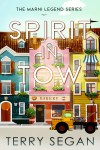
Years later, I read Spirit in Tow by Terry Segan, and her character named Gus drove me absolutely crazy. He caused a lot of problems, he was incredibly selfish, and he rarely apologized. Ms. Segan agreed to an interview when I was reviewing that book, and one of my questions was specifically about how she created Gus with all of his flaws and issues. One thing she said that stuck out to me was, “I… wanted Marni to see his occasional soft side, that we know almost every tough guy has, despite trying to hide it. It’s those cracks in his armor that kept Marni wanting to solve his murder and free his soul.” 

Occasional soft side. Cracks in his armor.

Characters need to have enough likable aspects, that their flaws can be, at the very least, tolerated.

And with this budding new view on flaws in fictional characters (and I do think it’s important to emphasize fictional – there are things that are okay in fiction that are not in real life, and that’s okay), I picked up Terry’s newest book: Five Steps to Celestia.

Joy lost her memory in a motorcycle accident 22 years ago. After her doctor is unable to find anything to identify her, he courts her, and they get married. Now she’s a widow, and comes across some mysterious seeds on a road trip with her bestie. Planting the seeds coincides with the arrival of some suspicious characters, and Joy’s memories start to crack open. As Joy learns about her past, she realizes that she was a different person than she is now, and she has a lot to answer for. And the big question: Which version of herself will Joy keep, or is it possible to blend her two lives?

Terry Segan does an excellent job of weaving an engaging story with enough mystery to keep the reader wanting more. And like her previous book, these characters are full of flaws.

Suzi is Joy’s best friend, and she starts out as your typical comedic elderly character. Suzi is on her 5th divorce when the story starts. She’s a terrible driver, a shopaholic, and a giant flirt with men young enough to be her grandsons (and they rarely want to flirt back). She’s loud, speaks her mind at inappropriate times, and won’t take no for an answer. Her flaws are going to cause a life-threatening climax that my younger self would have not been able to forgive had this book existed five years ago. But Suzi is also fiercely loyal. She will protect her loved ones with every fiber of her being. She has good internal radar when it comes to discerning who is and isn’t trustworthy. I honestly did not like her the majority of the book, but everything ended up coming together nicely in the end. 

Grace is Joy’s adopted daughter. Joy became Grace’s mother by marrying her father, the doctor who saved Grace’s life. Grace is married to a man who doesn’t deserve her, and her inability to kick him to the curb frustrates both the reader and Joy. But Joy has more patience than I do, and she allows her daughter to make her own choices – even if she disagrees with them. Grace’s decisions don’t put anyone else in danger the way that Suzi’s do, but it definitely caused some extra drama, that added to the tensions in the plot. 

Owen is Grace’s husband. He hurts Grace terribly and has a greedy and malicious plan that Suzi learns about from spying on him. He receives a couple of natural consequences from his actions, but none of those consequences come from Grace or Joy; and I really wanted those two women to deal out justice. *Sigh* But whether he gets the comeuppance I thought he deserved or not, doesn’t change the main plot. And because of that, I had to (begrudgingly) accept Joy’s realization: Grace is a grown woman who needs to make her own choices, and also needs her family for love and support. 

Silas is going to remain a bit more mysterious for this post. But what I will say is he likes to be in control, even if that means taking away others’ agency. Like with Owen, Silas has one consequence, but that consequence doesn’t make things better for Joy, our main character. And he doesn’t seem truly penitent. But his choices are important for the overall plot. His growth can’t happen until the end, if he was going to have growth. Joy chose to focus on other things, and doesn’t force him to change. Once again, I had to accept that this was Joy’s choice. 


When I finished reading Five Steps to Celestia, and I sat down to review it, I had to pause. I really was not happy with any of the four characters I just introduced you to. But did they make my reading experience unenjoyable? No. Did they cause an unsatisfactory ending? Again, no. So did the story deserve to lose a star or two because the characters are human? For the third time, no. And it’s with this realization that moving forward, I’ll be looking at books with imperfect characters differently and with more grace (pun intended).

Five Steps to Celestia released yesterday. Were you a lucky ARC reader like myself? What were your thoughts on the book?

Have you read any of Terry’s other books? What are your thoughts on those?

What books have you read that have helped you grow as a reader?

Let me know in the comments!
New Release: Fox Tale by Karen Hulene Bartell

Karen Hulene Bartell is back to talk about her newest release: Fox Tale. Before we dive into this captivating title, let’s get to know Karen.

Plotter or Pantser: I’m a pantser, no question about it. I do make short outlines of what happens next, but I’m too spontaneous to follow any extended framework. Besides, when I “play dolls” with friends, that is, brainstorm my plot, I often prefer their ideas to mine, which makes for far more interesting plot twists than I’d devise.

Does It Come to Me, or do I Struggle?: It’s usually a combination of the stories coming to me and me struggling to conclude the chapters. I’m inspired to begin each book, but occasionally I grapple with twists or turns of the novel, trying to patch the sections into the greater story, as well as smoothly transition the reader to the next chapter.

When did I Start Writing?: An only child, I began writing my first novel at the age of nine, learning the joy of creating my own happy endings…However, I got four pages into my first “book” and realized I had to do a lot of living before I could finish it! 

Reading is the entry to writing. Born to rolling-stone parents who moved annually–sometimes monthly–I found my earliest playmates as fictional friends in books. Paperbacks became my portable pals. Ghost stories kept me up at night–reading feverishly. Novels offered an imaginative escape, and the paranormal was my passion.

So here I am all these decades later, still creating my own happy endings…

What is the Most Powerful Challenge of Authoring a Novel?: IMHO, marketing is the nightmare to the dream of writing! Promoting my books is the hell to the heaven of authoring them. I’d much rather keep “plugging away” at finishing a chapter than “plugging” myself on social media 😉

Background of Fox Tale 

My husband works for a Japanese company. When he was instructed to meet with his Tokyo team, I leapt at the chance to accompany him. The next thing I did was research Japan’s cryptids. What appeared were Inari’s kitsunes or fox spirits—and voilà, the idea for Fox Tale was born.

What are Inari’s kitsunes? Japan’s history of foxes is complex. According to Fox Tale’s leading man, Rafe, “Originally, Inari was the concept of a successful rice harvest. Over time, devotees fleshed out that belief, and Inari became the androgynous god of wealth.” 

“And the kitsunes?” asked the protagonist, Ava.

“The relationship has always been cooperative…Initially, foxes kept rice fields free from rodents, ensuring good crop yields. Eventually, people humanized the foxes into guardians and agents.”

While my husband attended meetings, I explored Tokyo, sometimes alone on foot and sometimes with a group tour. I took copious notes, and each site I visited became part of my developing story. With the supernatural element, as well as the locale established, my imagination began taking flight.

I spoke to locals as often as possible, asking if they believed in kitsune–or if their neighbor or grandmother believed in them. (Luckily, many Japanese speak English!) Not one admitted to believing in the old superstitions, but almost all knew of someone who did. 

Said Fox Tale’s antagonist, Ichiro, “Most Japanese live in concrete canyons, and rational university educations replace superstition. Still, fox stories persist through theater, festivals, language, and literature…or kiterature as I call it.” 

“Despite a waning belief?” I leaned closer. 

“Even today, some believe in fox possession…although believing in kitsunetsuki might not be fashionable in this age of supercomputers and artificial intelligence, stories still circulate in the tabloids and mass media.”

“For example?” 

“In 2019, a doomsday cult member rammed his car into pedestrians on Takeshita Street, then pled not guilty on the grounds that the cult was fox possessed. And as recently as 2022, the Sessho-seki split in two.” 

Skeptical, I squinted. “The what did what?” 

“The killing stone…according to legend, it imprisoned an evil nogitsune vixen. Her spirit escaped when it split in half and began spewing sulfur fumes, killing anyone that approached…For over a thousand years, Japanese medical practitioners considered kitsunetsuki a disease. Even into the twentieth century, psychologists believed fox possession caused mental illness.” 

“But not anymore…” Crossing my arms, I hugged myself, seeking reassurance. “Right?” 

“Today, therapists consider kitsunetsuki a psychosis or a culture-bound syndrome. Although”—he shrugged—“its symptoms can extend to people familiar with the Japanese culture.”

Gathering all the information I could from locals, as well as researching online, the plot for Fox Tale began to take shape. Once I had the realistic component that tied the supernatural to the natural, I had the storyline. Then the characters emerged as the story unfolded in my mind.

When my husband finished his meetings in Tokyo, we visited Kyoto, where we toured Fushimi Inari. The mountain is sacred in the Shinto religion, a place where “deities coexist with nature” and where, some believe, Inari resides. Fushimi Inari has an ethereal presence. Its otherworldly aura and scenery are difficult to describe, but if anything supernatural could occur, it would happen on that mountain. While at that shrine, the various parts merged into the basis of Fox Tale: the supernatural element, general locale, plot, characters, and finally the specific location for the otherworldly activity. 

Lo and behold, a novel was born.

Chase is seemingly the villain of Fox Tale, yet from his perspective, he’s… 

“A guardian? Yes, but an angel…?” His lips rose in a sly smile. “I’m also a male with physical needs.” The smile faded. “I’m lonely without a woman’s company. I yearn for a woman’s touch.” The corners of his mouth drooped, and he spoke in a flat monotone. “Which brings us full circle to where this conversation began. You remind me of a woman I almost married—” 

Chase has objectives, but he acts and reacts according to his own code of honor.

The true villain is Atsuki, however, with his expensive suits, chauffeured cars, and Yakuza tattoos. Atsuki is an old adversary of Chase. Though his superficial generosity and lavish gifts fool many, Atsuki bends time and shapeshifts to attain his goals, then lures his pawns to their demise.

Meet Karen: Author of the Trans-Pecos, Sacred Emblem, Sacred Journey, and Sacred Messenger series, as well as Kissing Kin, Fox Tale, Wild Rose Pass, The Keys: Voice of the Turtle and more, Karen is a best-selling author, motivational keynote speaker, IT technical editor, wife, and all-around pilgrim of life. She writes multicultural, offbeat love stories steeped in the supernatural. Born to rolling-stone parents who moved annually, Bartell found her earliest playmates as fictional friends in books. Paperbacks became her portable pals. Ghost stories kept her up at night—reading feverishly. The paranormal was her passion. Novels offered an imaginative escape. An only child, she began writing her first novel at the age of nine, learning the joy of creating her own happy endings. Professor emeritus of the University of Texas at Austin, Karen resides in the Texas Piney Woods with her husband Peter and her mews—three rescued cats and a rescued *Cat*ahoula Leopard dog.

Follow Karen at her website: https://karenhulenebartell.com/

Fox Tale can be purchased here.

Heights terrify Ava. When a stranger saves her from plunging down a mountain, he diverts her fears with tales of Japanese kitsune—shapeshifting foxes—and she begins a journey into the supernatural.
She’s attracted to Chase, both physically and metaphysically, yet primal instincts urge caution when shadows suggest more than meets the eye.
She’s torn between Chase and Rafe, her ex, when a chance reunion reignites their passion, but she struggles to overcome two years of bitter resentment. Did Rafe jilt her, or were they pawns of a larger conspiracy? Are the ancient legends true of kitsunes twisting time and events?

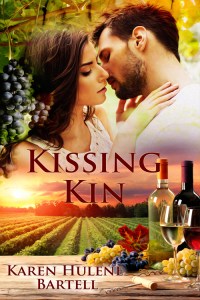
New Release: Kissing Kin by Karen Hulene Bartell

Maeve Jackson is starting over after a broken engagement—and mustering out of the Army. No job and no prospects, she spins out on black ice and totals her car.

When struggling vintner Luke Kaylor stops to help, they discover they’re distantly related. On a shoestring budget to convert his vineyard into a winery, he makes her a deal: prune grapevines in exchange for room and board.

But forgotten diaries and a haunted cabin kickstart a five-generational mystery with ancestors that have bones to pick. As carnal urges propel them into each other’s arms, they wonder: Is their attraction physical…or metaphysical?

The idea for Kissing Kin first came to me during 2020 because of the striking similarities between Covid and the Spanish Flu of 1918, but publishers convinced me no one wanted to read about pandemics. Time passed. 

Then I noticed a handmade cookbook my grandmother had constructed during the depression. It’s made of two cardboard flaps reinforced at the edges with duct tape and held together by two metal ring binders. That book inspired me. (I used some of its recipes in Kissing Kin, for instance, Simple Sponge Cake, Mother’s Soft Gingerbread, and…the treatment of chicken lice with nicotine-sulfate.)

The general tone of the cookbook, which was meant as a Christmas present during the 1930s, was chatty. It read more like a diary than a book of recipes, and it motivated me to begin writing Kissing Kin.

If wishes were fishes, Kissing Kin would be made into a movie. I realize that’s a longshot, but it never hurts to dream. On that note, Maeve, the female protagonist for my Kissing Kin dream cast would have to be Millie Bobby Brown because of her amazing acting range. With her talent, she could pull off being an M2 Bradley driver in Afghanistan and the unwitting spectator to specters. 

The male protagonist would have to be Timothée Chalamet. Not only is he a heartthrob, but he’s a versatile actor, whether the genre be drama, comedy, or action. I can see him as the struggling vintner, who makes Maeve a deal. On a shoestring budget to convert his vineyard into a winery, he offers her room and board in exchange for pruning grapevines.

And for your enjoyment, an excerpt:

Grandma’s bedtime stories echoed through my mind as I sped west on I-10. At an early age, family history had merged with myth until the name Fort Lincoln was as legendary as Avalon or Middle Earth.

But when the snow-covered peaks loomed closer, their reality was undeniable. Maybe her stories weren’t tall tales…

And what about her proverbs? “Idle hands are the devil’s workshop.” I winced. No job and no prospects. Mustering out after a five-year Army stint, I had to ask myself: What next? Where next?

Cody slipped into my thoughts, but I dismissed him, refusing to romanticize our breakup.

A troop of cavalry soldiers galloped toward me from the nineteenth century, but a second glance proved the images were metal cutouts–two-dimensional illusions that resembled an officer and guide leading two columns of cavalrymen.

The silhouettes evoked tales of my great-great-grandfather, Ben Williams. Beginning his military career as a scout, he’d been field promoted during combat, then commissioned as Second Lieutenant at Fort Lincoln.

I smiled, proud of our similar career paths. Maybe Grandma’s stories influenced me more than I realized.

Leaving the Interstate, I turned south. Road signs noted towns that sounded familiar from family stories but seemed as mythical as Camelot or Tintagel Castle.

Closer now, the mountains’ features came into view. No longer mere outlines on the horizon, each craggy palisade and butte towered over the highway. Fluffy hoarfrost transformed the landscape into an icy spectacle, with flaky, crystal shards overlaying each leaf and every blade of grass. A frozen fairyland! Just the way Grandma described it. Inspired by the raw beauty, I straightened my shoulders. Maybe I’m viewing my discharge the wrong way. Instead of adrift, maybe I’m free…

Kissing Kin can be purchased here: https://books2read.com/u/boXl10

Author of the Trans-Pecos, Sacred Emblem, Sacred Journey, and Sacred Messenger series, as well as Kissing Kin, Fox Tale, Wild Rose Pass, The Keys: Voice of the Turtle and more, Karen is a best-selling author, motivational keynote speaker, IT technical editor, wife, and all-around pilgrim of life. She writes multicultural, offbeat love stories steeped in the supernatural. Born to rolling-stone parents who moved annually, Bartell found her earliest playmates as fictional friends in books. Paperbacks became her portable pals. Ghost stories kept her up at night—reading feverishly. The paranormal was her passion. Novels offered an imaginative escape. An only child, she began writing her first novel at the age of nine, learning the joy of creating her own happy endings. Professor emeritus of the University of Texas at Austin, Karen resides in the Texas Piney Woods with her husband Peter and her mews—three rescued cats and a rescued *Cat*ahoula Leopard dog.98

Connect with Karen at her website: https://karenhulenebartell.com/

Historical Fiction: How Much Fiction is Okay?

I recently enjoyed following a discussion among historical fiction authors about accuracy and research. Probably my favorite thing I learned is that the food the ton eats in regency novels is often inaccurate to real life. I learned that bacon and eggs was a lower-class breakfast, and chocolate wasn’t a commonly accepted dessert yet. And when authors make such errors, readers who are educated in the time period they love are going to get upset. 

To be honest, learning that didn’t turn me off to any of the regency novels or authors I’ve read that have been inaccurate. As a high school history teacher, I don’t teach what type of food a specific socioeconomic class ate in a specific time period. I teach the impact people, events, and movements had on society and progress. And so it is those details that I’m hyper aware of when I read historical fiction. And yet, other people clearly do care about the minute details, which is completely valid. So, how does an author decide how much fiction to put into historical fiction?

Let’s use my favorite historical fiction author, Philippa Gregory, as an example. Readers either love her or hate her. I am in the camp that loves her. She makes a lot of risky moves with her historical accuracy, but I don’t always agree with all of them even though I love reading her books. Let’s take a look at The Other Boleyn Girl as our main example. (Mainly because I know both the book and historical facts very well.)

In several interviews, Ms. Gregory has stated that when she writes a royal court story, she has a timeline up on her wall that shows the movement of the court, so that she can put the characters in the right geographical location in the right month/season. From there, depending on who you talk to, things can get murky. 

In The Other Boleyn Girl the 4 main deviants from other accepted sources are:

  1. The birth order of the Boleyn children
  2. The publicly known father(s) of Mary Carey’s children
  3. Mary’s role in the court after her second marriage 
  4. George Boleyn’s sexuality 

The birth order of the Boleyn children

Every historical source I have ever read puts Mary Boleyn as the oldest, Anne Boleyn as the middle child, and George Boleyn as the youngest. Philippa Gregory switches the characters around completely: George, Anne, Mary. I do understand why (I think) she did it. The relationship she created for the two sisters – Anne as a bossy bully and Mary as passively compliant (which she grows out of over twenty years) – works better for Anne being “the mean older sister”. Despite me understanding what is most likely her reasoning for doing this, it still bothers me.

Who fathered Mary’s children?

When Mary Boleyn became Henry VIII’s mistress, she was married to William Carey. She became pregnant during that time, and the court believed – as well as historians – that the king was the father of Mary’s oldest child, Catherine Carey. Surviving portraits of the oldest Carey child do hold similarities to other known Tudor children (according to those with the eye to see such details). According to historical sources, Henry had set Mary aside well before she became pregnant with her second child, Henry Carey. Historically, there was no doubt in anyone’s mind that William Carey was the only possible father to baby Henry. Philippa Gregory, however, made the decision to keep Mary as the king’s mistress longer than is accurate, and to make the father of her second child Henry VIII. Once again, there is a method to her madness. Later on, Anne adopts Henry so that she would be the “mother” of a biological son of the king, so he would be more inclined to marry her. But once again, the inaccuracy doesn’t sit well with me. The rest of the plot can continue as normal without this change.

Mary’s role in court

After Henry VIII set Mary aside, she’s a background character in the main historical record. We know she gave birth to a boy named Henry, and her first husband, William Carey died during one of the sweat summers (a type of plague disease that killed thousands of people every year). At some point after Princess Elizabeth was born, and during Anne’s unsuccessful pregnancies, Mary married a man well below her station, William Stafford. She kept her marriage a secret until her third pregnancy became too noticeable to hide (or perhaps, they married because she became pregnant). Queen Anne banished her own sister from court, and Mary’s remaining family followed their queen and shunned her. Mary moved to Calais, and that’s where they were living when Anne was beheaded for false accusations of adultery. 

In The Other Boleyn Girl, Philippa Gregory condenses Mary’s banishment to less than twelve months, and she’s back at court as the queen’s sister. How does Ms. Gregory justify this very obvious discrepancy? An actual primary source states that during Anne’s last miscarriage, she let no one in her chambers besides her mother and her sister. Now, this sister could have been Jane Parker, George’s wife. But it was also well known that Jane and Anne didn’t like each other. In fact, Jane and George didn’t like each other. But still, how can Mary be at court if the historical record puts her in Calais? Or was it a misunderstanding on who was actually in the room? (Especially since this is a time where false accusations of adultery were being prepared.) Either way, Philippa Gregory has one source to validate her decision to keep Mary at court for the story. 

And this is actually how she does it in all of her books. As long as one source records a guess, rumor, etc.; she can put it in her book and says that she is exploring what the story would look like if that source were true. Which, I think, is fine. Provided she justify it in her Q&A section she puts at the end of each book. And she does, most of the time.

George’s Sexuality

A major side plot in The Other Boleyn Girl is George Boleyn falling in love with Francis Weston, and embarking on a love affair with him. Once again, Philippa Gregory uses an obscure source that claims George’s pre-execution speech included an apology for sodomy. This claim can’t be combatted the way that the others were. Historians can’t discover the thoughts and feelings of long dead people. So, if a historical fiction author wants to make someone gay, they can do so. 

Any other Philippa Gregory book is going to have similar changes. She uses the lack of perfect records to fill in the blanks with her own imaginings. She uses the very real beliefs of the time in witches to include spells, curses, and fortune telling. And she finds obscure (but real) claims to further dramatize an already dramatic era. 

But even though she does her homework to justify the changes she makes, the real question is: Do you readers support these changes? Enough that she is still writing and selling books, and Starz is slowly turning her more popular books into mini-series. But the naysayers are still quite loud. 

So, at the end of the day, if you’re going to write historical fiction, just know that any changes you make will be noticed by some while unnoticed or ignored by others. It’s still your choice to make, but it will affect your readership. As for me, I’m going to continue to read regency romances regardless of what the upper class eats; and I’m going to continue to enjoy Tudor era stories – though I will grumble internally when things are too wrong for my taste. 

What’s your favorite time period for historical fiction? Let me know in the comments!

Mean Girls in the Paranormal: Out of Body

I’m excited to review another ARC (Advance Reader Copy – I get to read it before the official release date).

Out of Body by Kimberly Baer (which publishes TODAY) is a YA Paranormal-SciFi adventure about a 15 year-old girl named Abby who discovers she has the ability to leave her body during sleep time – or travel on the astral plane. Her cousin, and best friend, Logan has the same ability. This is so exciting for Abby because Logan moved away six months ago and she misses him terribly. 

At first, Abby’s out of body experiences (OBE) allow her to help others: finding a lost pet, helping a neighbor call 9-1-1. Then she learns things she would rather not: her parents’ marriage is on the rocks, and the mean girls at school wrote nasty things about her in their yearbook. (I LOVED the Burn Book vibes in that scene.) 

Abby is an introvert, and it turns out her social life was because of Logan. Once he moved away, her “friends” disappeared. Both her and Logan having OBEs gives her hope that she’ll get her best friend back. But Logan has been traveling on the astral plane longer, and already has other friends and adventure plans that don’t involve her. 

She’s mostly fine being alone, but her mother is not okay with a socially inept daughter. Feeling pressure from her mom, Abby uses her OBEs to make drastic and dangerous decisions. These decisions blow up in her face, and the lessons she learned had a very Disney Channel feel that was nostalgic for me.   

As both cousins make youthful mistakes, Abby will have to accept that her reality has some cracks, and she’ll need to trust the two people she (thinks) she hates the most.

Kimberly Baer has such a great imagination for the fantastical elements to this story. The dilemma Logan finds himself in really makes the reader question outside intervention in environmental factors such as evolution, species survival, and the food chain. Overall, a great read for teenagers and fans of YA literature.

And like some of my other reviews, Kimberly Baer agreed to an interview! Check it out below:


I think it’s amazing that you have published in multiple genres. Most writers I have conversed with feel it’s safer to stick with one genre. What has your experience been like?

I agree that it’s safer to stick with one genre; otherwise it’s hard to establish a target audience. My problem is that all of my story ideas come to me out of the blue, and they’re not all in the same genre. When an idea resonates with me, I feel compelled to write that story, regardless of the genre. But most of my recent ideas have fallen within the young adult genre, so that might be the one I “settle down” with.

I know what an out of body experience is, but I haven’t read any fiction involving it. Was there any trope or world building expectations already in place that you felt compelled to follow or not follow?

Nope. Before I started writing Out of Body, I’d never read a book about astral projection, either fiction or nonfiction. I did some research as I was writing, but the world-building comes primarily from my imagination. Assuming astral projection is a real thing, I probably stretched the limits of possibility—but, hey, that’s what fiction is all about, right?

Is this a standalone novel, or do Abby and Logan have more adventures in the works?

I’m not ruling out a sequel. Astral projection is a fascinating subject with endless plot possibilities, so there just might be at least one sequel.

What’s next for your writing career?

I have more story ideas than time to write them, so I’ll just keep tackling them one at a time!


As mentioned above, Out of Body released today. You can follow Kimberly and purchase her books here: https://www.kimberlybaer.com/

My Grandparents’ WWII Love Story by Lee Ann Sontheimer Murphy

She was a widow with four children, ages sixteen to three, struggling to make ends meet after losing her husband in 1943. Edna Neely had grown up in a fine house, with a fur coat, and her own car at 16 but her world crashed when the stock market did. Everything was liquidated to pay her father’s debts when the banks failed. 

He was a farmer, older than the average soldier, and the “kids” serving in his unit called him Pop. Until he joined the Army, because he didn’t wait to be drafted, Claude Roberts lived near the small farming community of Fillmore, Missouri. Fillmore has fat farmland; fertile fields raise some of the state’s finest corn and soybeans. Surrounding farms produce cattle and hogs for the livestock market. In my grandfather’s day, nearby St. Joseph, MO still ranked as the third largest packing site in the nation.  He came from a large family but my grandmother was an only child.

After she married, my grandmother found a lifelong best friend in neighbor Margie Violett. The two young woman both had young children at home. They bonded over recipes, shared neighborhood gossip, and the age-old effort to understand the men they married.

After my grandmother was widowed, she joined the war effort. She volunteered her time at a local USO canteen and even though she hadn’t planned to find another husband, she was soon dating young men stationed at Rosecrans Field, an Army Air Corps based nearby. More than one proposed marriage but she declined, satisfied with her children and life.

Several of her cousins were away serving in the war and she wrote letters to each of them. When Margie suggested she add her Uncle Claude to her pen pal list, she did. Edna and Claude wrote numerous letters. She detailed her everyday life on the home front and he shared what he could of Army life in the Pacific Theater of war.

Despite the differences in location and background — she was raised in the shadow of the Missouri Capitol in Jefferson City, Missouri and he came from an Andrew County farm – they found common interests. My great-grandmother, Edna’s mother, also hailed from the Fillmore area. They poured out their hearts about music, life, and fell in love by letter.

When V-J Day came, the war ended and Claude would be coming home. They wrote about meeting in person but my grandmother never expected it to play out the way it did.

She woke up one winter morning to find a man, rolled up in his overcoat against the cold, on the porch asleep. It turned out to be Claude. When he’d gotten as far as St. Joe, he headed for the address he knew from the letters but since it was late at night, he decided to wait until morning. By the time my grandmother opened the door, he was nearly frozen.

Grandma invited him in, served him breakfast, and fell the rest of the way in love. They married a few months later and he became one of the best grandpas a child could have.

That’ s a real life love story. I write romance, from sweet to heat but I often draw on actual inspiration from my long relationship with my late husband or other family tales.

You can find my books on Amazon and elsewhere. https://www.amazon.com/stores/Lee-Ann-Sontheimer-Murphy/author/B004JPBM6I

And you can read my ramblings and writings on my blog here: https://leeannsontheimer.blogspot.com/

Real Life Romance: My Love Story by Maria Imbalzano

When I graduated from law school at the age of 28, I was fairly certain I would never get married. I had been on and off with my boyfriend for eight years, my parents had a terrible marriage, and I didn’t want to end up in an unhappy relationship. I had my career ahead of me, I had friends to hang out with, and I was fine by myself. 

A few weeks before I was to start my job at a law firm, I met with the managing partner. He said he had good news and bad news. What did I want to hear first?  I chose the bad news, which was that another new hire was starting two weeks before me and would be on the letterhead above me. The good news was that he was tall and good-looking. 

I laughed that off and began my legal career as anticipated a few weeks later. I did meet the “tall, good-looking attorney” on my first day, since we worked at a small firm (17 lawyers at the time). He was very nice, very handsome, and perfectly tall (6’4” to my 5’9” plus heels). But I had a boyfriend (the on and off guy) and he had a girlfriend (who was very short). 

We became friends, hung out on Friday nights for happy hour with our colleagues, and eventually broke up with our significant others due to relationship issues. We both worked late on week nights and started going out to get something to eat when we were famished—sometimes with others, sometimes on our own. It was all very platonic, but something was happening beneath the surface. 

On a weekend ski trip with our friends, we somehow ended up in the same room together. My roommate had disappeared into someone else’s room, and he didn’t have a bed in the guys’ room. Although there were bunkbeds, we shared some hot kisses and a bed that night. It all became very romantic over the next few weeks, as we kept our attraction hidden at work, and would meet up clandestinely so no one would know. 

Then he got cold feet. He told me we probably shouldn’t continue. We should just go back to being friends. I was devastated. I had fallen for him and didn’t want to be friends. And I told him just that. I said that, of course, I would be friendly at work. I was a professional after all. I told him I respected his decision, but I didn’t want to go back to hanging out. He said he understood and we left the restaurant with heavy hearts. 

The very next night, he asked if I wanted to go get something to eat. Had he not heard me? I said no, and reminded him that I did want to revert to the best friends zone. He accepted it that night, but a few days later we were at a firm function. He kept coming over to me, engaging in small talk, sitting down next to me if I sat, following me if I moved to a different spot. Then he asked why I was being so icy.  

I reminded him of our recent discussion. Sadness shrouded his eyes, but I could not back down. I had my heart to protect.  A few nights later, he asked me to go out to dinner with him. He wanted to talk.  Reluctantly, I agreed, despite my resolve. I was still crazy about him, and was willing to spend a few more hours together, hoping he would change his mind.

Although, he never said that in so many words, we spent that night and every night thereafter  together—either at my place or his. We went on romantic vacations together, most notably Key West and Rio de Janeiro and married eighteen months later. And I’m still crazy about him today.  

*****

I retired from the practice of law a few years ago, and now write full time. In several of my contemporary romance novels, the heroine is a lawyer, and a lawsuit pits the main characters against each other. My new release, “Island Detour,” (on pre-order and out on February 19th) does not follow suit. The main characters are teachers at an environmental school in the Florida Keys. Sunrise Island, a fictional island in the Keys, is based on Key West, which played an important role in my and my husband’s love story. We’ve gone there every year for the past thirty-seven years, and it is definitely one of my happy places. 

Buy Links for Island Detour https://books2read.com/u/4D20y7

Meet Maria and follow her writing journey: https://mariaimbalzano.com/