Titanic Facts for the Casual Fan
A traveling Titanic museum, Titanic The Exhibition, is currently set up in my area. I have always found the history of the Titanic fascinating, and walked through the museum. I’m not a Titanic expert by any means, so I found many parts of the museum informative and new.
Titanic Postcards
There are dozens (potentially hundreds) of various postcards from the time period featuring the Titanic. There are real photos of the ship being built and sitting fully built in port. And there are hand drawn likenesses of the various phases of being built, sitting in port, sailing on the ocean, and sinking.
Seeing the postcards didn’t surprise me as much as it reminded me how much times have changed. Because everyone has a camera on their phone, we aren’t buying postcards of the places we visit anymore. I think the last time I bought a postcard was in 2005 when I visited New Zealand and Australia. I want to start looking for postcards again when I travel.
Vaccination cards
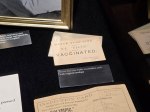
Vaccination against smallpox was required for immigrants to enter the United States during this time. So immigrants using the White Star Line ships to move to the U.S. had White Star Line vaccination cards. The photo below is a vaccination card for the S.S. Celtic, but the Titanic card would have looked similar.
The “packing list”
Packing for any trip is always such a feat. I make a list that is double and triple checked, and I still inevitably miss something. I cannot imagine how much food to plan for thousands of people.
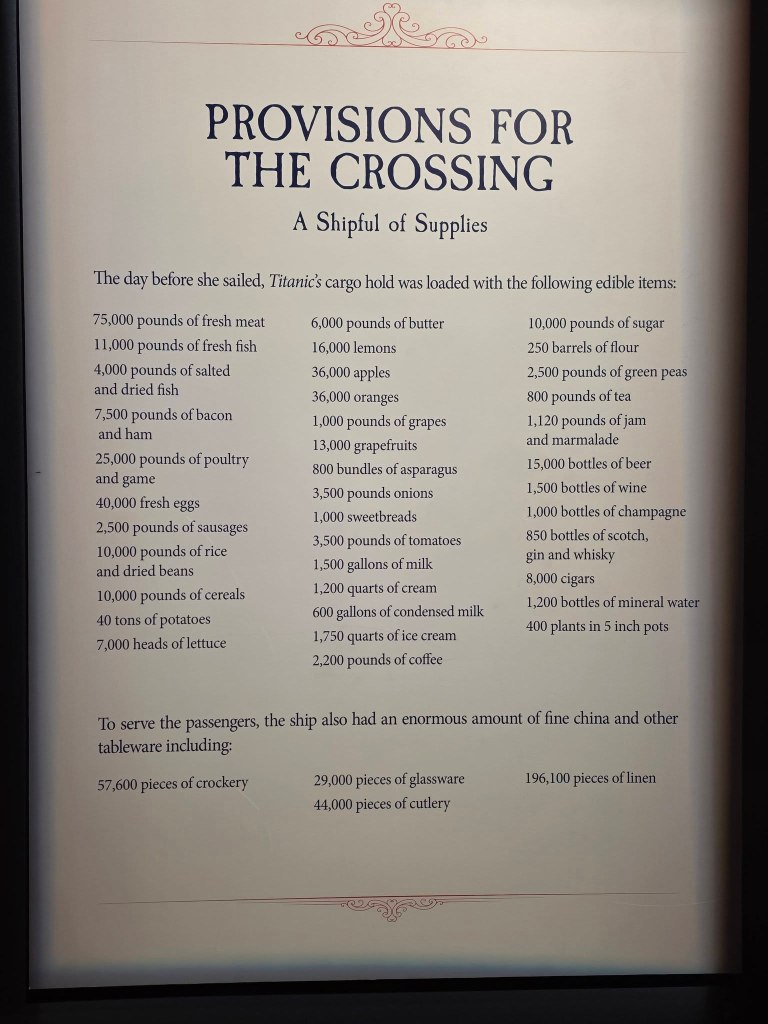
The Quality of rooms and dinnerware
I didn’t get a picture of the models of rooms and examples of dinnerware for first class, second class, and third class. But with each example, there was a plaque that explained how second class on the Titanic was better than first class on all other ships. Third class was also much better than the passengers anticipated. Which would make first class the best in the world. Titanic truly was a luxury ship for the time period.
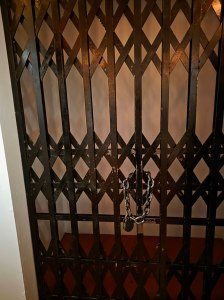
The infamous third class gates
There was a poster next to the replica of the gates that explained the gates were always locked to prevent third class passengers from visiting the first and second class areas of the ship. They weren’t locked just on the night of the sinking to prevent the 3rd class passengers from getting to the life boats (like in the movie). In the chaos of the sinking, most of the gates were left locked due to forgetfulness, not malice, which (in addition to not enough life boats) is why so many 3rd class passengers died during the sinking. Which is still really terrible! It reminds me of the Triangle Shirtwaist Fire from the late 1800s. The owner of the factory locked workers in to prevent them from taking breaks or leaving early. When the factory caught fire, no one could escape, and most of the employees died. Between these two tragedies (and probably others), there are now laws about emergency exits and locked doors/gates in regards to safety.
The Promenade Deck
This was for first class passengers to walk along for socializing. In fact, the poster said this was how mothers showed off their single daughters. And I immediately thought of Bridgerton! I imagine the promenade deck is the one Jack teaches Rose how to spit off of. I didn’t take a picture of the replica, but I did take a selfie with my husband while we were sitting on one of the benches. I certainly would have noticed him on a promenade!

The Iceberg
I knew that the Titanic received an iceberg warning that was pocketed by Mr. Ismay. What I didn’t know was that there were 5 iceberg warnings sent out to whatever ships might be sailing that part of the Atlantic. And when the Titanic hit the iceberg and began to sink, they sent out SOS messages all over. The museum had a wall that quoted the final correspondence between Titanic and other ships. Those ships received updates as they sailed toward the Titanic. As we know, none made it in time, and one arrived to rescue the survivors.
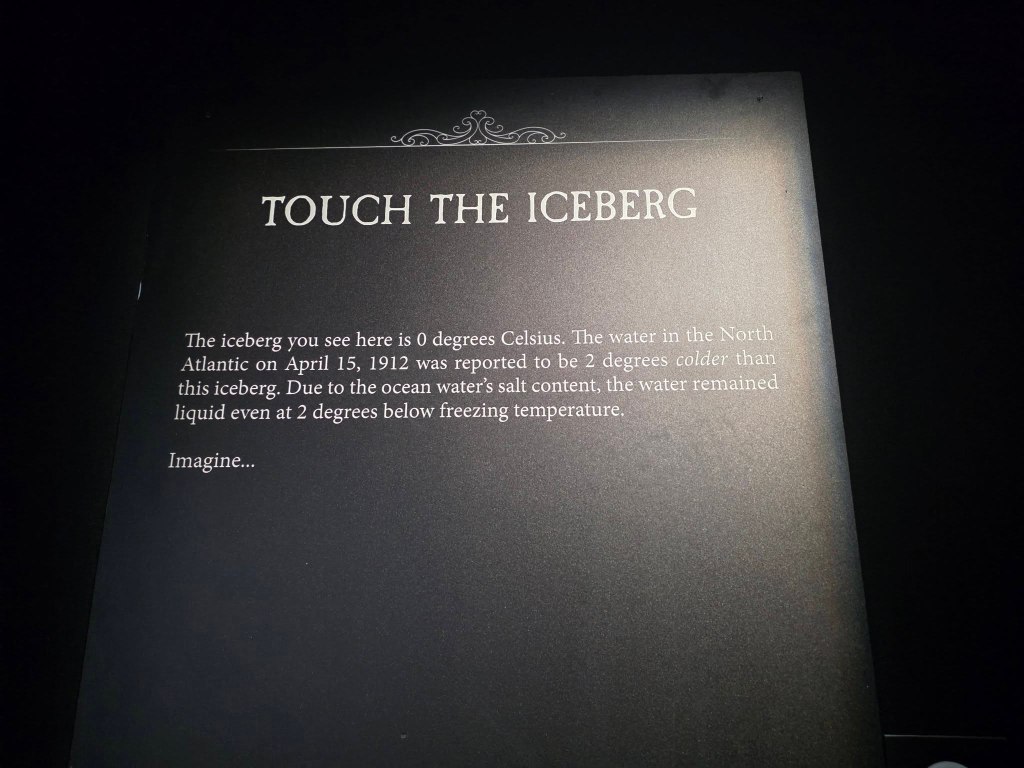
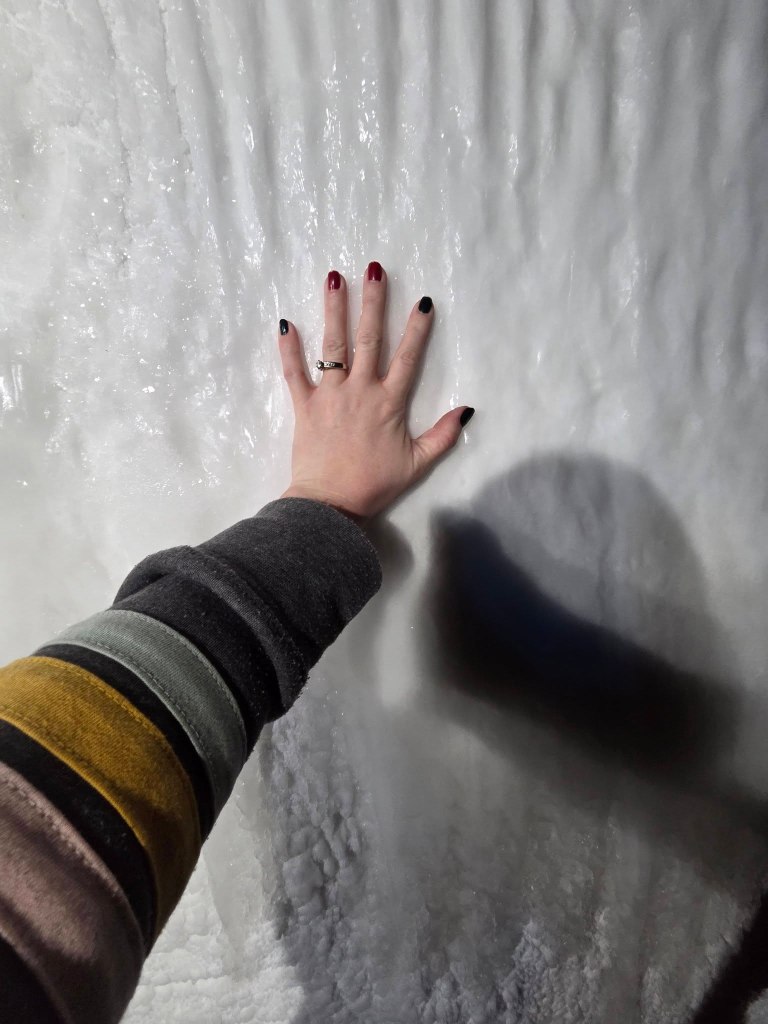
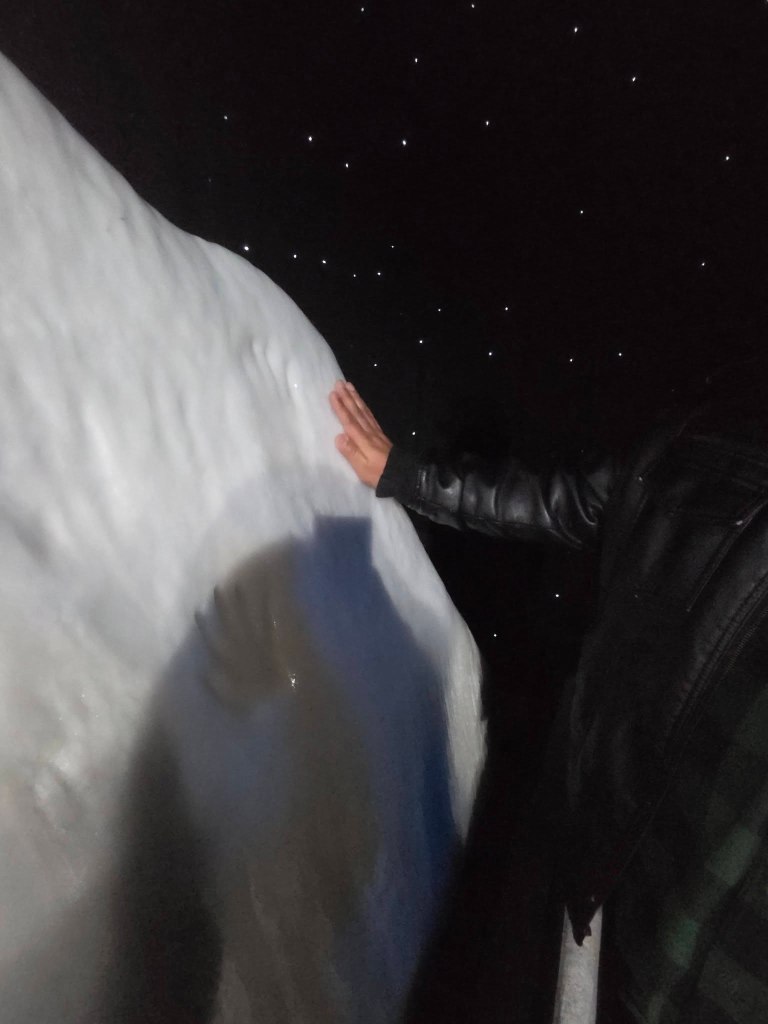
The same room with the iceberg correspondences also had a sheet of ice kept at two degrees above what the Atlantic ocean was that night. Visitors are allowed to touch the ice. It hurts. I can’t imagine falling into that water.
Connections to Utah
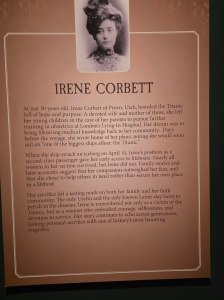
The museum had a room titled “Connections to Utah” where passengers who were either from Utah or spent any significant time in Utah were highlighted. The one that stuck out to me the most was Irene Corbett. She traveled to England for an education in nursing. Irene could have gotten on a lifeboat as a 2nd class passenger, but different accounts have been combined to guess that she gave up her seat to help others. She perished. Her children were then raised by their grandparents. She is the only known Latter-day Saint to perish in the sinking.
I imagine that this room changes based on location. I would love to know the passenger highlights for the other states.
Real Life Romances on the Titanic
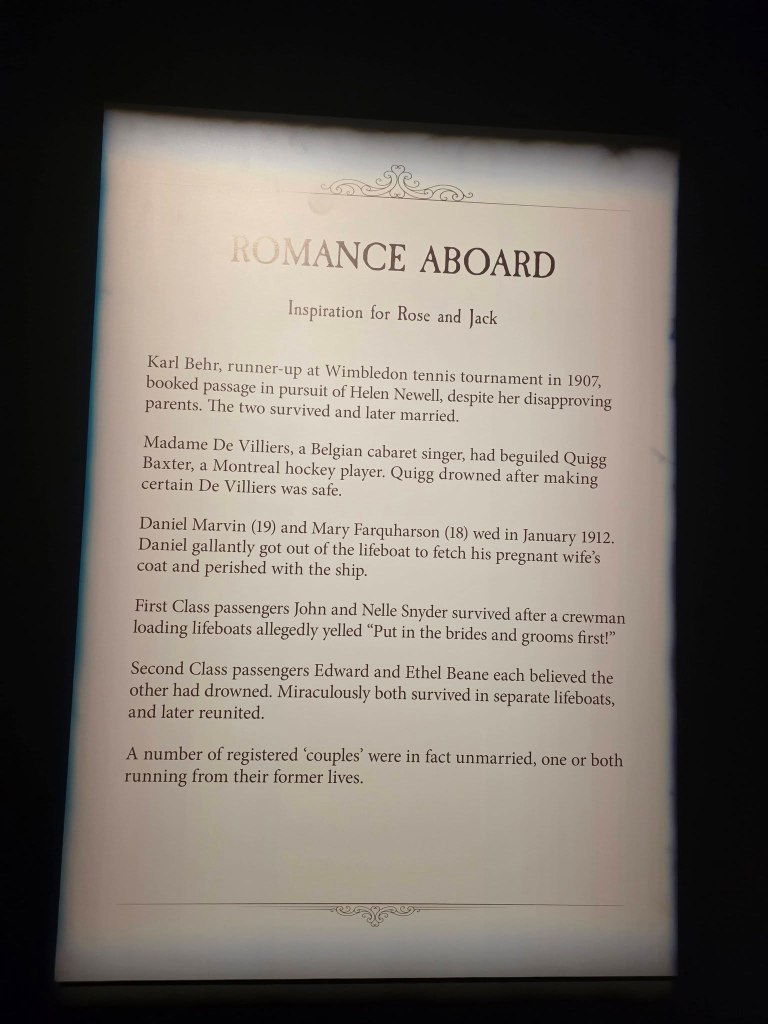
There were several real life couples who either met on the Titanic or used the Titanic to travel to America after marrying or planned to marry in America. Their stories inspired the fictional characters of Jack and Rose.
The Original Go Fund Me
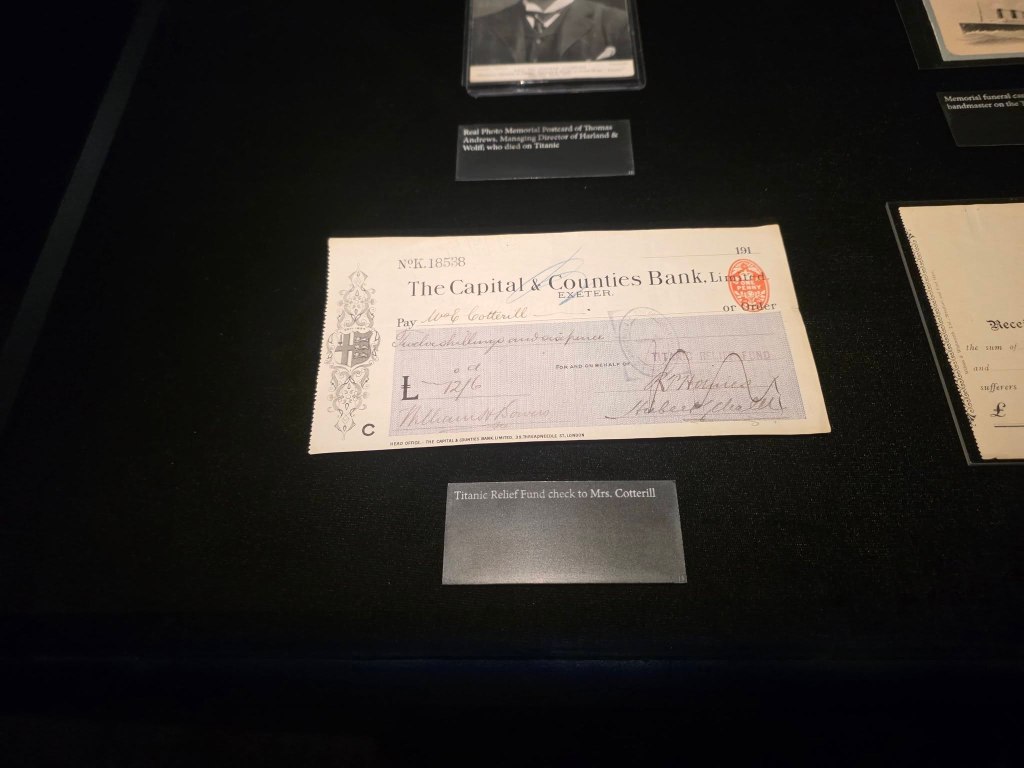
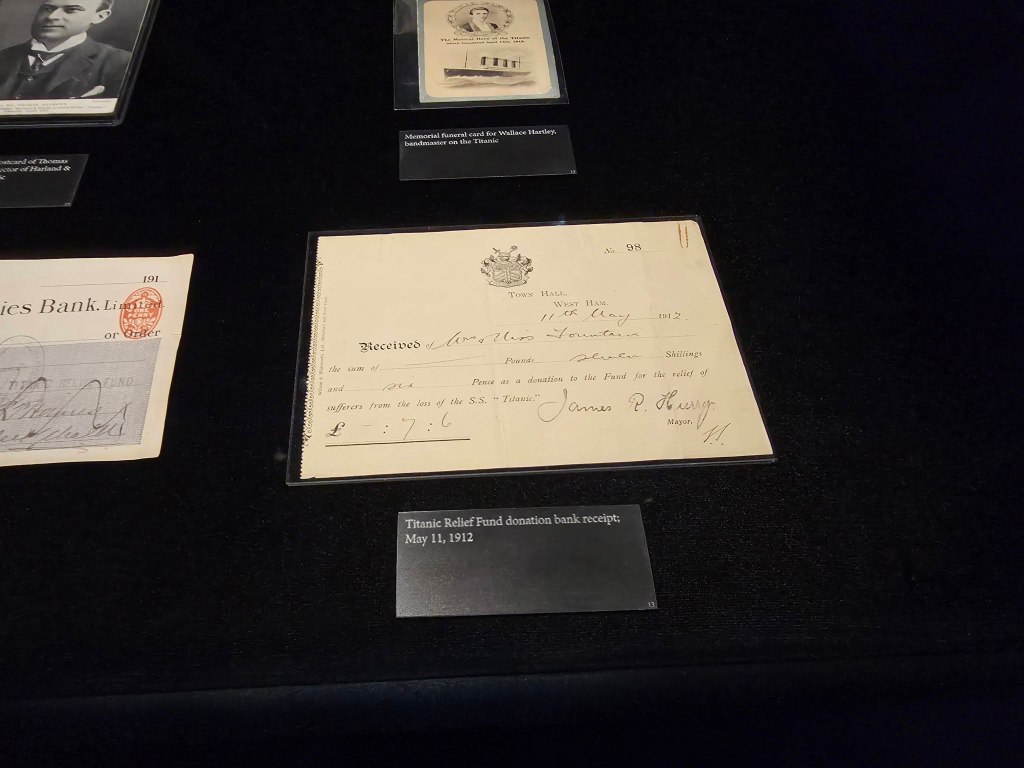
There was a Titanic Relief Fund that people could donate to that helped the survivors and sufferers of the sinking. I don’t know why learning that fact surprised me so much, but I enjoyed the information.
Goodbye
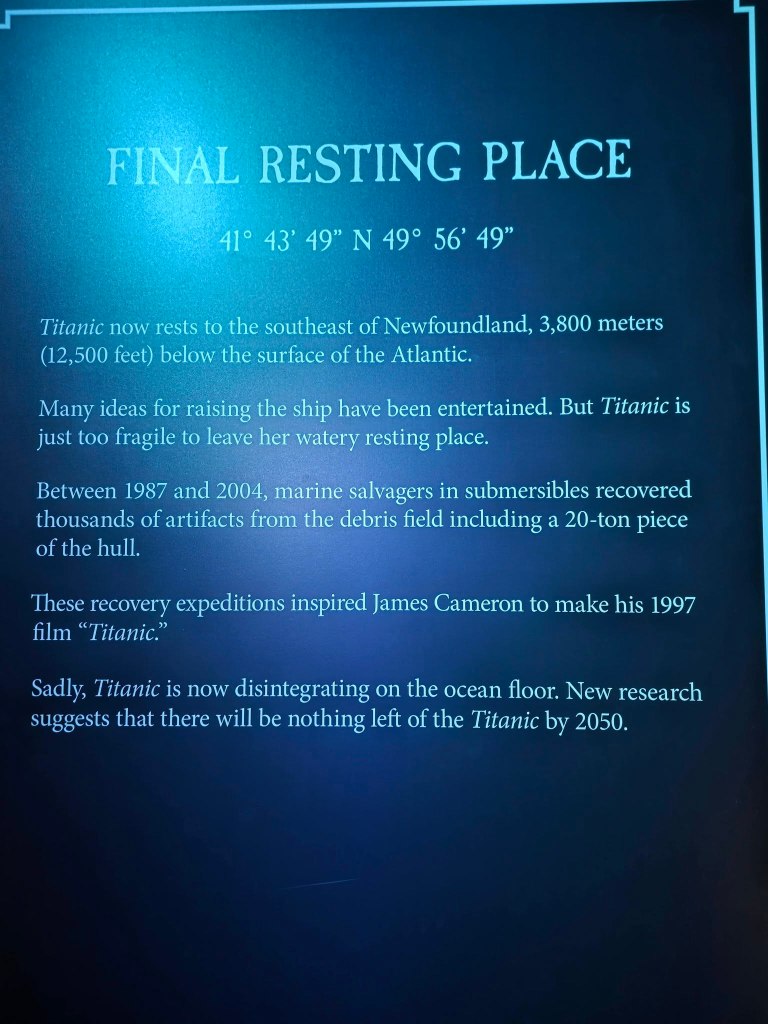
What’s left of the ship is currently disintegrating, and it is projected that Titanic will cease to exist by 2050. I know that most materials are not permanent, and the Titanic did sink over 100 years ago, but that bit of information was very surprising to me. 2050 is not too far off. That will be in most of our lifetimes. It’s sad to me.
The Titanic continues to gauge the interest of many people, and I imagine it will continue to be an event that people study. What’s an intriguing Titanic fact you know? Share it in the comments!











 Chelsey M. Ortega