My Top 5 Reads of 2025
Okay, it’s technically my top 8 reads of 2025, but 4 of them are in the same series, so I’m reviewing them together.
I read 41 books this year – 2 more than my goodreads goal! 5 (8) of them I loved so much, I need to share them with you.
Remember When We by Khardine Gray.
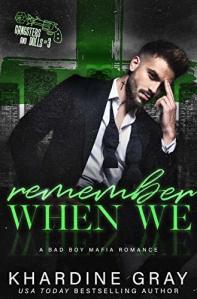
Khardine Gray also writes under the name Faith Summers. Whether she’s writing as Khardine or Faith, her series are all mafia romances. Remember When We is my absolute favorite of hers. It’s the third installment of her Gangster and Dolls series. It’s a second chance romance with the older brother’s best friend and secret baby tropes weaved into the plot. Lyssa and Gio haven’t seen each other in almost a decade. The death of Lyssa’s brother, Gio’s best friend tore them apart. Now they’re back in each other’s lives, and Lyssa owes money to the wrong man. Gio must not only win back her heart, but also save her from dangerous men who want to harm her.
Khardine/Faith write very spicy love scenes, and most of her MMCs are morally grey and very alpha-like. Several of her stories cross the line for me; but knowing that she has stories like Remember When We keeps me reading her stuff.
Queen Charlotte by Julia Quinn and Shonda Rhimes
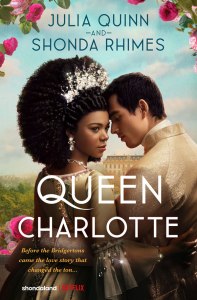
Unlike the other Bridgerton stories, Queen Charlotte the book was released after Queen Charlotte the limited Netflix series. But like most film-book comparisons, the book is better! What I love about reading is that we get to experience the characters’ emotions in their heads. On screen, we guess what they’re feeling by their body language and tone of voice. Like the mini-series, Queen Charlotte follows Charlotte and George’s early days as newlyweds, Brimsley and Reynolds’ relationship, and Lady Danbury’s fight to keep her children’s rightful status after her husband dies. The book also gets a couple of scenes that aren’t in the show. My guess is they are scenes that either got deleted from final edits, or were never filmed due to time. And finally, Brimsley and Reynolds’ love story is so much better in the book. I didn’t like their story in the show. I thought Reynolds was toxic and verbally abusive. In the book, Brimsley calls Reynsolds out on this unequal behavior, and Reynolds changes for the better by the end of the book.
I’m all for Julia Quinn and Shonda Rhimes continuing to give side characters their own story.
The Rokesby Series by Julia Quinn
- Because of Miss Bridgerton
- The Girl with the Make-Believe Husband
- The Other Miss Bridgerton
- First Comes Scandal
These four books are considered the Bridgerton Prequels. The MMCs of each book are a son in the Rokesby family – the family whose countryside property is next to the Bridgerton’s Aubrey Hall. And three of the FMCs are a Bridgerton girl; either a sister or cousin to Edmund Bridgerton (Violet’s husband and father to the eight main Bridgertons). I argue that these four books are better than the original eight Bridgerton books. But I’m sure it’s because Julia Quinn started with the Bridgerton books, and simply improved her plot creativity and writing skills as she wrote and published more. Let’s dive in to a brief summary of each:
Because of Miss Bridgerton is about the oldest Rokesby, George, and the oldest Bridgerton Billie (Sibylla). They think they hate each other, but their mothers know better and hook them up with an elaborate scheme of dinner parties and visiting London.
The Girl with the Make-Believe Husband takes us to the colonies on the North American continent during the American Revolution. Edward, the second oldest Rokesby is serving the King in his Majesty’s army. Cecilia has traveled to the colonies to find her injured brother, who happens to be Edward’s best friend. In order to get the answers she seeks, Cecilia needs the Rokesby name, and pretends to be married to Edward.
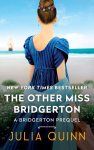
The Other Miss Bridgerton is about the third Rokesby, Andrew, and a Bridgerton cousin, Poppy. Andrew is a ship captain. His ship participates in some legit business and some pirate-level business. Poppy gets kidnapped by some of his crew, and he has to take care of her while they make an important and deadline-driven journey to Portugal.

First Comes Scandal is about the youngest Rokesby, Nicholas, and the youngest Bridgerton Georgie (Georgiana). Georgie’s reputation has been compromised by a malicious young man who wanted to force her to marry him. Nicholas’ father asks him to marry her in order to save her from a life of spinsterhood and a soiled reputation. Their love story begins after their marriage.
In usual Julia Quinn fashion, these four stories are full of witty women, temperamental men, and comedy. I love her writing, and this is my favorite series of hers (so far).
Romney: A Reckoning by McKay Coppins
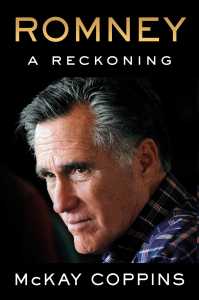
I didn’t know who Mitt Romney was before he became a real contender in the 2012 Republican primaries. Part of that is because I was too young to vote or care before then, and part because I took a political science class during that time, so of course my professor used class time to closely follow the campaigns. Over the years, I have grown to greatly respect Mitt Romney, especially during his time as a Senator representing Utah. Reading this biography that covers both his personal and political life was very enlightening, and I like him even more now. Mitt Romney always tries to do what he thinks is right, even when others disagree with and disparage him. I think he’s a great role model for future politicians.
Zalis by Nancey Cummings

Nancey Cummings writes science fiction romances, and her longest running series is the Warlord Brides/Warriors of Sangrin series. Zalis is the 13th installment in that series (16th, if you count the three side stories, which I do). It popped up on my “Because you read…” recommendations on my kindle, and I bought it right away and started reading immediately. Zalis is an alien warrior, his species is called Mahdfel, and he is of the Sangrin line. He meets his human mate when he rescues her in a group of kidnapped human women to be sold on the sentient being trafficking market. Gemma does not want to go back to earth, so she accepts a match with Zalis in order to stay near her twin sister. What will start as a marriage of convenience, has the chance to bud into love. I love Nancy Cummings’ writing. She is creative in her world building. She develops humorous and witty characters. Most authors cannot continue a series for this long and keep it entertaining with readers still wanting more. But I do want more, and her acknowledgements at the end of Zalis do promise more in due time!
What were your favorite books that you read in 2025? Share them in the comments!


 Chelsey M. Ortega