Should you repeat a writers conference?

In June 2023, I took the opportunity to attend my first educator’s conference with my administrators and several other teachers. The conference was in Austin, Texas. I’d never been to Texas before, so that in and of itself was motivation enough to accept an everything-but-meals-and-activities paid trip. About halfway through the conference, one of my colleagues said that he’d attended this exact conference with his previous school a few years prior, and the sessions and keynotes were the exact same. So he spent the week picking sessions he didn’t pick last time, or just enjoying himself in a city he’d never been to. Six months later, that same conference came to Salt Lake City, Utah – an hour north of us. Those of us who went to Austin saw no reason to attend again. So, the teachers who didn’t go to Austin, went to the Salt Lake sessions.

An editing software that I use hosts several online conferences each year for different genres. I religiously attended for a couple of years, and I noticed that they had the same presenters teach the same session for the topics of marketing, plotting, and different world building and editing programs. After the third repeat, I stopped attending those sessions.   

With that being my introduction to conferences, I struggled in deciding if attending the Quills Conference two years in a row would be worth it. 

It was.

First of all, the sessions were completely different. There were new presenters that were not there last year, and returning presenters taught completely different classes – or different enough, that it didn’t feel like a repeat. 

The networking opportunities were different as well. In fact, if my memory serves me correctly, there were more networking opportunities this year. 

Some things remained the same: pitches with agents and editors, headshots with a professional photographer, and banquets featuring three keynotes speakers (though the keynote speakers were different).

Overall, I learned plenty of new information, connected with new writers, reconnected with writers I only get to see at the Quills and Pre-Quills, and had an enjoyable break from my normal life. 

So, yes, attending the Quills Conference year after year is totally worth it. I look forward to having it be part of my summer travels each year. 

What writers conferences have you attended that you would recommend to others? Tell us in the comments!

World Building Expansion in Onyx Storm

I have had to percolate my thoughts on Onyx Storm for several weeks. I read the last chapter on July 31st. The next day I posted a thread that said, “I just finished Onyx Storm and I am not okay”. Then I finally posted my review on Goodreads on August 3rd. And after that, I still didn’t know how I wanted to write a positive analysis for my blog because the end absolutely destroyed me. 

And I finally figured out why I’ve been struggling: 1. I thought Onyx Storm was the final book in the series for the first half of reading it, and then my hair stylist told me there’s going to be more. 2. The cliffhanger ending is too hard (for me) when the next book isn’t out yet.

Both of those issues can be pushed aside for an analysis of the actual story. So let’s dive in.

Representation

This has been going on since the first book. I really like Rebecca Yarros’s way of introducing a character’s sexual orientation, gender identity, and disability. My favorite example is with a side character whose preferred pronouns are they/them. I apologize to the super fans, but I can’t remember this character’s name. They aren’t one of the primary side characters because they aren’t on Violet’s squad, and I don’t think they’re in Violet’s wing. Whenever they are in a scene, Violet’s inner dialogue and actual dialogue call the character they/them without a big info dump on why, nor is there a side plot where other characters have to learn to accept that character as they identify themselves. They just simply exist and the acceptance was already part of the culture before page 1 of book 1. 

We see something similar with Jessinia. She is deaf. And from the moment we meet her, Violet already knows sign language. In fact, the majority of the characters know sign language, implying that it is a cultural expectation in most provinces.

Gay and lesbian characters also don’t have a coming out plot. They just simply are there and we learn their identity when they get a love interest. Which is something I’m attempting in my own writing as well. 

Several characters are supposedly persons of color, but I have to admit I didn’t catch on to Rebecca Yarros’s hints and descriptions of said characters. The only two that were obvious to me were Xaden and Bodhi. But I’m going to give her grace because I’m also still learning how to let my readers know my characters’ race in an obvious but still respectful way. The racial issues that are written into the story are more about regional differences, not skin colors. We see this a lot in modern fantasy world building, and I personally like it. It’s something I’m trying to do in my own writing as well: put in diverse characters, but the issues they face don’t surround their skin color.

Disabled characters seem to be the one exception to the culture of Navarre. Violet was born disabled, and she’s raised to believe her disability will never allow her to be a dragon rider. Which, if you’ve read the first book, you know how she overcomes that. Now, one could argue that society itself has no problems with disabled people in Navarre, they just can’t be dragon riders. But I would argue back that dragon riders are considered the elite of the kingdom, so yes, society as whole probably does look down on the disabled. We see another character, Sawyer, become disabled during a major battle at the end of the second book, and he spends the third book learning to accept his new limitations and readjusting his riding style so he can still ride his dragon and fight – just like Xaden and Tairn did for Violet. 

Overall, I think what Rebecca Yarros is doing with representation in this series is a good step toward representation in fantasy stories. I can’t speak for any of those communities because I don’t belong to any of them. I have seen some criticisms from readers who belong to those communities, so she’s not doing it perfectly. But I do think she deserves props for trying, and will hopefully inspire other authors who can learn from her example and the criticisms in their own writing. 

Government Corruption

It’s hinted very early in Fourth Wing that the Kingdom of Navarre is corrupt, and has been for centuries. What I wasn’t prepared for was the revelation that all the kingdoms Violet and Quest Squad visit are just as corrupt. It definitely made the quest for the Irids frustrating. However, we do get to learn about several other kingdoms with their people, customs, and history. I hope we get to return to some of them in the remaining books. I also think it was really intriguing to make every government have some form of corruption. It definitely made the governments more realistic and applicable to our human world.  

Travel Plot

As mentioned above, the entirety of Onyx Storm is them traveling around trying to find where the Irid dragons ended up moving to and asking other kingdoms for help fighting the Venin. And like stated above, the results are very disappointing for Violet. This is not a new storytelling technique, but it’s usually done in a smaller chunk of the book, not the entire book. At first, I was really frustrated and didn’t feel like I read a complete story. But here’s the thing: Rebecca Yarros already showed us in the previous two books that this is the plotting style for this series. A lot of craziness happens and then we end the book on a huge cliffhanger. And as mentioned above, all of that craziness introduced us to several new communities, and poses the question: Is Navarre truly the villain? Or are all the governments villainous and selfish in their own ways?

Only one resolution

There are a lot of tensions going on throughout Onyx Storm: Violet and Xaden vs. General Aetos, Violet and Xaden vs. Theophanie, characters popping up all over the place with second signets, etc. And at the end of Onyx Storm, only one resolution happens. Which was quite strategic. Because of course I want to know what’s going to happen to everyone who showed off their second signet. Of course I want to know if General Aetos will either “come to Jesus” or if he’s going to die still being an asshole. I want to know more about Violet’s hair, because after teasing us for three books about how it’s so unique, the tidbit we got in this book was not enough to cleanse my palatte.

So, yeah. I’ll be purchasing the fourth book because I simply need to know what happens. Also I love Xaden and Violet.

In the meantime, I have a YA fantasy tangent to go on. 

Romance Tropes in Iron Flame

Iron Flame is the second installment of The Empyreon series, and it starts right where Fourth Wing left off. This sequel also ends on a major cliffhanger, and Onyx Storm picks off right where Iron Flame left off. Because of that, Iron Flame doesn’t feel like a complete singular story. Now that I’m almost done with Onyx Storm, it’s clear this series is one larger story instead of multiple parts that are connected. So, because of that, I did thoroughly enjoy reading Iron Flame and rate it 5 stars. And I have three main takeaways to discuss. 

What flaws are okay in a love interest?

Something I’ve noticed among online forums where favorite romance couples are discussed: each individual reader has their own lines in the sand on what is and isn’t forgivable among the flaws and mistakes that characters make. I had an experience with my own writing where in a set of beta readers one vehemently did not like the male love interest and was disappointed my female main character ended up with him. I did take his comments seriously, and made one tiny adjustment in one scene based on what he didn’t like. But it made me realize that not every reader is going to be okay with the choices the love interest makes, which will affect whether they root for that love interest to get their HEA or not. And that’s okay. 

For me, I had a similar issue with Xaden for a good chunk of Iron Flame. At the end of Fourth Wing he accidentally shares with Violet a pretty big secret. Violet is understandably furious that he kept something like that from her, and is even more angry that the only reason she now knows is because Xaden’s original plan went awry. At the beginning of Iron Flame, Xaden agrees to no more secrets under the caveat that Violet has to ask questions, and he’ll answer them honestly. But Violet can’t ask questions if she doesn’t know what information she’s missing. Xaden also won’t be intimate with Violet again until she says she loves him, which she won’t do until she can trust him. The two are at an impasse of Xaden’s own making. 

I have read so many romances with similar tensions where the female character gives in and the male gets his way. It creates an unequal dynamic that doesn’t sit well with me. And I was so fearful Violet was going to do the same thing. And if she did, would I still love this story? Would I enjoy reading their relationship scenes? Luckily, I was not forced to answer those questions. Both Violet and Xaden were able to compromise in a way that I found valid, and I’m back on Team Xaden. 

A new take on the jealous ex

The jealous ex causing tension and problems is my least favorite trope in a romance. So when Cat was introduced as Xaden’s ex who is still hung up on him, I was none too pleased. I was ready to throw the book across the room if Violet walked in on them and “it’s not what it looks like!” 

Lucky for me, and my copy of the book, that did not happen. Rebecca Yarros takes the jealous ex trope in a different direction that I ended up enjoying. Cat admits to Violet that she doesn’t love Xaden, she just wants what a marriage to him would provide: a crown. Xaden is the heir of Tyrrendor. Depending on how far back historians go, that makes him a duke at the lowest and a king at the highest. Cat is of royal blood from another kingdom, and Violet has no nobility in her lineage (that we know of so far in the series). The fact that Cat has no qualms with admitting her ambitions in front of an audience shines light on the culture these characters live in. Status and titles are more important than love. But like all characters like Xaden, he doesn’t care, and openly keeps Violet as his girlfriend.  

Correct representation of twenty-year-olds

Oftentimes, younger characters are depicted as much more mature than is realistic. While there are people in this world who are more intelligent and mature than is typical for their age group, the staggering number of such people as fictional characters probably doesn’t match reality. Rebecca Yarros does an amazing job of depicting people in their early twenties correctly. 

Violet is your typical brainiac main character who “isn’t like other girls.” But she also is like other girls in the fact that she falls in love quickly, overthinks Xaden’s words and actions in their relationship, and gets insanely jealous.

Xaden is the begrudging aristocrat who is thrust into leadership much too young. But he also has a temper that would get weaker characters into trouble and is willing to sacrifice the world for Violet.  

Rhiannon is a natural leader who still enjoys hookups, drinking, and partying.

Ridoc is the comedic relief who still has talent and grit that come in handy during battle. 

Garrick is the best friend who isn’t afraid to put Xaden in his place, but enjoys hook ups and flings. (Though I’m really hoping he and Imogen will end up together in the end.)

Imogen holds nasty grudges and talks back, but is fiercely loyal to her people. 

Sloan allows trauma and heartbreak to guide her emotions and choices, but shows incredible growth by the end.

Brhodi also provides comic relief and wisdom as he gives advice to Violet and Xaden.

There are many more characters to discuss, but the above are the ones I wanted to highlight for this post.

Overall, Iron Flame took me on an emotional journey that I’m still not quite recovered from. I love the world Rebecca Yarros has created, and her characters are the perfect cherry on top.

Have you read Iron Flame? What are your thoughts on it?

When expectations are challenged: Fourth Wing

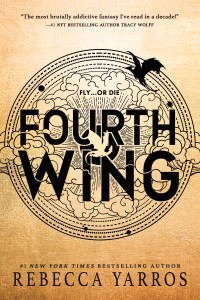
A year ago, I wrote about my journey as a reader to loving flawed characters and appreciating how their flaws shape the story. And since then, I’ve been more aware of how a story can challenge the reader regarding their belief about the real world or literary expectations for specific genres and character types. I recently had a wonderful experience being challenged by Fourth Wing by Rebecca Yarros. 

How corrupt governments are viewed by the protagonist

The first chapter already had me raising my eyebrows. It didn’t make any sense to me why the government would set up tests and challenges that could kill a citizen who is willingly trying to be part of the military. Right away my question was, “Why don’t they have some sort of magical something to catch the people who fall from the parapet so that they can pick a different career since they aren’t cut out to be a dragon rider?” And it made even less sense that those who made it into the rider’s quadrant were not only allowed but encouraged to kill their classmates. Once again, why isn’t something set up to protect their lives, but they can still fail and be sent back to civilian life? This violent and deadly setup was my first major clue that the government was corrupt.

The next early clue is the fact that children of separatists (a rebellion/secession that happened before the story started) are forced to walk the parapet and to [hopefully] die in the rider’s quadrant, though many make it through, like Xaden, Imogen, Garrick, and Liam. 

But where I got stuck was Violet’s (the main character) acceptance that this is how it is. She doesn’t question it. She doesn’t want to be part of it herself, but she doesn’t view it as bad or evil, just not for her. And it took her a long time to start to question what was going on. It was very frustrating for me because there was a very clear Hunger Games vibe with many of the training, tests, and games that the riders do to strengthen themselves for war. And because of that, I erroneously expected Violet to be more like Katniss in knowing right off the bat that her government is awful.

But Violet doesn’t come from an oppressed part of the kingdom. She’s moved around as a “military brat” with her mom rising in fame and power as a war general. So, of course she’ll have a different view of things. It’s not how she starts, it’s how she ends. And in the end, Violet accepts the truth.  

Whose job is it to flirt in fiction?

Violet and Xaden are both dealing with enemies-to-lovers and forbidden love tensions that make them fight their attraction toward one another for the first three-quarters of the book. Before they give in to their feelings, the reader gets 300 pages of Violet’s inner thoughts about how beautiful, muscley, and hot Xaden is. And at first, it was a little cringe for me. 

Tangent time: I was in high school when Twilight came out, and I fell hard for that series. My dance coach decided to read the first book because all of us teenage girls were constantly talking about it. Her response: “I got really bored of Bella constantly moaning about how ‘he’s so hot, I can’t stop thinking about him.’” It made me laugh then, and it still makes me laugh now. 

Anyway, that’s how I felt being in Violet’s thoughts about Xaden when it appeared he didn’t feel it back, yet. (Keyword: appeared) 

So, Violet and Xaden eventually give in to their attraction and they have two kisses before they finally do the deed. After that, Xaden doesn’t quite say “this was a mistake” (thank Gods), but he does say they’re not going to be in an official relationship. Violet decides she has more self-respect than to be his dirty little secret, so she decides they won’t have anymore physical relations if they aren’t going to also have an emotional relationship. Xaden respects her boundaries, though he’s confident he can break through them again. During their “dry spell”, Violet continuously reminds Xaden how great they could be together and how she’s certain he does feel something for her. 

During these moments I felt second-hand embarrassment for Violet. She was coming off as clingy and crazy.

But then I had a realization and metaphorically slapped myself in the face. If Violet was a male character, all of her thoughts about Xaden being beautiful and her attempts to convince Xaden to give them a try would be viewed as cute and expected for a romance. I realized I was still stuck in the society I had grown up in: the boy chases the girl, the girl does not chase the boy. 

And I got to thinking about my own relationship. I offered my number to my husband first. I asked him on a date first. 

So in our 21st Century of trying to retain equal rights: girls can chase the relationship if they’re comfortable doing that. And Xaden loves Violet’s confidence. 😉    

Cliff Hangers 

Rebecca Yarros ends almost every single chapter on various levels of a cliffhanger. Which writers have been strongly encouraged to do. You want the reader to NOT pause at the end of the chapter. But I’m not the kind of reader that needs every chapter to end that way. When the story is amazing, I don’t need a cliff hanger to convince me to keep reading. And Fourth Wing is more than good enough on its own. I’m happy when a chapter ends with temporary breaths of relief, resignation, or something more calming. In addition to that, several cliff hangers didn’t lead into the next chapter. The scene would skip several hours, days, and sometimes weeks. So It was a little frustrating when that happened. In my opinion, a cliffhanger should only happen if the next chapter starts where the previous chapter left off.

At the same time, I think I understand why Rebecca Yarros wrote Fourth Wing this way. This book takes place over the course of an entire calendar year, and we have to go through action packed military college scenes mixed with spicy romance. There was a lot to cover, and the book is already incredibly long, so some things did need to be skipped over and left up to the reader’s imagination or summarized through telling. 

Overall, Fourth Wing was a wild ride that I enjoyed immensely. In fact, I’m so hooked on Violet’s journey, that I moved the sequel, Iron Flame, to the top of my tbr list. I’m 300 pages in and can’t wait to write my analysis for that one.

In the meantime, subscribe to this blog to get access to my monthly newsletter, which provides updates on my own writing.

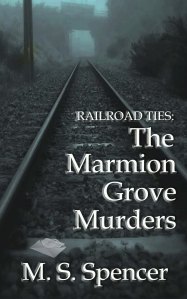
New Release: Railroad Ties: the Marmion Grove Murders by M.S. Spencer

I would like to introduce M.S. Spencer to you. She has had a long academic and writing career, and would like to share her latest release with you, which came out yesterday.


Thank you so much for having me today! I’d like to introduce you to the setting of my new mystery, which happens to be my hometown!

Railroad Ties: the Marmion Grove Murders, is the only one of my novels set in my home town and in the house I grew up in. Marmion Grove is modeled after a town near Washington DC. Founded in 1891 next to the B&O railroad line, it was developed as a getaway for DC dwellers during the hot and humid summers. Filled with hundred-year-old trees, including the majestic swamp magnolias, there are no sidewalks and no through streets. Fifty-four houses, including mine, are on the National Register of Historic Places. The town is peopled by a quirky assortment of academics, scientists, and eccentrics. Writing Railroad Ties reminded me of what a great place to live.

Another autobiographical detail is my heroine Sophie Childress’s involvement with the Vassar Book Sale. Now closed down, for forty years it was one of the largest and most successful used book sales in the country, raking in an average of $100,000 for scholarships. The sale lasted a week, but preparations, including book pricing, had to be done year-round. She follows in my footsteps to learn rare book evaluation—which leads her into the mystery.


Librarian, anthropologist, research assistant, Congressional aide, speechwriter, nonprofit director—M. S. Spencer has lived or traveled in five of the seven continents and holds degrees in Anthropology, Middle East Studies, and Library Science. She has published eighteen mystery or romantic suspense novels, and divides her time between the Gulf Coast of Florida and a tiny village in Maine. Follow M.S. Spencer on her blog: https://msspencertalespinner.blogspot.com


When Sophie Childress discovers a letter written in 1920 by the witness to a murder, she enlists Noah Pennyman—owner of the house where it took place—to investigate. Who was the victim? What did the killer do with the body—not to mention a carpetbag full of money? Together they expose a complex web of family ties and lies that has persisted through four generations in the historic village of Marmion Grove. When two more corpses are unearthed, Noah and Sophie are faced with too many victims and not enough murderers.

Excerpt: Sophie and Noah Meet

She parked at the curb, where a hedge of yellow forsythia marked the property line. The front lawn led up to a porch completely engulfed in a reticulated wisteria vine as thick and complex as fine lacework. Halfway up reared an ancient tree, its knobbed and serrated trunk perhaps five feet in diameter. The pendulous branches were the size of fully grown trees and were only kept from falling by a steel chain wrapped around them. Its broad leaves were gigantic. They must be almost two feet long!

As she sat gawking, a pleasant male voice said, “It’s a swamp magnolia. At least a hundred and fifty years old.”

Startled, she knocked her knee on the steering wheel. “Ouch!”

A young man came around the car and peered in her window. “Are you all right?”

She looked up into cornflower blue eyes partially obscured by a shrubbery of sandy hair. “Oh, sorry. I didn’t mean to stare. It’s just… I’ve never seen such big leaves before.”

“We used to use them as dinner plates, but they’re a bitch to wash.” He leaned in. “May I help you?”

She left off gazing at him and shook herself. “Oh. Oh, yes. Is this”—she checked Connie’s directions—“Peveril Hall?”

“It is indeed.”

“Do you live here? I’m supposed to collect a load of books for the Vassar Book Sale.”

“Ah. No. I mean, no, I don’t live here. Anymore. I used to. I grew up here, but I’ve been away a long time.”

“Then you can’t help me?”

“Huh? No! I mean, yes, I can help you. This is my house.”

“But you just said…”

He pointed to his left. “Head on up the driveway there. I’ll meet you out back.” And he loped off across the grass.

Okey doke. Sophie followed a lane along the side of the house to a gravel lot fronting a two-story garage. The backyard was dotted with small buildings. She got out and scanned the area. A small octagonal hut stood near a stately sycamore. Next to it crouched a one-room shanty with a chimney. That must be the servants’ quarters. She looked up at the garage. A huge hook painted green was attached to the wall just under the gable. “I wonder what that’s for.”

Just then the young man came around the corner of the house. “Hey there. I’m Noah, by the way. Noah Pennyman. My mother was the Vassar grad. And you are?”

She took a moment to admire his mobile, angular features. He seemed always on the verge of speaking…or maybe singing. The shock of blond hair fell negligently across his brow. When he shook her hand, a very masculine aroma of citrus and spice enveloped her. She suppressed the urge to inhale. “Sophie Childress. I’m from the—”

“Vassar Book Sale. So you said.” He reached out and flicked her hair. “Nice French braid. I never could figure out how it’s done. Come on inside.”

Railroad Ties is available at Books2Read, Amazon, Barnes & Noble, Apple/IBooks, Goodreads, and Bookbub.

May 2025 Newsletter

Everyone says that March is the longest month of the school year for students and teachers. But I actually think April is. After spring break, there are no more holidays or teacher work days. My kids also have a million end of the year performances – though I do love attending those and watching my little performers. 

What do you think? Is March or April the “longest” month of the school year?

Writing News

A couple of months ago, I finished writing my first short story. It took me two years! Short stories are hard because you have to write a complete story with fewer words. And everything I attempt always turns into a full length novel. And I finished just in time to submit it to an anthology whose theme matches my story’s. A few days ago, I received an email from the publisher that they want to include my story in their anthology! As details get hammered out, I will be sharing them here in the newsletter.

The Wolf Whisperer and the Warrior won the Fiction from the Heartland contest put on by Mid-America Romance Authors! I know in the last newsletter I said being a finalist was exciting enough, but I am so thrilled to have won. It really helped with some imposter syndrome I’ve been feeling recently. A literary agent was the judge for the final three stories, and so, this makes me think that maybe I could get this traditionally published. I haven’t made any concrete decisions yet. I still think that because it’s a fated mates werewolf romance it has the potential to do well on a reading app. Plus, having some stories available for free is nice for readers. *sigh* Decisions. Decisions. (In Dakota Fanning’s Jane voice in the Twilight series.)

Book Reviews

I’ve been rereading a lot of favorites, but here are the new ones for the month:

Killing the Witches: The Horror of Salem Massachusetts by Bill O’Reilly is unfortunately not what it’s advertised. There are three sections: 1. The Salem Witch Trials, 2. A short biography of Benjamin Franklin, 3. The event that inspired the movie The Exorcist. Each section on its own was an interesting read. But from cover to cover as a comprehensive claim? The sections don’t connect. I would have loved if the author fleshed out the Afterward and made that part of the book instead of the Revolutionary War stuff and The Exorcist stuff. 3 stars.

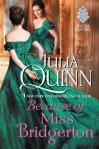
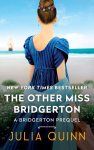
Because of Miss Bridgerton by Julia Quinn is the first of the Bridgerton prequels. Billie Bridgerton, the FMC, is the oldest Bridgerton of Edmund’s generation, making her the aunt of the OG Bridgertons. She helps run Aubrey Hall and is jealous that Edmund will one day inherit it instead of her. George Rokesby and his siblings have grown up with the Bridgertons, and he’s always seen Billie as too free spirited, until one day, he realizes he loves her free spirit. This is one of the slowest slow burns I’ve ever read. And the payoff was so worth it. Billie’s version of “not like other girls” is refreshing and it’s more about going after her dreams than trying to be different. George is a better heir than Anthony, hands down.

Dear reader, be patient. It takes a while to get to their first kiss, but I promise, after that, it’s amazing. 5 stars.

I’m chugging along on my ACOTAR series reread reviews on TikTok. My latest is Ch. 22-28 of A Court of Mist and Fury.

@chelseym.ortega

ACOMAF Ch. 22-28. Sorry for the long video, but these chapters have to go together! #booktok #acomaf #archeronsisters

♬ original sound – Chelsey M. Ortega

Hang in there. It’s almost summer.

Sincerely,

Chelsey M. Ortega

4 Writing Tips from the Pre-Quills Conference

The last weekend of March, I attended the Pre-Quills Conference put on by the League of Utah Writers. It’s a one day conference whose sessions are geared toward beginner writers. And I honestly still consider myself a novice writer. I still have a lot to learn. There were four sessions, with three options per session. I attended a session on writing short stories, writing BIPOC characters with respect, Marketing for Beginners, and how to write a first Chapter. I want to share the highlights from each session with you.

Short Stories

The presenter for this session was Cassidy Ward. He writes science articles and short stories. He started the session by reading one of his short stories out loud, and then using the parts of that story as an example for what he taught us. (The short story in question is on his website here. Go read it. It’s amazing.)

I chose this class for session 1 because I have written a short story that I’m submitting to a contest, an anthology, and a magazine. Some of the feedback I’ve received in my critique group has really frustrated me, and I needed to better understand what I was doing wrong from an actual published short story author. 

Cassidy’s presentation was so wonderful. What he taught helped me see where I can improve, but I also got some validation in certain areas that I was convinced were okay despite my critique group’s comments. (I do think that a lot of their comments would have worked for critiquing a full-length novel. And to be fair that’s what I generally bring to the group.)

So, after spending way too much time on this introduction, here are the highlights from his class:

  • “Get words on the page and get rid of the ones that don’t work.”
  • Treat exposition like salt: enough to set the stage → as little as possible, as much as you need
  • Give the reader at least one character to root for
  • Every character should want something. The stakes don’t have to be huge, but they should feel huge → the reader should feel what the character feels.
  • Focus on feelings rather than events → zoom in one thing (i.e. 20 minutes of someone’s life)

BIPOC Characters

This session was taught by J.T. Moore. I didn’t take many notes because I was just enjoying listening to her. Ms. Moore’s presentation was about how representation is important, and should be done respectfully. And like with the short stories session, I had a personal reason to choose this session.

I have Black, Asian, Latino, and Gay characters in my stories (none of which were chosen for the sake of representation – I strongly believe that my characters are “alive” in a way, and they tell me who they are). And my beta readers have never picked up on my attempt at respectfully describing these characters, assuming everyone was white and straight. *sigh* So, I needed help from someone more knowledgeable than me.

This is what I learned from J.T. Moore:

  • Give your characters hobbies, personalities, and descriptions other than skin color
  • Give your characters unique and complicated back stories to inform who they are
  • In speculative fiction, your characters don’t have to reflect the current world
  • Still identify their race, just don’t use their race to be their only description and personality

Marketing 

Like most authors, marketing is my weak spot. So, any time there’s an opportunity for me to learn from someone successful to see if what they do works for me, I’m going to take it. 

Candace Thomas has successfully tapped into an engaging website, using influencers, and creating merchandise. I took a lot of notes, but I’m only going to share a few highlights – specifically the ones I’m in the process of applying to my marketing.

  • Have your most recent book be the landing page for your website
  • Make your newsletters short and sweet
  • Know which generation prefers your genre and what social media platforms they use (i.e. Gen Z loves Romantatsy and are mostly on Instagram and TikTok)
  • Make content that matches your books that isn’t “Buy my book!”
  • Utilize influencers (they do cost $$)
  • Create merchandise that brings people to your website (and hopefully buy your book as well)

First Chapters

Lindsay Hiller has won several first chapter contests, and now heads and judges first chapter contests. I picked her session because I’ve never placed in a first chapter contest, let alone won. And most readers who attempted The Wolf Whisperer and the Warrior when it was on Kindle Vella stopped after chapter 1. So, I clearly need some help. 

Lindsay broke it down into 3 main writing tips:

  1. Follow the 4 emotion beats: What is the character’s goal (both for the chapter and the whole story)? What are their motivations for those goals? What obstacle(s) will prevent them from meeting that goal (at least the smaller one)? And what are the stakes if they don’t reach their goal (at least the smaller one)?
  2. Organize the following aspects: Provide a setting, give the basics for character description, voice, and flaws, and create a hook to convince the reader to keep reading after chapter 1.
  3. Put it all together: Begin by introducing the character, describe the setting, and provide a status quo. Go into their goal and motivation. End with the inciting incident that launches the character and reader into the rest of the story. 

I am so grateful I got to attend this conference. (Last year I got sick and had to stay home and watch the virtual sessions, which really wasn’t the same as being there in person.) I’ve already started applying some of the lessons I learned, and I’m hopeful for positive results. 

New Release: Dark Hearts Aflame by Amber Daulton

I’m really excited to welcome Amber Daulton back to the blog today. Her latest book, Dark Hearts Aflame, is available right now. Check out Amber’s journey to giving life to a side character’s story.


Dark Hearts Aflame follows Bristol Rieger and Carmen Lozano as they go off the grid to escape the criminals hunting them. Bristol himself is a retired drug lord who’s trying to go straight. Carmen is a cartel princess who has forsaken her crown and now lives under an assumed name while working as a medic with an anti-cartel resistance group. After her enemies discover her secret, Bristol gets roped into her problems. Danger, violence, and hot romance follows.

Originally, Dark Hearts Aflame was the final book in my romantic suspense series, Arresting Onyx, but it didn’t quite fit. Since it was so much darker than the Onyx books, I decided to create a spin-off series, the Lozano Cartel, and fully immerse myself in the dark romance genre. As for what inspired this story, I’m not sure. Bristol was a minor character in the Arresting Onyx series and quickly became one of my favorites. I knew from early on that I wanted to give him his own book, so when I sat down to plot out his story, the ideas just flowed out of me. I wrote the first draft back in 2018 and kept revising it off and on over the years while I multi-tasked in writing, editing, and publishing other books.

I’m a plotter, though I’ve been known to hand over the reins to my characters when they want to change something. I like to outline each scene either on paper or on my laptop, so I can see what works or move ideas around when needed. Sometimes, I get story ideas from my dreams; other times, I have to think about it for days on end. I never know when my muse will fire up, so I usually keep a pad of paper and a pen around for when I need them. I typically write every day, usually when I wake up in the morning until dinner time with a few short breaks in between. After dinner, I either relax or keep writing if my muse is fired up. I don’t have a day job at the moment, so I’m writing more often than not.

Outside of writing, I enjoy binge-watching TV shows, playing with my cats, hiking in the woods behind my house, and cultivating my herb beds. This year, my hubby and I have planted onions and potatoes in our garden, so that upkeep is going to keep me busy throughout the summer and fall.

Dark Hearts Aflame is now available at all online retailers. I’m currently revising book 2, Lost in His Spiderwebs, which will be released in October 2025. The Lozano Cartel series will span several novels and novellas, all of which are standalone stories, so please subscribe to my newsletter or follow my social media to keep tabs on when these books will be out. Enjoy the ride!


Amber Daulton is the author of the Lozano Cartel, the Arresting Onyx, and the Ramseys in Time series, as well as several standalone novellas. Her books are published through Daulton Publishing, The Wild Rose Press, and Books to Go Now, and are available in ebook, print on demand, audio, and foreign language formats.

She lives in North Carolina with her husband and demanding cats.

Follow Amber: https://linktr.ee/AmberDaulton
Check out her website (Daulton Publishing): https://amberdaulton.com
Sign up for her Exclusive Newsletter (free ebook to new subscribers):
https://amberdaulton.com/newsletter-signup/

He gets more than he bargained for with his runaway cartel princess.

A drug lord on the run. A cartel princess in hiding. All it takes is a spark to set their world ablaze.

Bristol Rieger left his criminal life behind for a fresh start in Mexico. Flying under the radar of the government and the cartels alike, his best-laid plans go awry when a woman from his narco days discovers his whereabouts. Carmen Lozano, however, is no longer the innocent girl he remembers.

Carmen escaped the chains of her tiara and her abusive marriage to join a group of resistance fighters. The last thing she expected was the now-retired capo setting out to seduce her with his wicked touch. Embracing the blood on his hands is easy, but his secrets wear on her patience.

When their enemies close in, Bristol will have to summon his inner monster to protect her. But can that monster be tamed again?

– Book one is an Interracial (Hispanic woman/white man) dark romance novel in the Lozano Cartel series. All the books can be read as a standalone, but are part of an interconnected series.

– Scenes featuring torture/violence, kidnapping, attempted assault, infertility issues, child abuse (discussed), and suicide (discussed) may be uncomfortable for some readers.

– No cheating and HEA guaranteed!

Here’s a Parenting Book if You Hate Parenting Books

I’m going off topic with this book review. I normally read and review fantasy, romance, and historical fiction. But a few months ago, I bought a book to help me be a better mom to my children, and it was so revolutionary for me, that I need to share it with you.

First off, I have avoided parenting books like the plague for years. The first few that I tried were not helpful at all, so I decided I was one of those parents who is going to have to figure it out on my own. Then I became desperate. 

One of my children exhibits some ODD behavior, but they don’t check enough boxes to actually be diagnosed. So, I needed something that wasn’t medical help. I googled “books for parenting children with ODD”. I ended up on reddit and comment after comment (on someone else’s question) recommended Raising Your Spirited Child by Mary Sheedy Krucinka. 

This book has been life changing. 

First, it helped me understand where my children fall on the “spirited spectrum” or their temperament. There are 9 categories to being spirited: Intensity, Persistence, Sensitivity, Perceptiveness, Adaptability, Regularity, Energy, First Reaction, and Mood. Spirited children do not have to be “extreme” in all 9 categories, but there was a point system that helped me use my children’s behavior to determine where they land. One is “spunky” and one is “spirited.”

Then I tested my own temperament as a parent, and I am a “spunky” parent.

The next part of the book talked about introverts and extroverts. What that looks like in spirited children, how each one regulates differently, and how to recognize cues that they need to refill their buckets. There was another quiz in which I learned that all of my children are extroverts, and I am right smack in the middle. This was very eye opening for me because some of our biggest dramas are when we get home from me being at work and them being at school/daycare. They want my attention right away, and I need 20-30 minutes to decompress. I am a school teacher. So after a full day of working with other kids, I need a short break before I spend the rest of the evening with my own.  

So after this revelation, we created a schedule, everyone gets to talk my ear off on the drive home, telling me as much as they want, and I interact accordingly. Then when we get home, they eat a snack while I get alone time in my room. When their snack is over, I’ve gotten my break and we move on to homework.

A big part of the book is getting to the root of your child’s behavior and learning to recognize their cues that they are getting overwhelmed. Then, as your child grows, you teach them how to recognize their own triggers before things escalate. This is where other parenting books have been unhelpful for me, and why I gave up on parenting books so early on in my motherhood years.

One particular chapter was a huge lightbulb for me: Ch. 16 Bedtime and Night Waking. As I read that chapter, it became clear to me that this was the big one for one of my children. Everyone handles not enough sleep differently, but one of my children cannot regulate their emotions when they don’t get enough sleep. Their tantrums are worse. The fighting, the talking back, the arguing. Everything is exacerbated tenfold when they don’t get enough sleep. And they are also a child who absolutely needs 10 hours a night. So, we’ve adjusted the bedtime routine to make sure they get enough sleep. 

There’s a lot more in this book than what I covered. And that’s the beauty of this book. There is a chapter that will be the chapter for different kids in different families. The introvert/extrovert and sleep chapters were what I needed. 


If you’re struggling with parenthood in any capacity and other parenting literature have not been helpful, I recommend Raising Your Spirited Child.