World Building Expansion in Onyx Storm

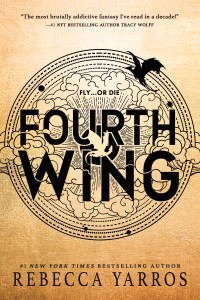
I have had to percolate my thoughts on Onyx Storm for several weeks. I read the last chapter on July 31st. The next day I posted a thread that said, “I just finished Onyx Storm and I am not okay”. Then I finally posted my review on Goodreads on August 3rd. And after that, I still didn’t know how I wanted to write a positive analysis for my blog because the end absolutely destroyed me. 

And I finally figured out why I’ve been struggling: 1. I thought Onyx Storm was the final book in the series for the first half of reading it, and then my hair stylist told me there’s going to be more. 2. The cliffhanger ending is too hard (for me) when the next book isn’t out yet.

Both of those issues can be pushed aside for an analysis of the actual story. So let’s dive in.

Representation

This has been going on since the first book. I really like Rebecca Yarros’s way of introducing a character’s sexual orientation, gender identity, and disability. My favorite example is with a side character whose preferred pronouns are they/them. I apologize to the super fans, but I can’t remember this character’s name. They aren’t one of the primary side characters because they aren’t on Violet’s squad, and I don’t think they’re in Violet’s wing. Whenever they are in a scene, Violet’s inner dialogue and actual dialogue call the character they/them without a big info dump on why, nor is there a side plot where other characters have to learn to accept that character as they identify themselves. They just simply exist and the acceptance was already part of the culture before page 1 of book 1. 

We see something similar with Jessinia. She is deaf. And from the moment we meet her, Violet already knows sign language. In fact, the majority of the characters know sign language, implying that it is a cultural expectation in most provinces.

Gay and lesbian characters also don’t have a coming out plot. They just simply are there and we learn their identity when they get a love interest. Which is something I’m attempting in my own writing as well. 

Several characters are supposedly persons of color, but I have to admit I didn’t catch on to Rebecca Yarros’s hints and descriptions of said characters. The only two that were obvious to me were Xaden and Bodhi. But I’m going to give her grace because I’m also still learning how to let my readers know my characters’ race in an obvious but still respectful way. The racial issues that are written into the story are more about regional differences, not skin colors. We see this a lot in modern fantasy world building, and I personally like it. It’s something I’m trying to do in my own writing as well: put in diverse characters, but the issues they face don’t surround their skin color.

Disabled characters seem to be the one exception to the culture of Navarre. Violet was born disabled, and she’s raised to believe her disability will never allow her to be a dragon rider. Which, if you’ve read the first book, you know how she overcomes that. Now, one could argue that society itself has no problems with disabled people in Navarre, they just can’t be dragon riders. But I would argue back that dragon riders are considered the elite of the kingdom, so yes, society as whole probably does look down on the disabled. We see another character, Sawyer, become disabled during a major battle at the end of the second book, and he spends the third book learning to accept his new limitations and readjusting his riding style so he can still ride his dragon and fight – just like Xaden and Tairn did for Violet. 

Overall, I think what Rebecca Yarros is doing with representation in this series is a good step toward representation in fantasy stories. I can’t speak for any of those communities because I don’t belong to any of them. I have seen some criticisms from readers who belong to those communities, so she’s not doing it perfectly. But I do think she deserves props for trying, and will hopefully inspire other authors who can learn from her example and the criticisms in their own writing. 

Government Corruption

It’s hinted very early in Fourth Wing that the Kingdom of Navarre is corrupt, and has been for centuries. What I wasn’t prepared for was the revelation that all the kingdoms Violet and Quest Squad visit are just as corrupt. It definitely made the quest for the Irids frustrating. However, we do get to learn about several other kingdoms with their people, customs, and history. I hope we get to return to some of them in the remaining books. I also think it was really intriguing to make every government have some form of corruption. It definitely made the governments more realistic and applicable to our human world.  

Travel Plot

As mentioned above, the entirety of Onyx Storm is them traveling around trying to find where the Irid dragons ended up moving to and asking other kingdoms for help fighting the Venin. And like stated above, the results are very disappointing for Violet. This is not a new storytelling technique, but it’s usually done in a smaller chunk of the book, not the entire book. At first, I was really frustrated and didn’t feel like I read a complete story. But here’s the thing: Rebecca Yarros already showed us in the previous two books that this is the plotting style for this series. A lot of craziness happens and then we end the book on a huge cliffhanger. And as mentioned above, all of that craziness introduced us to several new communities, and poses the question: Is Navarre truly the villain? Or are all the governments villainous and selfish in their own ways?

Only one resolution

There are a lot of tensions going on throughout Onyx Storm: Violet and Xaden vs. General Aetos, Violet and Xaden vs. Theophanie, characters popping up all over the place with second signets, etc. And at the end of Onyx Storm, only one resolution happens. Which was quite strategic. Because of course I want to know what’s going to happen to everyone who showed off their second signet. Of course I want to know if General Aetos will either “come to Jesus” or if he’s going to die still being an asshole. I want to know more about Violet’s hair, because after teasing us for three books about how it’s so unique, the tidbit we got in this book was not enough to cleanse my palatte.

So, yeah. I’ll be purchasing the fourth book because I simply need to know what happens. Also I love Xaden and Violet.

In the meantime, I have a YA fantasy tangent to go on. 

Romance Tropes in Iron Flame

Iron Flame is the second installment of The Empyreon series, and it starts right where Fourth Wing left off. This sequel also ends on a major cliffhanger, and Onyx Storm picks off right where Iron Flame left off. Because of that, Iron Flame doesn’t feel like a complete singular story. Now that I’m almost done with Onyx Storm, it’s clear this series is one larger story instead of multiple parts that are connected. So, because of that, I did thoroughly enjoy reading Iron Flame and rate it 5 stars. And I have three main takeaways to discuss. 

What flaws are okay in a love interest?

Something I’ve noticed among online forums where favorite romance couples are discussed: each individual reader has their own lines in the sand on what is and isn’t forgivable among the flaws and mistakes that characters make. I had an experience with my own writing where in a set of beta readers one vehemently did not like the male love interest and was disappointed my female main character ended up with him. I did take his comments seriously, and made one tiny adjustment in one scene based on what he didn’t like. But it made me realize that not every reader is going to be okay with the choices the love interest makes, which will affect whether they root for that love interest to get their HEA or not. And that’s okay. 

For me, I had a similar issue with Xaden for a good chunk of Iron Flame. At the end of Fourth Wing he accidentally shares with Violet a pretty big secret. Violet is understandably furious that he kept something like that from her, and is even more angry that the only reason she now knows is because Xaden’s original plan went awry. At the beginning of Iron Flame, Xaden agrees to no more secrets under the caveat that Violet has to ask questions, and he’ll answer them honestly. But Violet can’t ask questions if she doesn’t know what information she’s missing. Xaden also won’t be intimate with Violet again until she says she loves him, which she won’t do until she can trust him. The two are at an impasse of Xaden’s own making. 

I have read so many romances with similar tensions where the female character gives in and the male gets his way. It creates an unequal dynamic that doesn’t sit well with me. And I was so fearful Violet was going to do the same thing. And if she did, would I still love this story? Would I enjoy reading their relationship scenes? Luckily, I was not forced to answer those questions. Both Violet and Xaden were able to compromise in a way that I found valid, and I’m back on Team Xaden. 

A new take on the jealous ex

The jealous ex causing tension and problems is my least favorite trope in a romance. So when Cat was introduced as Xaden’s ex who is still hung up on him, I was none too pleased. I was ready to throw the book across the room if Violet walked in on them and “it’s not what it looks like!” 

Lucky for me, and my copy of the book, that did not happen. Rebecca Yarros takes the jealous ex trope in a different direction that I ended up enjoying. Cat admits to Violet that she doesn’t love Xaden, she just wants what a marriage to him would provide: a crown. Xaden is the heir of Tyrrendor. Depending on how far back historians go, that makes him a duke at the lowest and a king at the highest. Cat is of royal blood from another kingdom, and Violet has no nobility in her lineage (that we know of so far in the series). The fact that Cat has no qualms with admitting her ambitions in front of an audience shines light on the culture these characters live in. Status and titles are more important than love. But like all characters like Xaden, he doesn’t care, and openly keeps Violet as his girlfriend.  

Correct representation of twenty-year-olds

Oftentimes, younger characters are depicted as much more mature than is realistic. While there are people in this world who are more intelligent and mature than is typical for their age group, the staggering number of such people as fictional characters probably doesn’t match reality. Rebecca Yarros does an amazing job of depicting people in their early twenties correctly. 

Violet is your typical brainiac main character who “isn’t like other girls.” But she also is like other girls in the fact that she falls in love quickly, overthinks Xaden’s words and actions in their relationship, and gets insanely jealous.

Xaden is the begrudging aristocrat who is thrust into leadership much too young. But he also has a temper that would get weaker characters into trouble and is willing to sacrifice the world for Violet.  

Rhiannon is a natural leader who still enjoys hookups, drinking, and partying.

Ridoc is the comedic relief who still has talent and grit that come in handy during battle. 

Garrick is the best friend who isn’t afraid to put Xaden in his place, but enjoys hook ups and flings. (Though I’m really hoping he and Imogen will end up together in the end.)

Imogen holds nasty grudges and talks back, but is fiercely loyal to her people. 

Sloan allows trauma and heartbreak to guide her emotions and choices, but shows incredible growth by the end.

Brhodi also provides comic relief and wisdom as he gives advice to Violet and Xaden.

There are many more characters to discuss, but the above are the ones I wanted to highlight for this post.

Overall, Iron Flame took me on an emotional journey that I’m still not quite recovered from. I love the world Rebecca Yarros has created, and her characters are the perfect cherry on top.

Have you read Iron Flame? What are your thoughts on it?

When expectations are challenged: Fourth Wing

A year ago, I wrote about my journey as a reader to loving flawed characters and appreciating how their flaws shape the story. And since then, I’ve been more aware of how a story can challenge the reader regarding their belief about the real world or literary expectations for specific genres and character types. I recently had a wonderful experience being challenged by Fourth Wing by Rebecca Yarros. 

How corrupt governments are viewed by the protagonist

The first chapter already had me raising my eyebrows. It didn’t make any sense to me why the government would set up tests and challenges that could kill a citizen who is willingly trying to be part of the military. Right away my question was, “Why don’t they have some sort of magical something to catch the people who fall from the parapet so that they can pick a different career since they aren’t cut out to be a dragon rider?” And it made even less sense that those who made it into the rider’s quadrant were not only allowed but encouraged to kill their classmates. Once again, why isn’t something set up to protect their lives, but they can still fail and be sent back to civilian life? This violent and deadly setup was my first major clue that the government was corrupt.

The next early clue is the fact that children of separatists (a rebellion/secession that happened before the story started) are forced to walk the parapet and to [hopefully] die in the rider’s quadrant, though many make it through, like Xaden, Imogen, Garrick, and Liam. 

But where I got stuck was Violet’s (the main character) acceptance that this is how it is. She doesn’t question it. She doesn’t want to be part of it herself, but she doesn’t view it as bad or evil, just not for her. And it took her a long time to start to question what was going on. It was very frustrating for me because there was a very clear Hunger Games vibe with many of the training, tests, and games that the riders do to strengthen themselves for war. And because of that, I erroneously expected Violet to be more like Katniss in knowing right off the bat that her government is awful.

But Violet doesn’t come from an oppressed part of the kingdom. She’s moved around as a “military brat” with her mom rising in fame and power as a war general. So, of course she’ll have a different view of things. It’s not how she starts, it’s how she ends. And in the end, Violet accepts the truth.  

Whose job is it to flirt in fiction?

Violet and Xaden are both dealing with enemies-to-lovers and forbidden love tensions that make them fight their attraction toward one another for the first three-quarters of the book. Before they give in to their feelings, the reader gets 300 pages of Violet’s inner thoughts about how beautiful, muscley, and hot Xaden is. And at first, it was a little cringe for me. 

Tangent time: I was in high school when Twilight came out, and I fell hard for that series. My dance coach decided to read the first book because all of us teenage girls were constantly talking about it. Her response: “I got really bored of Bella constantly moaning about how ‘he’s so hot, I can’t stop thinking about him.’” It made me laugh then, and it still makes me laugh now. 

Anyway, that’s how I felt being in Violet’s thoughts about Xaden when it appeared he didn’t feel it back, yet. (Keyword: appeared) 

So, Violet and Xaden eventually give in to their attraction and they have two kisses before they finally do the deed. After that, Xaden doesn’t quite say “this was a mistake” (thank Gods), but he does say they’re not going to be in an official relationship. Violet decides she has more self-respect than to be his dirty little secret, so she decides they won’t have anymore physical relations if they aren’t going to also have an emotional relationship. Xaden respects her boundaries, though he’s confident he can break through them again. During their “dry spell”, Violet continuously reminds Xaden how great they could be together and how she’s certain he does feel something for her. 

During these moments I felt second-hand embarrassment for Violet. She was coming off as clingy and crazy.

But then I had a realization and metaphorically slapped myself in the face. If Violet was a male character, all of her thoughts about Xaden being beautiful and her attempts to convince Xaden to give them a try would be viewed as cute and expected for a romance. I realized I was still stuck in the society I had grown up in: the boy chases the girl, the girl does not chase the boy. 

And I got to thinking about my own relationship. I offered my number to my husband first. I asked him on a date first. 

So in our 21st Century of trying to retain equal rights: girls can chase the relationship if they’re comfortable doing that. And Xaden loves Violet’s confidence. 😉    

Cliff Hangers 

Rebecca Yarros ends almost every single chapter on various levels of a cliffhanger. Which writers have been strongly encouraged to do. You want the reader to NOT pause at the end of the chapter. But I’m not the kind of reader that needs every chapter to end that way. When the story is amazing, I don’t need a cliff hanger to convince me to keep reading. And Fourth Wing is more than good enough on its own. I’m happy when a chapter ends with temporary breaths of relief, resignation, or something more calming. In addition to that, several cliff hangers didn’t lead into the next chapter. The scene would skip several hours, days, and sometimes weeks. So It was a little frustrating when that happened. In my opinion, a cliffhanger should only happen if the next chapter starts where the previous chapter left off.

At the same time, I think I understand why Rebecca Yarros wrote Fourth Wing this way. This book takes place over the course of an entire calendar year, and we have to go through action packed military college scenes mixed with spicy romance. There was a lot to cover, and the book is already incredibly long, so some things did need to be skipped over and left up to the reader’s imagination or summarized through telling. 

Overall, Fourth Wing was a wild ride that I enjoyed immensely. In fact, I’m so hooked on Violet’s journey, that I moved the sequel, Iron Flame, to the top of my tbr list. I’m 300 pages in and can’t wait to write my analysis for that one.

In the meantime, subscribe to this blog to get access to my monthly newsletter, which provides updates on my own writing.

When Once Upon A Dream Has A Beast: Bloodstone

“I know you

I walked with you 

Once upon a dream

I know you

The gleam in your eyes

Is so familiar a gleam…”

The adult version of Sleeping Beauty involves sensual dreams with a sexy, but faceless hunk; who also happens to be a beast – at least, that’s how others view him.

In Bloodstone by Helen C. Johannes, the heroine Mirianna has a dream lover who makes the men in her village pale in comparison. So Mirianna has saved herself for this dream man, constantly searching for him during the day. 

Durren has been cursed for fifteen years. No one can look upon his face without dying. So he completely covers himself in black clothing from head to foot, earning the feared nickname of the Shadow Man. He also dreams of a beauty who shudders under his touch for reasons other than fear. 

“And I know it’s true

That visions are seldom

As they seem.

But if I know you

I know what you’ll do.

You’ll love me at once

The way you did

Once upon a dream.”

Except that’s not what happens when Mirianna and Durren finally meet in person. Durren is in possession of the legendary bloodstones (gems made from dragon blood), and Mirianna’s father needs them to make jewelry for a client. Mirianna fears the Shadow Man and feels manipulated by him when she learns her dream lover is the legendary beast of the land. And Durren feels unworthy of Mirianna’s affections. But he gives in to his urges, and uses the threat of the real beast, Krad, to take Mirianna home with him. If she agrees to live with him, he’ll save the rest of her traveling party from the Krad. 

“Tale as old as time

True as it can be

Barely even friends

Then somebody bends

Unexpectedly

Just a little change

Small to say the least 

Both a little scared

Neither one prepared

Beauty and the beast.” 

Mirianna and Durren will navigate treachery, past mistakes, and life threatening plots with the help of a lioness and a blind boy. Amongst the danger and drama, they will be given the opportunity to fall in love and save the world.

I’m excited to introduce you to Helen C. Johannes, who has agreed to an interview. Helen is the author of three fantastic high fantasy romances: The Prince of Val-Feyridge, The Lord or Druemarwin, and Bloodstone. And a mid-grade fantasy Frederick Fly-Catcher. Helen lives in the Midwest with her husband and grown children.


How did you come up with bloodstones? Are they based on any existing jewel or gemstone?

They are loosely based on the Apache tear and obsidian. The Apache tear is darkly translucent, and obsidian is such a deep, glossy black, like clotted blood. I wanted something that would both be petrified hard and yet capable of radiating light when struck by the sun.

How I came up with the idea goes back to my father’s expeditions to Alaska to dredge for gold, and the stories he told about finding garnets among the gold flecks while panning. That’s the inspiration for the Shadow Man panning the stream in the early chapters and encountering the she-lion. My father and his friends, fortunately, never encountered anything larger than Alaskan ground squirrels.

I really admire your worldbuilding creativity in not just Bloodstone, but The Prince of Val-Feyridge and The Lord of Drumarwin. How do you come up with these lands, histories, cultures, and names? How much time does it take to create such extensive worlds?

This is challenging to answer since I’m very much an “into the mist” writer, and I create what I need when I need it, seemingly out of the stuff of my imagination. However, I’ve been fortunate to have traveled widely in Europe and the UK and to have studied medieval history before I concentrated on German and English language and literature. That connection to very old places and the treasure trove of myths, legends, and fairy tales, along with a love of tramping through castles, has given me a pretty solid grounding. You’ll probably recognize some Germanic as well as Old English in my names of people and places. And I must not forget mentioning how much The Lord of the Rings affected me when I read the books as a high school senior.

As far as names, some come almost instantly along with the full character (Rees and Pumble), some require refining or changing entirely (Syryk, Brandelmore), and some take half the book to decide what they want to be called (I’m looking at you, Shadow Man).

Were the connections to beloved fairy tales deliberate?

Having a big, illustrated collection of fairy tales as my first remembered childhood book probably is the reason fairy tales resonate with me. That and growing up on Disney’s animated versions of those tales. I don’t know that the connection is always deliberate so much as that the tales are archetypal stories embedded in our culture.

Bloodstone at its heart is a Beauty-and-the-Beast-type story, and I had that in mind from the beginning, but for The Prince of Val-Feyridge and Lord of Druemarwin, the Cinderella and Princess and the Pea connections arose organically from the characters and their journeys.

What are you currently working on? Do readers get to return to any previous worlds? Or are you bringing us someplace new?

I’ve just published my second children’s book, The Dis’Aster Family’s Halloween, a picture book based on characters my children created. My first children’s book is Frederick Fly-Catcher, a middle grade fantasy chapter book. Currently, I’m working on a throwback 1960’s YA romantic suspense/gothic (there’s something freeing about a setting that’s pre-computers and cell phones). And I’m mulling a return to a novella in the Crown of Tolem world. I gave myself plenty of characters to work with there.


Helen C. Johannes is one of my favorite fantasy authors. She has such an amazing imagination when it comes to world building, and a talent with words to show the reader that magical world. The clear connections between beloved fairy tales made the foreshadowing and guessing that much more fun. If you like your high fantasy intertwined with romance, then Bloodstone is for you. 

Follow Helen at her blog: https://helencjohannes.blogspot.com/

Going in Blind: Dragons Walk Among Us

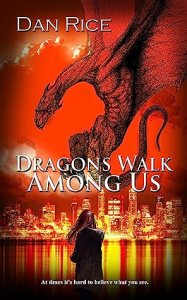
I’m about to eat my own words. In a previous post, I talked about how important a good cover and blurb are to convince potential readers to buy your book. Well, I put Dragons Walk Among Us by Dan Rice on my to-be-read list based on the title alone. I read it in an email (Dan is also with The Wild Rose Press), and put it on my list right away. I didn’t see the cover until I started following Dan on social media. I have never read the blurb. 

Allison Lee is an angsty teenager who participates in environmental rallies, takes photos for the school newspaper, and is navigating her feelings for her crush. In addition to typical teenage drama, Allison also deals with racism as a biracial Chinese American. Her best friends, Dalia and Haji, stick with her through her ups and downs. 

Allison is friends with a homeless veteran named Joe. One night, on her way to visit him, she is attacked. She wakes up in the hospital a couple weeks later completely blind. She lost her spot in her school’s social standing during her coma, and with her blindness, risks never regaining it. Her father introduces her to the creator of an experimental procedure that could give her eyesight back. Allison agrees to it, and after a few more weeks of surgery and healing, she is finally back at school with her friends.

There are a few unsavory side effects to Allison’s new eyesight, but the one she was not prepared for is a giant holographic dragon following her father’s colleague around. Allison makes the bold decision to tell the professor that she can see his dragon. Her confession pulls her into the world of dragons and an impending war with their enemies, the skaags. 

Dan Rice expertly wove Allison’s human struggles into the tensions of the dragon community. The bigotry and prejudice Allison faces as a biracial human also plagues the dragon world in its own way. Allison was abandoned by her mother at birth, allowing her to bond with dragon characters who also struggle with feelings of abandonment. 

Mr. Rice also captured the American teenager perfectly. Allison is quick to anger, quick to love, and quick to react. She struggles with self-esteem about her personal appearance. And she is passionate about her interests. Her friends, and even her enemies, are all believable high school students that I can see in my classroom. 

I thoroughly enjoyed each and every scene, and I can’t wait to read the sequel. 

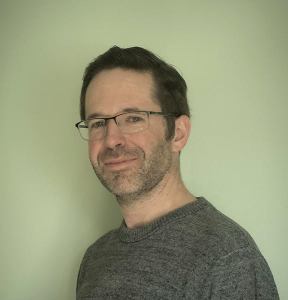
In addition to my review, I am pleased to introduce Dan Rice, who kindly granted me an interview:

First, would you introduce yourself as a person and a writer?

Hi, I’m Dan. I pen the young adult urban fantasy series The Allison Lee Chronicles in the wee hours of the morning. The series kicks off with my award-winning debut, Dragons Walk Among Us, which Kirkus Reviews calls, “An inspirational and socially relevant fantasy.”

While not pulling down the 9 to 5 or chauffeuring my soccer fanatic sons to practices and games, I enjoy photography and hiking through the wilderness.

What inspired Dragons Walk Among Us?

I wanted to write a book from a relatively young age. I grew up reading fantasy and science fiction and naturally gravitated toward writing those genres. For a long time, I wanted to write gritty epic fantasy like Game of Thrones or Joe Abercrombie’s novels. Eventually, I discovered my authorial voice is more suited to young adult material.

The opening scene in Dragons Walk Among Us was inspired by my older son being harassed for his biracial appearance at summer camp. Allison’s encounter with Leslie grew from that seed, and the rest of the story flowed from there.

There is a lot of great racial diversity in Dragons Walk Among Us. Was this a conscious choice? Or did the characters tell you who they were as you created them?

My sons’ schools are far more diverse than the institutions I attended. I wanted to write a story that would ring true with young adult readers. So I created a diverse cast to match what I observed at school events and read in news articles about the increasing diversity across the United States.

You did an excellent job portraying the angsty teenager. What experience do you have with teenagers and/or what research did you do that helped you bring these believable characters to life?

Well, people were all or will be teenagers, angsty or otherwise, at some point in life. My oldest son still isn’t a teenager, but he’s been acting like one since about the age of eight. I often imagine what his antics might be like if he were a bit older.

Allison describes dragons as “European” and skaags as “Chinese”. In your worldbuilding, are both creatures somehow related?

The original skaags were laboratory creations the dragons made to hunt down rebels. The draconic empire deploys magic to bind the skaags as loyal soldiers. The magic is believed to be unbreakable.

The third book is coming out soon. Is this the end of Allison’s story, or does she have more adventures ahead of her? What’s next in your writing career?

The entire series will be four books. Right now, I plan to participate in a haunted high school series my publisher is doing. After finishing those projects, I will try penning a dystopian novel.

Follow Dan at his website: https://www.danscifi.com/