New Release: Indigo by Karen Hulene Bartell

I had the honor of being an ARC reader for Indigo by Karen Hulene Bartell. Let me tell you, this book earned its 5 stars. Indigo starts off with the popular being-left-at-the-altar beginning; and then it goes in a completely different direction. With perfect timing, our main character Raluca learns that she has inherited a cabin from a deceased aunt she didn’t know existed. While attempting to clean the place up in order to sell it, Raluca uncovers family secrets, curses, and diseases. Intertwined with these investigations is the brewing of a new relationship that can mend her broken heart.

I loved that the paranormal aspect of the story focused on windigos. In a world of vampires, werewolves, and dragons, I thought this was a wonderfully unique choice for the monster. Karen also really leaned into the suspense in a way that I enjoyed. It’s been a long time since I’ve read a story that made me read with the lights on. The non-romantic parts of the plot stood well on their own. I didn’t feel anxious to get back to the romance like I have experienced with other stories. All around, this was a great read, and I highly recommend it.

In addition to my review, I have interviewed Karen, so let’s give her the floor!


Can you introduce your story, world, and characters?

Starting over after a broken engagement, Raluca Olson inherits a Northwoods cabin from a mysterious relative. Bloodcurdling shrieks, hanging trees, and stories of hellhounds make the log cabin inhospitable, but then she meets Dylan McCoombs. The attraction is immediate and mutual as he answers questions about her Grand Aunt Winny. He also shares the Anishinaabe legend about windigos. Some believe they’re spirits that inhabit people. Others say they’re simply morality tales for children about social taboos like cannibalism or incest, but psychiatrists define the concept as a culture-bound syndrome.

Raluca wants to flip the cabin quickly and resume her life in Chicago. But realtors contend that the rustic cabin needs an overhaul, and she is short on funds. Dylan helps her renovate, and as they spend time together, the magnetism evolves into a relationship.

During renovations, she discovers a diary and scrapbook that offer clues about her aunt, the area’s founding family, and a “certain family member” that never left. Gradually, she learns she’s related to the Marchands and “all the Marchand women are carriers, but the men bear the family curse.”

What is the family curse? The diary reveals that the family suffers from hemophilia and porphyria. But the journal suggests that a third inherited trait is passed from one generation to the next…something evil…

Because porphyria leads to anemia and causes acute light sensitivity, sufferers are pale, which is why porphyria inspired vampire stories. Another symptom of porphyria is excessive facial hair, which caused the disease’s association with werewolves. When the European settlers’ folklore collided with the Anishinaabe legend of the windigo, the Marchand myth was born.

Is a windigo an unclean spirit, a morality tale, or a culture-bound syndrome? Is that what’s leaving gutted animals on her doorstep?

Grappling with bloodthirsty prowlers, unscrupulous realtors, and neurotic neighbors isn’t challenging enough. Just when Raluca relearns to trust her instincts in a new relationship, her blindsiding ex arrives with an engagement ring and an attitude.

How does this HEA unfold? Raluca must solve an eight-generation mystery of family dysfunction, as well as deal with greed, murders, meth labs, and forest fires to marry the man she loves. Then, just as she discovers marital bliss, a package is delivered.

That sounds like a lot of twists and turns! What inspired this story?
Three years ago, we moved into a new neighborhood, where I’d walk my dog past a nearby cemetery. Each day,  I’d see more elements for a story that was slowly developing: a “devil’s chair;” a creaky, hanging sign; a bare patch with just a footstone, a “hanging tree;” swerve marks on the road beside the cemetery; a mailwoman who chewed and spit; and a neighbor whose family suffered from hemophilia and who swore some of the events (that I ultimately wrote about in Indigo) actually happened to her in another cemetery. Elements of truth embellished with an overactive imagination is how Indigo came to be.

I love how much of our lives make their way into our stories. Can you give  us a brief look at your writing process. Are you a plotter or pantser? How much time did you spend on this project? What is your writing schedule like?

I’m definitely a pantser – although I did plan Indigo a tad with a story arc, and it took about 18 months to write. I try to write every day, but sometimes it’s 350 words, and other days, when I’m on a roll, it can be 4-5,000 words.

Who are you outside of writing?


I’m a Master Naturalist, a Master Gardener, and a member of the Native Plant Society of Texas, so it seems I’m always outside – gardening, kayaking, hiking, or helping with the various projects, plant sales, and flotillas. I walk our dog Tory every day, and my husband and I sing in the church choir every Sunday.


Meet Karen and her latest book, Indigo.
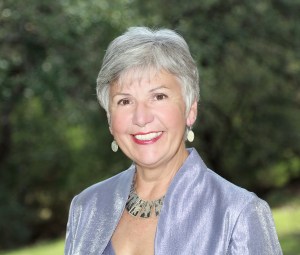
The author of 29 published books and Indigo (https://www.goodreads.com/book/show/249818067), Karen Hulene Bartell was born to rolling-stone parents who moved annually. Her earliest playmates were fictional friends in books. Paperbacks became her portable pals. Ghost stories kept her up at night–reading feverishly. Novels offered an imaginative escape, and she began her first novel at nine, learning the joys of creating her own HEAs. Professor emeritus of the University of Texas at Austin, she lives in the Texas Piney Woods with her husband and *mews*–three rescued cats and a rescued CATahoula Leopard dog.

Reeling after her fiancé dumps her, Raluca Olson inherits a rustic cabin from an unknown relative. Eerie incidents and rumors of a mythical windigo alarm her, but she’s determined to learn the truth about her dysfunctional family before she flips the property.

Despite unscrupulous realtors, bloodthirsty prowlers, and a devious ex, her life improves with a rescued puppy, and passion ignites when she meets Dylan McCoombs, but…

What does a demonic half-beast share with a psychosis and porphyria? Are monsters born or formed? Nature or nurture? Is a windigo spirit genetic? More importantly, does she carry the gene?

Stay up to date with Karen at www.KarenHuleneBartell.com/
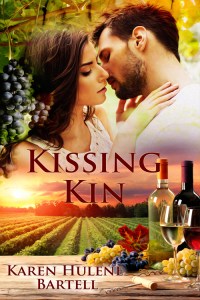
New Release: Kissing Kin by Karen Hulene Bartell

Maeve Jackson is starting over after a broken engagement—and mustering out of the Army. No job and no prospects, she spins out on black ice and totals her car.

When struggling vintner Luke Kaylor stops to help, they discover they’re distantly related. On a shoestring budget to convert his vineyard into a winery, he makes her a deal: prune grapevines in exchange for room and board.

But forgotten diaries and a haunted cabin kickstart a five-generational mystery with ancestors that have bones to pick. As carnal urges propel them into each other’s arms, they wonder: Is their attraction physical…or metaphysical?

The idea for Kissing Kin first came to me during 2020 because of the striking similarities between Covid and the Spanish Flu of 1918, but publishers convinced me no one wanted to read about pandemics. Time passed. 

Then I noticed a handmade cookbook my grandmother had constructed during the depression. It’s made of two cardboard flaps reinforced at the edges with duct tape and held together by two metal ring binders. That book inspired me. (I used some of its recipes in Kissing Kin, for instance, Simple Sponge Cake, Mother’s Soft Gingerbread, and…the treatment of chicken lice with nicotine-sulfate.)

The general tone of the cookbook, which was meant as a Christmas present during the 1930s, was chatty. It read more like a diary than a book of recipes, and it motivated me to begin writing Kissing Kin.

If wishes were fishes, Kissing Kin would be made into a movie. I realize that’s a longshot, but it never hurts to dream. On that note, Maeve, the female protagonist for my Kissing Kin dream cast would have to be Millie Bobby Brown because of her amazing acting range. With her talent, she could pull off being an M2 Bradley driver in Afghanistan and the unwitting spectator to specters. 

The male protagonist would have to be Timothée Chalamet. Not only is he a heartthrob, but he’s a versatile actor, whether the genre be drama, comedy, or action. I can see him as the struggling vintner, who makes Maeve a deal. On a shoestring budget to convert his vineyard into a winery, he offers her room and board in exchange for pruning grapevines.

And for your enjoyment, an excerpt:

Grandma’s bedtime stories echoed through my mind as I sped west on I-10. At an early age, family history had merged with myth until the name Fort Lincoln was as legendary as Avalon or Middle Earth.

But when the snow-covered peaks loomed closer, their reality was undeniable. Maybe her stories weren’t tall tales…

And what about her proverbs? “Idle hands are the devil’s workshop.” I winced. No job and no prospects. Mustering out after a five-year Army stint, I had to ask myself: What next? Where next?

Cody slipped into my thoughts, but I dismissed him, refusing to romanticize our breakup.

A troop of cavalry soldiers galloped toward me from the nineteenth century, but a second glance proved the images were metal cutouts–two-dimensional illusions that resembled an officer and guide leading two columns of cavalrymen.

The silhouettes evoked tales of my great-great-grandfather, Ben Williams. Beginning his military career as a scout, he’d been field promoted during combat, then commissioned as Second Lieutenant at Fort Lincoln.

I smiled, proud of our similar career paths. Maybe Grandma’s stories influenced me more than I realized.

Leaving the Interstate, I turned south. Road signs noted towns that sounded familiar from family stories but seemed as mythical as Camelot or Tintagel Castle.

Closer now, the mountains’ features came into view. No longer mere outlines on the horizon, each craggy palisade and butte towered over the highway. Fluffy hoarfrost transformed the landscape into an icy spectacle, with flaky, crystal shards overlaying each leaf and every blade of grass. A frozen fairyland! Just the way Grandma described it. Inspired by the raw beauty, I straightened my shoulders. Maybe I’m viewing my discharge the wrong way. Instead of adrift, maybe I’m free…

Kissing Kin can be purchased here: https://books2read.com/u/boXl10

Author of the Trans-Pecos, Sacred Emblem, Sacred Journey, and Sacred Messenger series, as well as Kissing Kin, Fox Tale, Wild Rose Pass, The Keys: Voice of the Turtle and more, Karen is a best-selling author, motivational keynote speaker, IT technical editor, wife, and all-around pilgrim of life. She writes multicultural, offbeat love stories steeped in the supernatural. Born to rolling-stone parents who moved annually, Bartell found her earliest playmates as fictional friends in books. Paperbacks became her portable pals. Ghost stories kept her up at night—reading feverishly. The paranormal was her passion. Novels offered an imaginative escape. An only child, she began writing her first novel at the age of nine, learning the joy of creating her own happy endings. Professor emeritus of the University of Texas at Austin, Karen resides in the Texas Piney Woods with her husband Peter and her mews—three rescued cats and a rescued *Cat*ahoula Leopard dog.98

Connect with Karen at her website: https://karenhulenebartell.com/

My Grandparents’ WWII Love Story by Lee Ann Sontheimer Murphy

She was a widow with four children, ages sixteen to three, struggling to make ends meet after losing her husband in 1943. Edna Neely had grown up in a fine house, with a fur coat, and her own car at 16 but her world crashed when the stock market did. Everything was liquidated to pay her father’s debts when the banks failed. 

He was a farmer, older than the average soldier, and the “kids” serving in his unit called him Pop. Until he joined the Army, because he didn’t wait to be drafted, Claude Roberts lived near the small farming community of Fillmore, Missouri. Fillmore has fat farmland; fertile fields raise some of the state’s finest corn and soybeans. Surrounding farms produce cattle and hogs for the livestock market. In my grandfather’s day, nearby St. Joseph, MO still ranked as the third largest packing site in the nation.  He came from a large family but my grandmother was an only child.

After she married, my grandmother found a lifelong best friend in neighbor Margie Violett. The two young woman both had young children at home. They bonded over recipes, shared neighborhood gossip, and the age-old effort to understand the men they married.

After my grandmother was widowed, she joined the war effort. She volunteered her time at a local USO canteen and even though she hadn’t planned to find another husband, she was soon dating young men stationed at Rosecrans Field, an Army Air Corps based nearby. More than one proposed marriage but she declined, satisfied with her children and life.

Several of her cousins were away serving in the war and she wrote letters to each of them. When Margie suggested she add her Uncle Claude to her pen pal list, she did. Edna and Claude wrote numerous letters. She detailed her everyday life on the home front and he shared what he could of Army life in the Pacific Theater of war.

Despite the differences in location and background — she was raised in the shadow of the Missouri Capitol in Jefferson City, Missouri and he came from an Andrew County farm – they found common interests. My great-grandmother, Edna’s mother, also hailed from the Fillmore area. They poured out their hearts about music, life, and fell in love by letter.

When V-J Day came, the war ended and Claude would be coming home. They wrote about meeting in person but my grandmother never expected it to play out the way it did.

She woke up one winter morning to find a man, rolled up in his overcoat against the cold, on the porch asleep. It turned out to be Claude. When he’d gotten as far as St. Joe, he headed for the address he knew from the letters but since it was late at night, he decided to wait until morning. By the time my grandmother opened the door, he was nearly frozen.

Grandma invited him in, served him breakfast, and fell the rest of the way in love. They married a few months later and he became one of the best grandpas a child could have.

That’ s a real life love story. I write romance, from sweet to heat but I often draw on actual inspiration from my long relationship with my late husband or other family tales.

You can find my books on Amazon and elsewhere. https://www.amazon.com/stores/Lee-Ann-Sontheimer-Murphy/author/B004JPBM6I

And you can read my ramblings and writings on my blog here: https://leeannsontheimer.blogspot.com/

A Boy Carrying a Watermelon by Kitty Shields

The original Kitty Shields was a titan at 5”0’. She could convince the tides to turn left and guilt the devil into helping her clean the house. She was a force of nature, and also my mommom. As with most love stories, this is as much legend as truth. But let me tell you a romance that started with a boy carrying a watermelon down the street.

Kitty Shields and Joe McElhenny grew up in the same neighborhood in South Philadelphia—both products of a strong Irish Catholic upbringing in a close-knit community. He was seven years older than her, so for the early part of their lives, they ran in different circles. Until one June morning when an eleven-year-old girl struggled to carry a watermelon twice the size of herself down the steep hill to her house. And a gallant eighteen-year-old boy offered to carry it for her. She never forgot that morning or the kindness of that boy.

The two continued to circle each other. As these things usually happen, Kitty grew into a beautiful woman. When she was about seventeen, she walked by a group of young men loitering out on their front steps. Joe saw her and called out, “Kitty, can I walk you home?” She looked him dead in the eye and said, “You look fine right where you are.” Because nothing says romance like telling the boy you like to stay the hell away from you. Years later, Kitty admitted her mouth sometimes went a little too fast for her head.

Soon after, Joe joined the Navy. It was 1938 and the U.S. had not entered WWII yet. In fact, his ship, the U.S.S. Canopus, pulled out of Pearl Harbor ten days before the attack that would take America into the war. In 1942, the U.S.S. Canopus was assigned to the Philippines, where the crew served and repaired submarines and other ships. After the surrender at Bataan, the crew scuttled and sank the Canopus rather than giving it over to the enemy. Along with over two hundred other members of the crew, Joe was taken prisoner and held by the Japanese for two years.

Meanwhile, Kitty took a job as an administrator at the Philadelphia Naval Yard. More than most, she was aware of what the war really cost in terms of lives. And like many people during that time, she had put her life and dreams on hold. But after the war was won, Kitty made a decision that she was ready to get married and she went looking for a certain boy that she remembered from the neighborhood. Using her connections at the navy, she tracked him down in the middle of the Pacific where he had been assigned on the U.S.S. Missouri.

Joe was out at sea when he received a letter from home, a letter in handwriting he didn’t recognize. He tore it open, worried about what news might be inside. After scanning the contents, he jumped up and headed out of the room where his friends were. They called after him, “Bad news, Joe?” He stopped long enough to grin back at them and say, “No. Best news of my life.” Then he ran off to write his reply.

After that, Kitty and Joe corresponded, getting to know each other and growing a healthy respect and affection for this person that neither had set eyes on in years. When Joe’s ship finally returned to Philadelphia, they dated properly. On the third date, Joe asked Kitty to marry him. She looked at him dead and said, “You’re insane. People don’t marry after three dates. We have to wait a while.”

“Well, what’s a while?” he asked.

“A year,” she said.

“Okay.” He shrugged. “I mean, I already know, but I’ll wait forever if that’s what you want.”

She didn’t make him wait forever. She did make him wait a year, though. At long last, they were wed, and Joe was transferred to the naval yard as a legal officer. Now, Joe was a bit sluggish in the mornings. And one morning he was being particularly slow to get out the door. Kitty threatened his life if he didn’t get his behind moving and get to work. She was eight months pregnant with their first, and a little ungainly and a lot uncomfortable.

He looked at her and said, “I’m afraid to leave you. What if you fall and I lose you? I can’t handle that.” She patted his cheek and stood on her tip-toes to give him a kiss and told him she’d be fine. And to please, get the hell to work.

Some love stories are epic. Some love stories are tragic. And some love stories are about falling in love with your husband all over again because he hovers over you while you’re pregnant. Kitty said she never forgot the way he looked at her that morning and knew she’d made the best decision of her life. Joe said he never loved anyone else. This is a love story that started with a boy carrying a watermelon down the street.

By: Kitty Shields (the younger)

About the Author: Kitty Shields (she/her) lives outside Philadelphia, where she writes to overcome the fact that she was born a middle child with hobbit feet, vampire skin, and a tendency to daydream. In her spare time, she binds books, takes bad photos, and dodges the death traps her cat sets.

You can check her debut novel Pillar of Heaven from Amazon here (https://www.amazon.com/dp/B08GFV95K5). It’s a Tale of Assassins, Telepaths, & Lattes:

With the holidays looming and student loans coming to call, Kate McGovern needs to find a good-paying job and fast, preferably away from the masses of caffeine junkies and coffee snobs at her current job. But finding a job sucks. Finding your first proper job after college when you have no experience and no idea what you want to do really sucks. Then Kate’s favorite customer puts her up for an executive assistant gig with one of the richest men in Boston. And suddenly, Kate’s luck has changed. The catch? Her new boss expects her to read his mind. Literally. And she’s pretty sure he’s evil. No big deal. First jobs are always tough, right?