New Release: The Passenger by Joie Lesin

Joi Lesin’s debut novel The Passenger came out last month, and I am excited to introduce her and her Paranormal Historical Romance to you.


Let’s start with what is The Passenger about?

Elizabeth Reilly is twice haunted. She not only keeps the memories of her late husband, a casualty of World War II, close to her heart but she also inherited the ability to communicate with the spirits of the dead from her mother. 
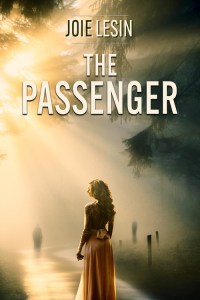
When she aids a dying man, Paolo Clemente, in his last moments of life, she launches on a journey that will forever change her life and the life of the family Paolo left behind. After befriending Paolo’s ghost, Elizabeth travels to California to help him find peace. There she meets his son, Giovanni, who has recently returned from the war in Europe. Gio, as he is known by those closest to him, is only just settling back into his post-war life. When Elizabeth arrives, bringing news of the father he never truly knew, Gio is suspicious of both Elizabeth and her story.

The Passenger is a historical paranormal romance that explores the themes of love, grief and discovering who we truly are. These things are set against the backdrop of paranormal historical and picturesque settings that transports the reader to another time and place. Add to that, the characters are forced navigate the challenges of long hidden family secrets, matters of the heart, and the supernatural.

For me, the setting is as much of a character as the people who populate the story. The Passenger takes place in Cana, a fictional town nestled somewhere in California’s wine country. It’s a town where there’s so much more than meets the eye. 

To visit Cana, you must travel over winding roads bordered on both sides by green, rolling foothills and tall, sun filtering conifers surrounded by native plants. Along the way, the ancient trees part to reveal estates of all sizes. Here, a vineyard displays rows of grapes ripe for the picking. There, a ranch complete with cattle grazing the hillside. This is where you’ll find the vineyard Paolo Clemente bought after immigrating from Foggia, Italy to America. 

History and the paranormal are my two favorite genres. What inspired this story?

The inspiration for Elizabeth, Paolo, and Gio’s story came to me when I was 16 years old. I was on the city bus on the way home from school playing the “What If” game, making up stories for random passengers. 

On this particular day, I noticed a man sitting at the back of the bus who seemed a bit down on his luck. I wondered, what if he were alone in the world? What would happen if this man collapsed there on the bus? Would he die right there on that bus alone? What if I, or someone else, comforted him in his dying moments?

The tale blossomed from there until I finally sat down to write it 16 years later.

That’s amazing that such a seemingly small moment stuck with you for so long. How does that affect your writing schedule?

As a writer, I find I am a combination of a pantser and plotter—I puzzle together rather than plot my stories. For me this means I spend a significant amount of time thinking about the story. I tend to work out the story in my head like a problem that needs to be solved. This also means that part of my writing routine may look like I am just staring into the sky, but I am working hard—honestly.

All of my stories start with a single scene. Most of the time when that scene first comes to me, I don’t yet know the characters, but I see a moment in time. From there I treat it like a puzzle. I discover who the characters are by writing the opening and closing scenes. From there, I write to discover what has to happen to lead them from that opening to the single scene that birthed the story for me—and how to progress forward from that pivotal moment to the closing scene. Any plotting I do happens a scene or two at a time. It may not sound like it but it’s both organic and methodical for me.

I am, and have always been, a night owl. So, when I’ve gathered enough of the story elements together in my head, I sit down to write, usually, at night. Why? Because my creativity is most alive under the moonlight.

Welcome to the night writer’s club! When you aren’t writing, who are you?

Outside of writing, I am many things—a wife, mother, stepmother, daughter, sister, and friend. Until three years ago, I was also a Business Analyst, but now have the opportunity to focus on my writing full-time. 

For grounding myself, I simply love to lose myself in books and always have—both reading and writing them.

For fun, I take pictures and share them on social media. I’m always on the lookout for a view that’s new to me. I’m also a novice ukelele player. By this I mean, I’ve been learning how to play for the last four years. My husband did restring my ukelele for lefthanded playing, so I think I should get the hang of it one day soon—maybe. Which leads me to say, aside from books, one of my biggest interests is music. I have an eclectic taste, but my favorite to listen to by far is indie rock—80s and current.

I think anyone who can play a musical instrument is awesome. What’s next in your writing career?

 I am currently working on two projects at once. 

The first is a story that takes up where The Passenger left off. Like its predecessor, Watch Over Me is a ghost story and answers some questions left open at the end of The Passenger. This paranormal romance takes place in 1968 and tells the continuing story of Elizabeth’s daughter, Bella. What was the inspiration? A scene of Bella running through the vineyard with someone—or something—in pursuit while the earth trembles.

I’m also working on a mermaid novel that explores the relationships between sisters, mothers, and daughters. I’m very excited about this story and cannot wait to share more about it. 

First though, my ghosts are calling and want their stories told.


Minnesota-based author, Joie Lesin is a life-long fiction writer and the author of The Passenger. She has long been fascinated by anything otherworldly including ghosts. She loves to write a good ghost story—especially when it includes a touch of romance.

Originally from Massachusetts, at six years old, Joie moved to her mother’s birthplace, Minnesota. By eight, Joie lost her New England accent, however, it’s gradually returning as the years go by. She grew up in Minneapolis but now resides in St. Paul with her husband and their blended family—which includes a rambunctious grand-corgi.

Joie misses the ocean, but she often finds herself walking by one of Minnesota’s many lakes and travels to one of the coasts as often as she can. In fact, she considers California her home away from home. When she’s not writing, reading, or walking, you can find her listening to music. She absolutely loves music—especially live—and songs have sparked most of her story ideas.

Follow her at her website: https://www.jlesin.com/

She’s a 1940s ghost whisperer. He’s the son of a ghost.

Burdened with her empathic gift, Elizabeth Reilly wants to be free of it and fit in with normal people. Nevertheless, when the spirit of an old man asks for her help, she travels across the country to help him return home. Gio Clemente is still angry with his father who abandoned him as a child. To help the father pass on, Elizabeth must persuade Gio to let go of his anger. Though he resents her intrusion, they are both stunned to find themselves fighting a profound attraction. Elizabeth can accept his headstrong brand of love, but can Gio accept her gift—and believe in her?

The Passenger, a 1940s ghost story set in the California wine country, tells a tale of family connections, life-changing choices, and love—lost and found.

The Passenger is available now: https://www.jlesin.com/thepassenger
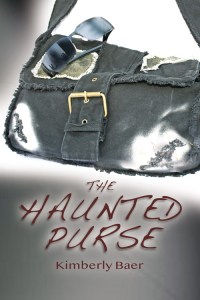
What YA Stories Can Teach Us: The Haunted Purse

I’m currently reading the Junie B. Jones series to my 6 year old (I know the title says YA, I have a point, I promise), and my adult eyes view Junie B. in a whole new light. It makes me sad that almost every adult in her life is so impatient with her and jumps to punishment right away instead of finding the root cause of Junie B’s behavior. There are two adults who treat her well and actually listen to her: Principal, and Grampa Frank Miller, but talking about those two is for a different post. 

Like with fiction’s funniest kindergartener, I’ve had a different reading experience with YA stories now that I’m a parent and I teach high school. And I’ve started to see three common messages in the recent YAs I’ve read: how adults treat teenagers is important, see something-say something, and honesty really is the best policy. 

As I dive into these lessons, I would like to use The Haunted Purse by Kimberly Baer to dive deeper into these themes. 

First, let’s get you on board with the plot and characters of The Haunted Purse.

Libby Dawson is our main character. She is a 15-year-old Sophomore, and her story begins during the second half of the school year. She just purchased a new (to her) purse from her local thrift store, and her purse keeps making things disappear. After she sweats for an hour or so, her purse will magically return it. This Mary Poppins purse causes problems between Libby and her Physics teacher, and Libby and her mom. On the flip side, the purse also helps her overcome her bullies and protects her from an assault the school’s heartthrob has planned for her. 

Libby eventually figures out that the purse is not magic, it’s haunted. The ghost of the previous owner has possessed the purse, and she wants Libby to solve her disappearance and murder. One big problem: this is a cold case from over twenty years ago.

Libby’s best friend, Toni, gets to witness the purse in action and happily becomes Libby’s sidekick in solving the case. The two girls put themselves in dangerous situations, leading to Toni getting grounded for the rest of the summer, and now Libby has to finish the case by herself – which ends up being more dangerous than Toni’s ridiculous idea that got her grounded. 

Now that you’ve got a feel for the story, let’s dive deeper into our three messages.   

How educational professionals treat each student is important. 

The opening scene is Libby losing her position as her Physics teacher’s “favorite student”. An essay is due, and Libby has to tell her teacher, “My purse ate my homework.” Her teacher doesn’t believe her, and embarasses her in front of the whole class. At the end of the class period, the purse returns the essay to Libby, and she tells her teacher she found it and asks if she can turn it in. Her teacher says yes, but the damage is done. She stops treating Libby with respect and compassion. Libby is the narrator for her story and informs the reader that this teacher is obsessed with being the fun teacher for the popular kids, plus has a few prized academic students. Libby used to be one of those prized academic students, but after this one mistake, she’s now a peasant, especially since the popular kids already bully Libby. 

I had a teacher like that in high school. Not to the extent of bullying students, but he was focused on keeping the popular kids entertained, and it caused him to let the rest of us fall through the cracks. 

In another scene, Libby is planning the rest of her high school career with her school counselor, and he is very condescending about Libby’s socioeconomic status. He basically tells her that her only chance of going to college is to be a straight A student so she can get scholarships. While what he said was factually true, Libby already knew that about herself, his delivery was so gross and judgmental. 

So, the takeaway from these two scenes is that teenagers – and young people in general – are very aware of their surroundings. They can absolutely tell how adults feel about them. And adults who have a stewardship role over minors need to be a safe person.  

See something, Say something.  

A big part of Libby’s character arc is that she is “the girl who raised herself.” Libby’s mom, Misty, had her when she was a teenager, and Libby has never known her biological father. Misty did not want to be a mom that young, and resented Libby for taking away her young adult years. So when she meets a man who claims he doesn’t like kids (at least, that’s what Misty tells Libby – I have my own theory), Misty moves in with him and leaves Libby in their apartment. Misty stops by occasionally to give Libby money for groceries, rent, and other bills; but other than that, Libby is literally living by herself. The entire apartment complex knows this, and no one does anything about it. Libby doesn’t want to end up in foster care, so she is fine with everyone else’s silence. But no one caring about her whereabouts is going to be a problem when she finds herself at the mercy of the villain.

Obviously, the plot would not have gone the way it did if one of Libby’s neighbors called social services the minute Misty abandoned her daughter. But in real life, these kinds of situations are not okay.  

Honesty really is the best policy.  

Almost all of the characters lie at some point. Most of them are lies by omission. The one I want to highlight, I’ll have to be vague on because it’s part of the resolution. So one of the characters who was close to the ghost when they were alive blames themself for the victim’s disappearance. They knew the ghost (when she was alive) was doing something they weren’t supposed to, and kept their secret for them. Twenty years later, they’ve still kept that information a secret because they feel so awful. Like most blame plotlines, if they’d confided in at least one other person, they would have learned everything was all right, and they weren’t responsible. 

We all need at least one person whom we can be completely honest with. 

So with these common lessons in YA stories (and let’s be honest, most stories), the plots would not be as developed and the stories would be over too quickly if these types of mistakes weren’t made. But the lessons learned from them are great for real life.

And this is one of the many reasons that The Haunted Purse is a worthy 5 star read. The story is intriguing, the characters are realistic and relatable, and the lessons learned are applicable. 
Have you read The Haunted Purse? What were your thoughts on it? What other stories like it would you recommend? Let me know in the comments!

How to Put a Ghost in a Romance: Bound Across Time

Four years ago, I learned the rules of romance writing. There are two very important requirements for a story to be considered a romance:

  1. The main plot must center around the relationship between the love interests.
  2. It must end with a Happily Ever After or Happy For Now. 

I struggled with rule #2 for about a year (check out how I overcame that in a previous blog post), but once accepted, I had a big question: How do you make this work with ghosts? If one half of the couple is a living person, and the other half is a ghost, how are they going to have an HEA?

Part of my confusion came from reading an incorrectly labeled paranormal romance. First off, the main plot was not the relationship with the (ghost) love interest; that ended up being the side plot. Second, the main character is not reunited with their ghost love interest until decades after the main story ends when they die of old age (think the reunited scene of Jack and Rose in Titanic). That didn’t really feel like an HEA to me. 

So, like the emotional teenager I sometimes act like, I stayed away from ghost stories until Bound Across Time by Annie R. McEwen fell into my lap. This is a paranormal romance worth reading.

Let’s start with our living character, our female main character: Celeste Gowdie (a.k.a. CeCe). CeCe’s mother died when she was young, and she was raised by her aunts in the U.S. state of Georgia. CeCe doesn’t know who her father is (this is important for one of the reveals toward the end). She studied history in college, and is working in St. Rhydian’s castle in Wales when the story begins. CeCe wants to be taken seriously as a real historian, but she ends up being the American tour guide who gets to research and share ghost stories to the patrons. 

Patrick O’Loinsigh is the bastard son of one of the historic Lords of the castle. He was born in Ireland in the 18th Century, educated in Paris, and forced to move to his father’s castle during his early adult years. His father used him to do his dirty work since Patrick wouldn’t be inheriting the title. Patrick is murdered by his half brother, and his spirit spends the next few centuries hanging out in the in-between waiting for the living soul who matches a prophecy meant to free him.

Patrick and CeCe have a meet-cute of epic proportions. Patrick lures CeCe to the top of the tallest tower by turning on a battery operated candle. CeCe can’t lock up the castle and go home until all lights are turned off. So after a literal hike, CeCe comes across a handsome man in 1700s clothing. Patrick scares CeCe so bad that she faints. 

It takes CeCe several days to believe Patrick that he is the ghost of the handsome man in the gallery of the castle’s historic inhabitants. At first she thinks he’s a loiter pretending to be Patrick O’Loinsigh. But when she finally believes him, she falls, and she falls hard. 

The local witch coven gets involved, CeCe’s aunts get involved because… family secrets! (That I’m not going to spoil.) Everyone wants CeCe to stay away from Patrick for her own good. Of course she doesn’t listen, and she embarks on a passionate and steamy love affair with Patrick. 

Well, it turns out that when a living person spends that kind of time with a ghost, their literal being starts to disappear. So now, CeCe and Patrick have a difficult decision to make: go their separate ways to save CeCe’s life, or research if magic can help them. 

And that’s where I’m going to leave you with this story, because you’re just going to have to read it yourself if you want to know how it ends. But the ending is soooooo worth the emotional turmoil that Ms. McEwen is going to put you through. 

These kinds of stories always have to have “rules of magic” and the rules of magic that Annie created were very cool. When Patrick and CeCe meet up, the room they are in reverts back to the way it was when Patrick was alive. When Patrick leaves, the room returns to its modern-day look and feel. When they are together, they are neither in the past nor present – though they are closer to the present, because humans could hear CeCe if they came by the room. 

There also appears to be two different “types” of magic. There’s a traditional witch who can cast spells and make potions and such. Then there are people born with “gifts”. CeCe is born with a gift that allows her to see and hear Patrick in the first place. (For more details on that, read the book!)


And to finish off this review, here is a Q&A with the author herself:

In your planning, what came first: a story about witches? Or a story about ghosts?

Door Number Three: a story about a castle! Because, when I conceived the book, I was living in a small Welsh town that is graced by a very old and beautiful castle. I spent a lot of time thinking about the people who passed through those halls and gardens. Were any of them still there? So, yes, I suppose the ghosts came first and everything else followed. 

What historical people, places and facts are true? What did you embellish or fill in the holes?

The town, the witches, the historian who’s forced to resort to ghost walks since history doesn’t sell, the castle, the stone circle a few miles out of town, the Welsh coast almost within sight of Ireland, the family who kept secrets, the work of people – archivists, admins, docents, conservationists – at an historic site: all those are fact-based, along with the many casually dropped references to and stories about the past as viewed by both a modern historian and a ghost who died in the mid-1700s. Beyond and embracing those is the truth of protagonist CeCe’s life and work; just like her, I’m a career historian who lived in a small Welsh town and met the astoundingly warm and quirky inhabitants, worked in the local castle, visited the stone circle. The things I changed were the ghost (whom I never met, more’s the pity) and the names and actions of both CeCe and the locals. Oh, and the color-changing cat! Always wanted one of those but, alas, mine have all been the single-color variety. 

I’m guessing Aiofe’s story is next? Do you also plan on going back in time and also telling Gabrielle’s story?

Bound to Happen (Book Two of the Bound Series) does indeed follow Aoife/Fee’s story. It involves a radical change in setting, from a tiny Welsh town to London and, specifically, Covent Garden, where Aoife has a grant to research playwrights and poets of the 1600s. She’s lured to an abandoned theater by some urban exploring chums and…Well, you’ll have to read the novel to see what happens then! But in addition to new and very different secondary characters – Aoife’s Ghana-born flatmate and her ancestor priestess Mom, along with some skeptical folks in the National Trust and Museum of London Archeology – characters from Book One re-appear, like Jana Smithbury-Tewkes (and her new color-changing feline, Rumpelstiltskin.) Through them, readers learn more about Fee’s Savannah family (still keeping secrets, as families do) and her life growing up with leathling-souler parents in 18th century Paris. As to Gabrielle Gowdie: while bits of her tale are woven into Bound to Happen, it’s in Boundless (Book Three of the series), that we hear from an aging Helene Gowdie (oldest of the original five sisters who included Gabrielle) about why and how the secret-keeping of Gowdie family began.

What’s next for your writing career?

More writing, more publishing! I’m contracted with four publishers (one in the UK, the rest US-based) for nine books, five of which are written, the rest in progress. I’m eager to push ahead with my series for the UK publisher, Bloodhound Books; it’s Victorian working class romance centered on the lives and loves of four women who work in a London corset workshop. If you liked Peaky Blinders, you’ll love The Corset Girls! I haven’t left paranormal romance behind, though; I’ve got a spine-chilling vampire romance story in Rowan Prose Publishing’s horror anthology coming out later this year. And I’m finishing a time travel historical romance set in 1910 Boston, New Orleans, and Wales. Several other WIPs are nudging me for attention, including a Regency romance comedy about the lengths to which an impoverished heiress will go to avoid an inconvenient marriage, an 1880s romance set in New Orleans’ back streets, and a novel of smuggling and love on the Kent coast in the 1740s. 


Annie R. McEwen has written a beautiful romance that brings past and present together in the most captivating of ways. She kept me guessing until the very end how the problems would get resolved. Very captivating and well-earned five stars

If Sookie Stackhouse Could Talk to Ghosts: Spirit in Tow

If Sookie Stackhouse could talk to ghosts and spoke her mind the first time, you’d have Marni Legend, the star of Spirit in Tow by Terry Segan.

I originally went into this book blind, and was hooked on the first page, having no idea what kind of story I was getting myself into. Marni is in the over 40 club, a divorcee, and she can see and talk to ghosts. Spirits visit her for help with unfinished business so they can move on. Her newest client appears when she’s trying to go to her own mother’s funeral. 

This opening scene shows us how her gift works. She can see and talk to ghosts when they make themselves known and visible to her. As her mother’s funeral gets underway, we learn that her brother can hear ghosts, just not see them. Her sister cannot see or hear ghosts, but believes they are there when her siblings talk to and about them. This is an inherited gift that Marni’s grandmother also had. Also, Marni and her sister being on the opposite ends of the ghost communicating spectrum has put them at odds for years, and there’s a lot of sister drama throughout the story. 

Marni’s newest client is named Gus, and it took him a long time to figure he was dead, decades to be exact. So Marni gets the pleasure of solving a cold case. Gus is selfish, crass, and as emotional as an overgrown toddler. He also gets Marni tangled up in a crime ring. But Marni has been given this responsibility to see souls to the other side, so she is firm and patient with him as she tries to help him – God bless her.   

While trying to help Gus figure out how he died, Marni meets a new paramour, Jake, who happens to be Gus’ older brother. Jake is the best written character, in my opinion. Every new scene with him gave me whiplash, but once again, in a good way. Terry Segan did an excellent job with him. She kept me changing my mind about him and guessing to the very end.  

Marni also has the chance to rekindle her relationship with her high school sweetheart, Kendal; creating a love triangle between her, Kendal, and Jake. Both Marni, and Kendal were burned by their previous spouses. They know each other, they are comfortable with each other. 

And I’m honored to end this review with a Q&A with Terry Segan herself.


I haven’t read very many ghost stories, so I had no preconceived expectations on world building. Can you walk us through your world building when it comes to what ghosts can and can’t do, who gets the gift, and how do ghosts find them?

Having read several books involving ghosts, I’ve noticed one thing each author does—set up their own set of rules. With so many paranormal stories available, I find it refreshing when a writer can add a new twist. The key is to remain consistent throughout the book or series. For my Marni Legend series, I wanted
the interaction between a ghost and the humans who see them to have a natural feel to the situation. Since I chose to have this as a family trait and occurring in every other generation, this enabled Marni to have knowledge of how to react. Since my character is in her late forties, this has given her decades of practice and self-assurance in her gift. In my books, the ghosts are able to recognize people possessing the ability to see them and vice versa. As far as finding the ghosts, the living come upon them in the general area of either their death or where their body lies.

As a reader, I found Gus extremely frustrating (but I DO love flawed characters, they keep the story full of promise). If I was Marni, I would have told him to take a hike and solve his own death. How did you create Gus as a character, and how did he influence the plot from your end as the writer?

Since I’m a pantser and not a plotter, I didn’t have a full picture of Gus’ character when I began. I knew there would be verbal sparring between Marni and Gus, and he would want to come off as a tough guy. I agree with you, Marni should have told him to take a hike more than once when he withheld important (read life- threatening) information on purpose as opposed to details he couldn’t remember. As his character developed throughout the book, I also wanted Marni to see his occasional soft side, that we know almost every tough guy has, despite trying to hide it. It’s those cracks in his armor that kept Marni wanting to solve his murder and free his soul. With Gus’ cast of associates still alive and kicking, it allowed
me as a writer to put Marni into a number of comical or dangerous situations that kept the story moving forward.

I see that your latest book, Manatee Soul, is a continuation of Marni’s adventures. How many adventures do you have planned for Marni and her siblings?

Manatee Soul has Marni and her sister, Gloria, going on a girls’ trip to Crystal River, Florida. While still told from Marni’s point of view, both sisters get equal appearance time. Right now, I don’t have a set number of books in mind. As long as I can conjure up fun storylines, I’ll keep the series going. I’ve begun writing the third Marni Legend book, and this one will feature her brother, Calvin, while Gloria takes a back seat. The story also returns to Marni’s hometown of Northport where there are plenty of stories to tell from past and present characters.

What’s next in your writing career?

To keep writing, of course! My next release is another stand alone entitled, Five Steps to Celestia. It comes out this spring and will take readers on the journey of a woman trying to piece together her past. After losing her memory twenty-two years prior, a little mysticism, a string of odd occurrences, and a menacing
stranger prompt her to remember—and not all of her past is hearts and sunshine. Look for it in May 2024.


I normally rotate through a few books at a time. But Spirit in Tow was so captivating, that I paused my other reading to finish this one. If you like murder mystery with a dash of paranormal, then I highly recommend Spirit in Tow

Follow Terry at her website: https://terrysegan.com/