My Top 5 Reads of 2024

On Goodreads I read 38 books in 2024. But when I count the 16 books not registered on Goodreads and the 4 unpublished books I beta read, I read 58 books in 2024. Regardless, I didn’t meet my Goodreads goal of 76 books. But that’s okay. My Goodreads goal is always one more than I read the previous year. So, that means my 2025 goal will be 39 books. 

Of those 58 books, here are my favorites: 

The Dragon Prince’s Obsession by Ninally is the sequel to The Dragon King’s Obsession. Both books are about dragon shifters falling in love with the enemy: humans. In this series world building, dragon shifters live high up in the mountains. Human hunters down the mountain hunt them, and have hunted female dragons almost to extinction. In the first book, dragons capture the daughter of the leader of the hunters, and the king of the dragons falls in love with her while she is their captive. Of course there’s lots of drama, witches get involved, and the final battle is epic. And then the sequel begins. 

New couple. New story. One of the best enemies-to-lovers I’ve ever read. Adela is a human servant in the king’s palace. She serves the king’s sister, Princess Lucille, and the queen, Mystique. Prince Mikhail is the king’s brother. Mikhail was one of the villains of the first book. He kidnapped Mystique and tried to kill her.

Adela stumbles across Mikhail being imprisoned by witches while she is on an unwilling adventure with the spoiled Lucille. In Lucille’s inability to see anyone other than herself, she returns to the palace safe and sound without Adela. Mikhail and Adela fight their way out, and Mikhail takes Adela to his palace. Because she saved his life, his dragon now owes her. Mikhail begrudgingly takes care of her as he fights his dragon’s attraction to her. He hates humans, but he also opens Adela’s eyes to how she is treated back at the main palace. Adela is “friends” with the royal women, but yet still has to serve them and sleep in cramped quarters with the other human servants. Adela also thinks she’s in love with the king’s right hand man, Blaze. Lucille and Blaze are secretly in love and having a secret affair. The problem, is that in order to keep her secret, Lucille encourages Adela’s crush on Blaze to hide her own feelings, knowing Blaze will never look at Adela like that. So, she’s setting Adela up for romantic failure for her own selfish agenda.

When Mikhail cracks everything open for Adela, she refuses to return to the king’s palace. Mikhail keeps her in his, where she is not a servant, but an equal resident. They grow closer and have one of the most delicious slow burns I’ve ever read. During her time there, Adela also discovers she is not truly human. Her mother was human, but her father was something else (which I’m not going to give away – read the book!). Her newfound abilities call evil witches to them, and she and Mikhail will have to literally fight for their survival and love.

It’s beautiful. It’s spicy. I LOVE this story.     

The Woman They Could Not Silence by Kate Moore is a biography of Elizabeth Packard, whose story takes place in the 1860s in Illinois. Elizabeth held different religious and political beliefs from her husband, who was a preacher. She vocalized them in public, and her husband responded by getting corrupted doctors to certify Elizabeth as insane, and locked her in an asylum. Kate’s research of Elizabeth’s experience teaches four main historical facts:

1. What was considered “insane” in the 1800s – Women could be diagnosed with insanity if they disagreed with their husbands, disobeyed their husbands, or stopped loving their husbands. Elizabeth was guilty of all three.

2. How deep male ownership of women was –  Several doctors who “diagnosed” Elizabeth with insanity never saw her in person. They listened to her husband’s description of her, and wrote a certificate of insanity! Also, Elizabeth couldn’t divorce her husband because he would automatically get their six children if she did.

3. Treatment of patients in asylums – Elizabeth women with less money and social status than her slapped, starved, choked, and drowned. When Elizabeth disobeyed her doctor, he took her possessions and moved her from her private room into a shared room. While the employees didn’t physically abuse Elizabeth, they allowed the more violent patients to do so instead.

4. The amount of research and lobbying needed to change the law – When Elizabeth was released from the asylum, she went to work to change the law so that some of the friends she’d made could also be released, and future women didn’t go through the same thing. It took her a decade, which included a nationally followed legal battle against her husband and doctor. She was successful in getting the laws changed across the state, which would end up saving her daughter in the future when she also suffered mental health problems in her adult years. 

Elizabeth Packard’s story is one that needs remembering for both mental health laws and feminist ideology. I have always enjoyed biographies about strong and powerful women, and Elizabeth makes it on that list. 
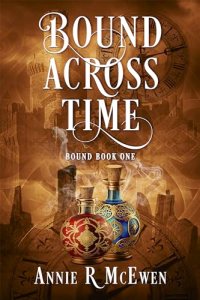
Bound Across Time by Annie R. McEwan was my first experience where an author reached out to me and offered me a free copy of their book to read and review. And it was amazing. Of course, Ms. McEwan got the royal treatment: an unboxing video, a blog post, and a YouTube review. 

Bound Across Time is the first of a paranormal time-travel romance series. Patrick O’Loinsigh died in the 1700s in Wales. His ghost as been stuck in the castle he perished in. In modern days, the first living person, Cece Gowdy can see him. She’s a witch and they embark on a passionate love affair. But loving a ghost comes with risk and danger. Cece is not made for Patrick’s limbo world, and Patrick isn’t made for Cece’s living world. They are going to have to rely on the help of other witches to fight against the magic of time that is separating them.

I always find magic system world building interesting, and the rules of magic for this world were really cool. This was also the first ghost-human relationship that followed the rules of the romance genre. The sequel, Bound to Happen will be released early this year!

The Haunted Purse by Kimberly Baer is my tried and true “don’t judge a book by its cover.” I thought the title sounded juvenile and the cover didn’t pull me in. Then it ended up being the book of the month for the book club I was in. I inhaled it.

Libby is a 15-year-old high school student who lives on her own while her mom dates around, pretending she doesn’t have a daughter. Libby purchases an old purse from the secondhand store. The purse makes things disappear, and provides extra things to the purse. As Libby gets used to her purse’s abilities, she notices a connection with some of the objects that appear. They are all connected to a 20-year-old cold case. Convinced that the purse holds the ghost of the missing girl, Libby puts on her detective hat and works to solve the case.

In addition to the murder mystery plot, there are three other themes that provide great lessons for young adult readers:

  1. How educational professionals treat each student is important – Libby’s math teacher bullies her, and her counselor looks down on her for being poor.
  2. See something, say something – A big part of what keeps the plot moving is teenagers keeping secrets. Obviously, the secrets need to exist for a great story, but in real life, keeping secrets like these are dangerous.
  3. Honesty really is the best policy – This connects with number 2. Teenage characters lying to adults helps the plot, but in real life, telling a trusted adult the truth can always help. 

The Haunted Purse is the best YA story I’ve read in a while.
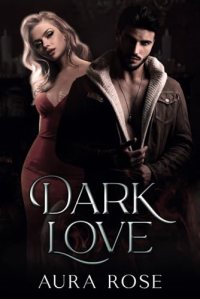
Dark Love by Aura Rose is the second in a fated mates romance trilogy. Each book features a different couple. The first book is called The Last Alpha. To be honest, I didn’t much care for the first one. Some authors who write fated mates stories use the mate bond in their plot to have a – what I call – justified cheating subplot. That is in The Last Alpha, and left a bad taste in my mouth for the rest of the book. Luckily, the end of the first book lets the reader know who the couple will be for Dark Love, and I was fully on board for their love story.

Madeline is a werewolf, Arius is a witch-vampire hybrid. Arius is not supposed to exist per the council’s rules, and they’ve been trying to kill him since he was born. Arius is also the son of the vampire king who tried to kill Madeline’s pack in the first book. So, she and Arius get a very steamy enemies-to-lovers and forbidden love arc – which, in my opinion, is the best combination of romance tropes. Trigger warning: Arius does kidnap Madeline at the beginning of the book, but he doesn’t torture or SA her.

Once Madeline and Arius accept the mate bond, they combine forces to take down the bigoted council so they can live in peace. Arius is my favorite book boyfriend

It ends on a pretty dramatic cliff-hanger. I’m about a third of the way through the third book, His Lost Tribrid. It’s also really good. Unfortunately, the platform it’s on (Dreame) has tripled their prices over the past year. So, I won’t be able to finish it there. So, I’ve subscribed to Aura Rose’s Amazon page, and as soon as it’s available on Amazon, I’ll buy it there and finish it. 

What notable books did you read in 2024? Share them in the comments!

How to Put a Ghost in a Romance: Bound Across Time

Four years ago, I learned the rules of romance writing. There are two very important requirements for a story to be considered a romance:

  1. The main plot must center around the relationship between the love interests.
  2. It must end with a Happily Ever After or Happy For Now. 

I struggled with rule #2 for about a year (check out how I overcame that in a previous blog post), but once accepted, I had a big question: How do you make this work with ghosts? If one half of the couple is a living person, and the other half is a ghost, how are they going to have an HEA?

Part of my confusion came from reading an incorrectly labeled paranormal romance. First off, the main plot was not the relationship with the (ghost) love interest; that ended up being the side plot. Second, the main character is not reunited with their ghost love interest until decades after the main story ends when they die of old age (think the reunited scene of Jack and Rose in Titanic). That didn’t really feel like an HEA to me. 

So, like the emotional teenager I sometimes act like, I stayed away from ghost stories until Bound Across Time by Annie R. McEwen fell into my lap. This is a paranormal romance worth reading.

Let’s start with our living character, our female main character: Celeste Gowdie (a.k.a. CeCe). CeCe’s mother died when she was young, and she was raised by her aunts in the U.S. state of Georgia. CeCe doesn’t know who her father is (this is important for one of the reveals toward the end). She studied history in college, and is working in St. Rhydian’s castle in Wales when the story begins. CeCe wants to be taken seriously as a real historian, but she ends up being the American tour guide who gets to research and share ghost stories to the patrons. 

Patrick O’Loinsigh is the bastard son of one of the historic Lords of the castle. He was born in Ireland in the 18th Century, educated in Paris, and forced to move to his father’s castle during his early adult years. His father used him to do his dirty work since Patrick wouldn’t be inheriting the title. Patrick is murdered by his half brother, and his spirit spends the next few centuries hanging out in the in-between waiting for the living soul who matches a prophecy meant to free him.

Patrick and CeCe have a meet-cute of epic proportions. Patrick lures CeCe to the top of the tallest tower by turning on a battery operated candle. CeCe can’t lock up the castle and go home until all lights are turned off. So after a literal hike, CeCe comes across a handsome man in 1700s clothing. Patrick scares CeCe so bad that she faints. 

It takes CeCe several days to believe Patrick that he is the ghost of the handsome man in the gallery of the castle’s historic inhabitants. At first she thinks he’s a loiter pretending to be Patrick O’Loinsigh. But when she finally believes him, she falls, and she falls hard. 

The local witch coven gets involved, CeCe’s aunts get involved because… family secrets! (That I’m not going to spoil.) Everyone wants CeCe to stay away from Patrick for her own good. Of course she doesn’t listen, and she embarks on a passionate and steamy love affair with Patrick. 

Well, it turns out that when a living person spends that kind of time with a ghost, their literal being starts to disappear. So now, CeCe and Patrick have a difficult decision to make: go their separate ways to save CeCe’s life, or research if magic can help them. 

And that’s where I’m going to leave you with this story, because you’re just going to have to read it yourself if you want to know how it ends. But the ending is soooooo worth the emotional turmoil that Ms. McEwen is going to put you through. 

These kinds of stories always have to have “rules of magic” and the rules of magic that Annie created were very cool. When Patrick and CeCe meet up, the room they are in reverts back to the way it was when Patrick was alive. When Patrick leaves, the room returns to its modern-day look and feel. When they are together, they are neither in the past nor present – though they are closer to the present, because humans could hear CeCe if they came by the room. 

There also appears to be two different “types” of magic. There’s a traditional witch who can cast spells and make potions and such. Then there are people born with “gifts”. CeCe is born with a gift that allows her to see and hear Patrick in the first place. (For more details on that, read the book!)


And to finish off this review, here is a Q&A with the author herself:

In your planning, what came first: a story about witches? Or a story about ghosts?

Door Number Three: a story about a castle! Because, when I conceived the book, I was living in a small Welsh town that is graced by a very old and beautiful castle. I spent a lot of time thinking about the people who passed through those halls and gardens. Were any of them still there? So, yes, I suppose the ghosts came first and everything else followed. 

What historical people, places and facts are true? What did you embellish or fill in the holes?

The town, the witches, the historian who’s forced to resort to ghost walks since history doesn’t sell, the castle, the stone circle a few miles out of town, the Welsh coast almost within sight of Ireland, the family who kept secrets, the work of people – archivists, admins, docents, conservationists – at an historic site: all those are fact-based, along with the many casually dropped references to and stories about the past as viewed by both a modern historian and a ghost who died in the mid-1700s. Beyond and embracing those is the truth of protagonist CeCe’s life and work; just like her, I’m a career historian who lived in a small Welsh town and met the astoundingly warm and quirky inhabitants, worked in the local castle, visited the stone circle. The things I changed were the ghost (whom I never met, more’s the pity) and the names and actions of both CeCe and the locals. Oh, and the color-changing cat! Always wanted one of those but, alas, mine have all been the single-color variety. 

I’m guessing Aiofe’s story is next? Do you also plan on going back in time and also telling Gabrielle’s story?

Bound to Happen (Book Two of the Bound Series) does indeed follow Aoife/Fee’s story. It involves a radical change in setting, from a tiny Welsh town to London and, specifically, Covent Garden, where Aoife has a grant to research playwrights and poets of the 1600s. She’s lured to an abandoned theater by some urban exploring chums and…Well, you’ll have to read the novel to see what happens then! But in addition to new and very different secondary characters – Aoife’s Ghana-born flatmate and her ancestor priestess Mom, along with some skeptical folks in the National Trust and Museum of London Archeology – characters from Book One re-appear, like Jana Smithbury-Tewkes (and her new color-changing feline, Rumpelstiltskin.) Through them, readers learn more about Fee’s Savannah family (still keeping secrets, as families do) and her life growing up with leathling-souler parents in 18th century Paris. As to Gabrielle Gowdie: while bits of her tale are woven into Bound to Happen, it’s in Boundless (Book Three of the series), that we hear from an aging Helene Gowdie (oldest of the original five sisters who included Gabrielle) about why and how the secret-keeping of Gowdie family began.

What’s next for your writing career?

More writing, more publishing! I’m contracted with four publishers (one in the UK, the rest US-based) for nine books, five of which are written, the rest in progress. I’m eager to push ahead with my series for the UK publisher, Bloodhound Books; it’s Victorian working class romance centered on the lives and loves of four women who work in a London corset workshop. If you liked Peaky Blinders, you’ll love The Corset Girls! I haven’t left paranormal romance behind, though; I’ve got a spine-chilling vampire romance story in Rowan Prose Publishing’s horror anthology coming out later this year. And I’m finishing a time travel historical romance set in 1910 Boston, New Orleans, and Wales. Several other WIPs are nudging me for attention, including a Regency romance comedy about the lengths to which an impoverished heiress will go to avoid an inconvenient marriage, an 1880s romance set in New Orleans’ back streets, and a novel of smuggling and love on the Kent coast in the 1740s. 


Annie R. McEwen has written a beautiful romance that brings past and present together in the most captivating of ways. She kept me guessing until the very end how the problems would get resolved. Very captivating and well-earned five stars

New Release: Fox Tale by Karen Hulene Bartell

Karen Hulene Bartell is back to talk about her newest release: Fox Tale. Before we dive into this captivating title, let’s get to know Karen.

Plotter or Pantser: I’m a pantser, no question about it. I do make short outlines of what happens next, but I’m too spontaneous to follow any extended framework. Besides, when I “play dolls” with friends, that is, brainstorm my plot, I often prefer their ideas to mine, which makes for far more interesting plot twists than I’d devise.

Does It Come to Me, or do I Struggle?: It’s usually a combination of the stories coming to me and me struggling to conclude the chapters. I’m inspired to begin each book, but occasionally I grapple with twists or turns of the novel, trying to patch the sections into the greater story, as well as smoothly transition the reader to the next chapter.

When did I Start Writing?: An only child, I began writing my first novel at the age of nine, learning the joy of creating my own happy endings…However, I got four pages into my first “book” and realized I had to do a lot of living before I could finish it! 

Reading is the entry to writing. Born to rolling-stone parents who moved annually–sometimes monthly–I found my earliest playmates as fictional friends in books. Paperbacks became my portable pals. Ghost stories kept me up at night–reading feverishly. Novels offered an imaginative escape, and the paranormal was my passion.

So here I am all these decades later, still creating my own happy endings…

What is the Most Powerful Challenge of Authoring a Novel?: IMHO, marketing is the nightmare to the dream of writing! Promoting my books is the hell to the heaven of authoring them. I’d much rather keep “plugging away” at finishing a chapter than “plugging” myself on social media 😉

Background of Fox Tale 

My husband works for a Japanese company. When he was instructed to meet with his Tokyo team, I leapt at the chance to accompany him. The next thing I did was research Japan’s cryptids. What appeared were Inari’s kitsunes or fox spirits—and voilà, the idea for Fox Tale was born.

What are Inari’s kitsunes? Japan’s history of foxes is complex. According to Fox Tale’s leading man, Rafe, “Originally, Inari was the concept of a successful rice harvest. Over time, devotees fleshed out that belief, and Inari became the androgynous god of wealth.” 

“And the kitsunes?” asked the protagonist, Ava.

“The relationship has always been cooperative…Initially, foxes kept rice fields free from rodents, ensuring good crop yields. Eventually, people humanized the foxes into guardians and agents.”

While my husband attended meetings, I explored Tokyo, sometimes alone on foot and sometimes with a group tour. I took copious notes, and each site I visited became part of my developing story. With the supernatural element, as well as the locale established, my imagination began taking flight.

I spoke to locals as often as possible, asking if they believed in kitsune–or if their neighbor or grandmother believed in them. (Luckily, many Japanese speak English!) Not one admitted to believing in the old superstitions, but almost all knew of someone who did. 

Said Fox Tale’s antagonist, Ichiro, “Most Japanese live in concrete canyons, and rational university educations replace superstition. Still, fox stories persist through theater, festivals, language, and literature…or kiterature as I call it.” 

“Despite a waning belief?” I leaned closer. 

“Even today, some believe in fox possession…although believing in kitsunetsuki might not be fashionable in this age of supercomputers and artificial intelligence, stories still circulate in the tabloids and mass media.”

“For example?” 

“In 2019, a doomsday cult member rammed his car into pedestrians on Takeshita Street, then pled not guilty on the grounds that the cult was fox possessed. And as recently as 2022, the Sessho-seki split in two.” 

Skeptical, I squinted. “The what did what?” 

“The killing stone…according to legend, it imprisoned an evil nogitsune vixen. Her spirit escaped when it split in half and began spewing sulfur fumes, killing anyone that approached…For over a thousand years, Japanese medical practitioners considered kitsunetsuki a disease. Even into the twentieth century, psychologists believed fox possession caused mental illness.” 

“But not anymore…” Crossing my arms, I hugged myself, seeking reassurance. “Right?” 

“Today, therapists consider kitsunetsuki a psychosis or a culture-bound syndrome. Although”—he shrugged—“its symptoms can extend to people familiar with the Japanese culture.”

Gathering all the information I could from locals, as well as researching online, the plot for Fox Tale began to take shape. Once I had the realistic component that tied the supernatural to the natural, I had the storyline. Then the characters emerged as the story unfolded in my mind.

When my husband finished his meetings in Tokyo, we visited Kyoto, where we toured Fushimi Inari. The mountain is sacred in the Shinto religion, a place where “deities coexist with nature” and where, some believe, Inari resides. Fushimi Inari has an ethereal presence. Its otherworldly aura and scenery are difficult to describe, but if anything supernatural could occur, it would happen on that mountain. While at that shrine, the various parts merged into the basis of Fox Tale: the supernatural element, general locale, plot, characters, and finally the specific location for the otherworldly activity. 

Lo and behold, a novel was born.

Chase is seemingly the villain of Fox Tale, yet from his perspective, he’s… 

“A guardian? Yes, but an angel…?” His lips rose in a sly smile. “I’m also a male with physical needs.” The smile faded. “I’m lonely without a woman’s company. I yearn for a woman’s touch.” The corners of his mouth drooped, and he spoke in a flat monotone. “Which brings us full circle to where this conversation began. You remind me of a woman I almost married—” 

Chase has objectives, but he acts and reacts according to his own code of honor.

The true villain is Atsuki, however, with his expensive suits, chauffeured cars, and Yakuza tattoos. Atsuki is an old adversary of Chase. Though his superficial generosity and lavish gifts fool many, Atsuki bends time and shapeshifts to attain his goals, then lures his pawns to their demise.

Meet Karen: Author of the Trans-Pecos, Sacred Emblem, Sacred Journey, and Sacred Messenger series, as well as Kissing Kin, Fox Tale, Wild Rose Pass, The Keys: Voice of the Turtle and more, Karen is a best-selling author, motivational keynote speaker, IT technical editor, wife, and all-around pilgrim of life. She writes multicultural, offbeat love stories steeped in the supernatural. Born to rolling-stone parents who moved annually, Bartell found her earliest playmates as fictional friends in books. Paperbacks became her portable pals. Ghost stories kept her up at night—reading feverishly. The paranormal was her passion. Novels offered an imaginative escape. An only child, she began writing her first novel at the age of nine, learning the joy of creating her own happy endings. Professor emeritus of the University of Texas at Austin, Karen resides in the Texas Piney Woods with her husband Peter and her mews—three rescued cats and a rescued *Cat*ahoula Leopard dog.

Follow Karen at her website: https://karenhulenebartell.com/

Fox Tale can be purchased here.

Heights terrify Ava. When a stranger saves her from plunging down a mountain, he diverts her fears with tales of Japanese kitsune—shapeshifting foxes—and she begins a journey into the supernatural.
She’s attracted to Chase, both physically and metaphysically, yet primal instincts urge caution when shadows suggest more than meets the eye.
She’s torn between Chase and Rafe, her ex, when a chance reunion reignites their passion, but she struggles to overcome two years of bitter resentment. Did Rafe jilt her, or were they pawns of a larger conspiracy? Are the ancient legends true of kitsunes twisting time and events?

Historical Fiction: How Much Fiction is Okay?

I recently enjoyed following a discussion among historical fiction authors about accuracy and research. Probably my favorite thing I learned is that the food the ton eats in regency novels is often inaccurate to real life. I learned that bacon and eggs was a lower-class breakfast, and chocolate wasn’t a commonly accepted dessert yet. And when authors make such errors, readers who are educated in the time period they love are going to get upset. 

To be honest, learning that didn’t turn me off to any of the regency novels or authors I’ve read that have been inaccurate. As a high school history teacher, I don’t teach what type of food a specific socioeconomic class ate in a specific time period. I teach the impact people, events, and movements had on society and progress. And so it is those details that I’m hyper aware of when I read historical fiction. And yet, other people clearly do care about the minute details, which is completely valid. So, how does an author decide how much fiction to put into historical fiction?

Let’s use my favorite historical fiction author, Philippa Gregory, as an example. Readers either love her or hate her. I am in the camp that loves her. She makes a lot of risky moves with her historical accuracy, but I don’t always agree with all of them even though I love reading her books. Let’s take a look at The Other Boleyn Girl as our main example. (Mainly because I know both the book and historical facts very well.)

In several interviews, Ms. Gregory has stated that when she writes a royal court story, she has a timeline up on her wall that shows the movement of the court, so that she can put the characters in the right geographical location in the right month/season. From there, depending on who you talk to, things can get murky. 

In The Other Boleyn Girl the 4 main deviants from other accepted sources are:

  1. The birth order of the Boleyn children
  2. The publicly known father(s) of Mary Carey’s children
  3. Mary’s role in the court after her second marriage 
  4. George Boleyn’s sexuality 

The birth order of the Boleyn children

Every historical source I have ever read puts Mary Boleyn as the oldest, Anne Boleyn as the middle child, and George Boleyn as the youngest. Philippa Gregory switches the characters around completely: George, Anne, Mary. I do understand why (I think) she did it. The relationship she created for the two sisters – Anne as a bossy bully and Mary as passively compliant (which she grows out of over twenty years) – works better for Anne being “the mean older sister”. Despite me understanding what is most likely her reasoning for doing this, it still bothers me.

Who fathered Mary’s children?

When Mary Boleyn became Henry VIII’s mistress, she was married to William Carey. She became pregnant during that time, and the court believed – as well as historians – that the king was the father of Mary’s oldest child, Catherine Carey. Surviving portraits of the oldest Carey child do hold similarities to other known Tudor children (according to those with the eye to see such details). According to historical sources, Henry had set Mary aside well before she became pregnant with her second child, Henry Carey. Historically, there was no doubt in anyone’s mind that William Carey was the only possible father to baby Henry. Philippa Gregory, however, made the decision to keep Mary as the king’s mistress longer than is accurate, and to make the father of her second child Henry VIII. Once again, there is a method to her madness. Later on, Anne adopts Henry so that she would be the “mother” of a biological son of the king, so he would be more inclined to marry her. But once again, the inaccuracy doesn’t sit well with me. The rest of the plot can continue as normal without this change.

Mary’s role in court

After Henry VIII set Mary aside, she’s a background character in the main historical record. We know she gave birth to a boy named Henry, and her first husband, William Carey died during one of the sweat summers (a type of plague disease that killed thousands of people every year). At some point after Princess Elizabeth was born, and during Anne’s unsuccessful pregnancies, Mary married a man well below her station, William Stafford. She kept her marriage a secret until her third pregnancy became too noticeable to hide (or perhaps, they married because she became pregnant). Queen Anne banished her own sister from court, and Mary’s remaining family followed their queen and shunned her. Mary moved to Calais, and that’s where they were living when Anne was beheaded for false accusations of adultery. 

In The Other Boleyn Girl, Philippa Gregory condenses Mary’s banishment to less than twelve months, and she’s back at court as the queen’s sister. How does Ms. Gregory justify this very obvious discrepancy? An actual primary source states that during Anne’s last miscarriage, she let no one in her chambers besides her mother and her sister. Now, this sister could have been Jane Parker, George’s wife. But it was also well known that Jane and Anne didn’t like each other. In fact, Jane and George didn’t like each other. But still, how can Mary be at court if the historical record puts her in Calais? Or was it a misunderstanding on who was actually in the room? (Especially since this is a time where false accusations of adultery were being prepared.) Either way, Philippa Gregory has one source to validate her decision to keep Mary at court for the story. 

And this is actually how she does it in all of her books. As long as one source records a guess, rumor, etc.; she can put it in her book and says that she is exploring what the story would look like if that source were true. Which, I think, is fine. Provided she justify it in her Q&A section she puts at the end of each book. And she does, most of the time.

George’s Sexuality

A major side plot in The Other Boleyn Girl is George Boleyn falling in love with Francis Weston, and embarking on a love affair with him. Once again, Philippa Gregory uses an obscure source that claims George’s pre-execution speech included an apology for sodomy. This claim can’t be combatted the way that the others were. Historians can’t discover the thoughts and feelings of long dead people. So, if a historical fiction author wants to make someone gay, they can do so. 

Any other Philippa Gregory book is going to have similar changes. She uses the lack of perfect records to fill in the blanks with her own imaginings. She uses the very real beliefs of the time in witches to include spells, curses, and fortune telling. And she finds obscure (but real) claims to further dramatize an already dramatic era. 

But even though she does her homework to justify the changes she makes, the real question is: Do you readers support these changes? Enough that she is still writing and selling books, and Starz is slowly turning her more popular books into mini-series. But the naysayers are still quite loud. 

So, at the end of the day, if you’re going to write historical fiction, just know that any changes you make will be noticed by some while unnoticed or ignored by others. It’s still your choice to make, but it will affect your readership. As for me, I’m going to continue to read regency romances regardless of what the upper class eats; and I’m going to continue to enjoy Tudor era stories – though I will grumble internally when things are too wrong for my taste. 

What’s your favorite time period for historical fiction? Let me know in the comments!

Favorite Reads from 2023

I read 88 books in 2023. And of those 88, I would like to highlight 24 of them (don’t worry, 21 of those are in 3 series).

Bridgerton: When He Was Wicked, It’s in His Kiss, On the Way to the Wedding

I finished the final three books of the Bridgerton series at the start of 2023. They were the perfect way to end the series. Julia Quinn got bolder with the three younger Bridgertons, and it paid off. Francesca is a widow who is fighting her feelings for her deceased husband’s cousin. Hyacinth is an independent woman who doesn’t want to fall in love, so when Lady Danbury’s grandson catches her eye, she doesn’t know what to do. And Gregory… Gregory, Gregory, he’s going to go after a young woman promised to someone else. Hyacinth’s and Gregory’s stories had action and danger that I loved. 

A Court of Thorns and Roses – A Court of Silver Flames

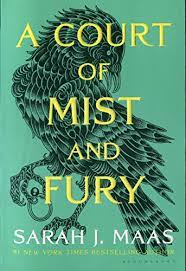
When your editor recommends a book to help with your writing, you follow through. When I finished the first draft of Bondwitch: Hybrid, I asked my editor for advice on a specific plot point. She recommended I read A Court of Thorns and Roses by Sarah J. Maas and the subsequent novels. I have never gobbled up a series so quickly. And a quick paragraph won’t do the series justice. Lucky for you, I already have a detailed analysis for each book right here on the blog. Check them out:

ACOTAR: Beauty and the Beast Meets the Goblet of Fire

Mist and Fury: A Perfect Redemption

Wings and Ruin: The Cost of War

Frost and Starlight: Diversity in Healing

Silver Flames: Overcoming Toxicity

I will say overall, the world building is superb; and Sarah J. Maas gives JK Rowling a run for her money when it comes to morally gray characters. Everyone is flawed. Everyone makes astronomical mistakes. Everyone lies and cheats and steals. And almost everyone earns their redemption. 

Warriors of Sangrin

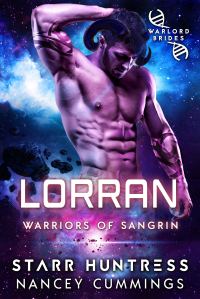
This series I also wrote a deeper post on. This is a SciFi Romance series by Nancey Cummings. In this world, Earth was invaded by alien invaders called Suhlik. The Suhlik’s enemies, Mahdfel come to Earth’s aid… for a price. That price is in the form of brides as Mahdfel only produce sons, so they must mate with females from other planets. There are 11 stories in the main line and 3 side stories, so far. This series opened me up to alien romances, and I’m addicted. 

The Alpha and Her Hunter

The is one of the best fated mate, werewolf stories I have ever read. The author, Lauren Rutherford, created a unique world building that worked so beautifully. Female werewolves are bigger, stronger, and the leaders of the packs. Hunters have their own powers that differentiate them from regular humans. And if you haven’t figured it out from the title, we have a Romeo and Juliet story going on. Forbidden love. My favorite trope. A female werewolf and a male hunter fall in love, and have to fight their families to be together. It ends on a cliffhanger, and I’m anxiously awaiting the sequel.   

The King’s Curse

This was the final Plantagenet/Tudor book left for me to read by Philippa Gregory. It’s Margaret Pole’s turn to tell her story, and I’d venture to say that this is one of Gregory’s longer books in respect to how much time is covered (it’s still her typical 600-page novel). We jump into Margaret’s story around the time that Princess Katherine from Spain is arriving to marry Arthur, following her life to the day Margaret was executed. Her execution was confusing to the court and historians. Catherine Howard had recently been executed for adultery, and Margaret had not been close to being involved in that. The most probable reason is that Henry still felt threatened by her and her sons since they were the remaining York family, and could distantly claim the throne. I really enjoyed learning about Margaret’s life through Gregory’s historical fiction. She’s always been a side character with few notable moments in the other novels, and with The King’s Curse she gets to take center stage. I loved seeing a human side to her, rather than the perfect ally to Katherine and Mary that she is usually depicted as. Though she did stay loyal to Henry’s first family, she still had her own trials that she had to focus on and make difficult decisions to protect her name, family, and property. And now, it’s the end of an era. 15 years, and I’ve finally read about the main Plantagenet and Tudor women.  

The Lycan Prince’s Huntress

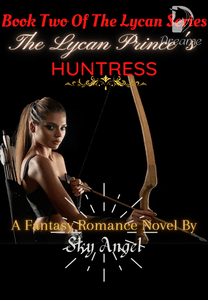
This is the the prequel to a fated-mate-werewolf romance called Prince Reagan. In some omegaverse world building, there is a shifter called a lycan. Lycans are a more powerful version of werewolves. Depending on the author and their imagination, lycans can walk on their hindlegs in their wolf form (I kind of imagine Remus Lupin from Harry Potter, but more muscular), they live longer (or are full on immortal), they are the royal pack/family that regular werewolf packs have to bow down to, etc. The Lycan Prince’s Huntress can be found on the reading app Dreame. In this story, the FMC is the daughter of the head hunter; and their clan hunts werewolves and lycans. The MMC is the crowned prince of the Lycan Kingdom. And these two are fated mates. Forbidden love, enemies to lovers, Romeo and Juliet. And since those are my favorite tropes, I lapped this story right up. Also, it was an added bonus that the FMC wasn’t a sniveling weakling who becomes a jellied donut in the presence of her mate. 

And those were my favorite books I read last year. What are your favorite books from 2023? Let me know in the comments! 

Powerful Women in Winter Solstice in the Crystal Castle

“Well behaved women rarely make history.”

Princess Gabrielle is not well behaved. She is a skilled archer, can fight any man with her own sword, and gallops across the French countryside to her heart’s content. The ladies of Paris cannot fathom such a lifestyle, nor do they think it’s acceptable for a princess and future queen to be acting in such a manner. 

But it’s this unladylike behavior that will allow Gabrielle to save her own life, twice. In a time when Gabrielle must obey her father, and then her future husband, she is determined to forge her own destiny, and that destiny lies in the arms of Basiten; the Master of Horse, and her combat trainer turned personal guard. 

“Behind every successful man there stands a woman.”

Bastien has two women other than Gabrielle working behind the scenes to ensure that he wins Gabrielle’s hand in marriage, and the kingdom of Finistere. His mother, Laudine, uses her Winter Solstice wish for her son rather than herself. Then we have Beatrice, Gabrielle’s great aunt, and a powerful socialite in Paris. Beatrice will play an important role protecting Bastien’s legal right to marry Gabrielle.

If I’m going to read historical fiction, I want to read about powerful women – or at least women who created their own power in a world trying to stop them. Jennifer Ivy Walker does this masterfully with her female characters, particularly with Gabrielle and Beatrice in Winter Solstice in the Crystal Castle

Gabrielle is the only child of the King of Finistere. But since this is medieval France, she can’t inherit her father’s throne on her own. The king’s health is failing, and he needs to choose his daughter’s husband, who will also be his successor. One particularly unsavory nobleman wants Gabrielle for nefarious reasons, and in order to stop him, King Guillemin plans a tournament; where the winner will be given Gabrielle’s hand and Guillemin’s kingdom. But Gabrielle can only imagine marrying one person: Bastien, her father’s master of horse. Bastien has trained Gabrielle in archery and hand-to-hand combat; and the only thing keeping them apart is Bastien’s lack of a noble title. Luckily, a moment of foul play from another contender provides Bastien with the opportunity to be ennobled, and eligible for Gabrielle’s hand. But will the official documents arrive in time?  

And for the second half of this review, I’m pleased to announce that the author herself, Jennifer Ivy Walker agreed to an interview!


What time period is this supposed to take place in?

This trilogy is set in the HIgh Middle Ages in medieval France.

And can you explain how the politics and culture worked in multiple smaller kingdoms dotting the area that is now modern-day France? How does that fit into your story?

During the Middle Ages, there were many separate kingdoms and duchies in France.  The region of Brittany was separate from the rest of France until 1532, well after my trilogy takes place.

Lancelot makes an appearance in the first chapter. He is the only character I am familiar with. Who else is based on European mythology? Are there any characters that are based on historical figures?

Nearly all of the characters in my trilogy come from the original medieval French legend of Tristan et Yseult (Tristan and Isolde in English). The characters of King Marke of Cornwall, King Hoël of France, Prince Kaherdin, Lady Gargeolaine, and the Morholt all come from that French legend as well. Some of the characters, such asViviane (the Lady of the Lake) and Morgane la Fée come from French versions of Arthurian legend.

I know that you are a French teacher. Is the French used in the book modern-day or medieval?

I used modern French with medieval phrases and terminology, for authentic medieval French would be even more difficult to understand than medieval English. (Imagine reading Shakespeare, but in French!) 

The second book in your Wild Rose and the Sea Raven series is titled The Lady of the Mirrored Lake. Is Viviane that lady? And if so, should your books be read in a specific order?

No, Viviane is the Lady of the Lake–le Lac de Diane in the enchanted Forest of Brocéliande. My protagonist and heroine Issylte becomes the Lady of the Mirrored Lake (Le Miroir aux Fées–the lake known as the Fairy Mirror) when she becomes a Priestess of the Tribe of Dana (the Goddess of the Earth). Yes, the books should be read in chronological order since they are a continuing trilogy and not stand alone novels.

What are you currently working on? And what’s next to be released from you?

I have three new releases:  Winter Solstice in the Crystal Castle–a stand alone novel that involves many of the characters introduced in my trilogy. It’s a medieval romance between a fiery French princess descended from Viking Valkyrie and the chivalrous knight who suffers an impossible love for her.

I also have two contemporary novellas which are steamy romances set in modern-day France. Amour in Avignon (releasing November 29th!)  is a Cyrano de Bergerac inspired love story set in the south of France during the world-famous Festival of Theater in Avignon. 

Flames of Flamenco (releasing December 27th) is a fiery romance set in Montmartre– the bohemian heart of Paris–between a skilled artist who melts the frozen heart of the American heroine with the flames of his passionate flamenco dance. 

I have also written a World War II historical romance,The Witch of the Breton Woods, which will be published in early 2024. It’s the story of a reclusive, traumatized young woman who heals and shelters a wounded American paratrooper, keeping him hidden from the Gestapo and la Milice–the local French paramilitary organization that collaborates with the Nazis. She introduces her soldier to the underground French Resistance (of which she is a member) and together, they join forces with the Allies to fight in the Battle of Saint-Malo.

I have just completed another stand alone spinoff of my trilogy, entitled A Celtic Yuletide Carol, which I hope will be published for the holiday season in 2024. And I am currently working on a Viking trilogy set in Normandy during the tenth century–the ancestors of my French Viking princess from Winter Solstice in the Crystal Castle. I have also outlined another three book series introducing the next generation of characters from The Wild Rose and the Sea Raven trilogy. I hope to write those three books in 2024.


I rate Winter Solstice in the Crystal Castle 5 stars. If you like medieval folklore and romance check out not only Winter Solstice, but Jennifer’s other books as well.

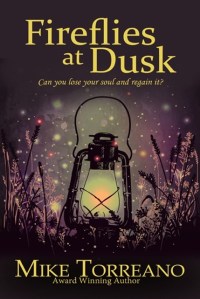
New Release: Fireflies at Dusk by Mike Torreano

I’ve always been a fan of history, and the Civil War in particular, so when I first decided to write a novel, I picked one of my favorite CW personalities to focus on-George McClellan.

So in thinking about how to showcase McClellan, I decided to create a character to see McClellan through, hence Jonathan Gray, a young lieutenant on McClellan’s staff. To fill Jonathan out, I created his childhood, and that’s where the story really took off in a different direction.

Jonathan was raised in a pacifist family in Ohio, part of the Underground Railroad. When slavers took a runaway family away from the Quaker meeting house, Jonathan was crestfallen that no one tried to stop them. He rejected his father’s pacifism, which started a thread of conflict between them that ran the length of the novel.

Finally away from the family farm at college, Jonathan’s youthful arrogance led him far astray from the solid values he was raised with. He behaved with reckless abandon, further distancing him from his family, his childhood sweetheart, and his faith.

With great disdain, joins the Union Army when the War breaks out. At first an entitled junior officer on McClellan’s staff, he’s later sent west to join General Sherman’s army. His commander’s ‘welcome to the fightin’ side of the Army, son’ sends him on his way.

There, he joins a Company of combat-hardened veterans who’ve gotten wind of Jonathan’s prideful attitude. Forced to lead battle-hardened men who would just as soon see him dead, he must decide whether or not to undertake what promises to be a grueling journey to regain his self-respect amid continual harsh fighting.

Bottom line-While I started out thinking I’d be writing about McClellan, Jonathan pushed him clearly into the background, which was an interesting twist for me as a new writer years ago.

Back in 2014, I shotgunned this manuscript out to agents and editors with no luck. I did get one rejection which gave chapter and verse about what it needed. The editor was right, Fireflies wasn’t ready then. Months later I emailed the same editor and asked if anyone wanted to see the western mystery I was writing at the time. She said, ‘Send it to me when it’s ready.’ I polished and polished The Reckoning, and it became my first contract with The Wild Rose Press.

I now have five books with them, the latest being Fireflies at Dusk, which I decided to finally pivot back to last fall. After much revision and polish, I sent it in to TWRP and got my latest contract. So a rejection led to my first contract, and then years later, to this, my latest one.

As for my writing process, I’m not one other writers should emulate. I’m a total pantser, and I only write when I feel like it, which isn’t daily which also means I don’t have an organized schedule. I oftentimes get stuck in a scene and then take some time to percolate on things. Sometimes days.

While it’s not a method I’d recommend it seems to work for me. What also seems most important is that a writer discover how they best work. There’s no one right way, ultimately just what works.

This latest novel, Fireflies, has taken an unusually lengthy path to publication, but most of my novels take about a year and a half.

Mike Torreano is an award-winning author of traditional western mysteries set in Colorado and New Mexico Territories. In the fifth grade he read his first Zane Grey novel and has been hooked on the Old West ever since.

His debut western mystery, The Reckoning, was released in 2016 by The Wild Rose Press and the sequel, The Renewal, was released in 2018. Both are set in South Park, just west of the Rampart Range. He’s now finishing up the third in the South Park series, The Return.

An interest in the Goodnight-Loving cattle trail inspired his first stand-alone western, A Score To Settle, which was set on that trail and came out in 2020. A friend’s suggestion prompted Mike to write his latest western mystery, White Sands Gold, which was released in September 2022. It has received four literary awards.

His first historical novel, Fireflies at Dusk, is due out this month and is a coming-of age tale about a young man torn between his pacifist family and his urge to fight against slavery with the Union Army as the Civil War breaks out.

Mike also speaks at clubs and organizations about the timeless values of the Old West and The Code of the West, and how those values are still relevant today.

He can be found on Facebook, LinkedIn, Bookbub, and Goodreads, and his website: https://miketorreano.com/

As the Civil War looms, a young Ohio farm boy comes face to face with the injustice of slavery—an evil that tears at his very soul. In his callow youth, he rejects his family’s pacifism after runaways are cruelly seized from his Quaker meeting house. His anger causes him to turn his back on everyone who ever loved him. When the War breaks out, Jonathan joins the Union Army, making this rift complete. Will he ever turn back to his family, his sweetheart and his faith? Or has Jonathan drifted so far away that he can’t find his way back?

Check out the book trailer: https://www.youtube.com/watch?v=DKVlj4InOMo&t=7s

An Oldie, but a Goodie: From Here to Fourteenth Street by Diana Rubino

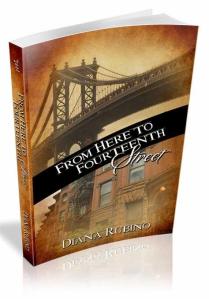
From Here to Fourteenth Street was re-released in 2015 with The Wild Rose Press, after I revised it and gave it a new title. It was originally titled I love You Because with my first publisher. It’s the first in a trilogy, The New York Saga, featuring 3 generations of the McGlory family. Tom McGlory, an Irish New York cop, and Vita Caputo, an Italian immigrant from the Lower East Side of Manhattan, meet and fall in love despite the overwhelming odds against them in 1894. They overcome economic hardship, prejudice, hatred, and corruption in this tumultuous world.

Book Two, Bootleg Broadway, is set during the Prohibition era and features Tom and Vita’s son Billy, a scatterbrained musical genius. My objective was to get him into one mess after another, and had no trouble doing that, once I got to know Billy.

In Book Three, The End of Camelot, Billy’s daughter Vikki is the heroine. Set around the assassination of President Kennedy in November 1963, Vikki realizes her husband Jack was embroiled in the plot to kill the president, but his mission was to prevent it. Jack was found dead in the bathtub of his hotel in Dallas, the same day of the assassination. When the Dallas police rule his death accidental, Vikki vows to find out who was behind the murders of JFK and her husband. With the help of her father and godfather, she sets out to uncover the truth.

My inspiration for From Here to Fourteenth Street was my great-grandmother; businesswoman, politician, small-time bootlegger, wife and mother. She was way ahead of her time. I modeled Vita after her, and since 19th Century New York City history always fascinated me, it came naturally to weave her story through that world, brining sights, sounds and smells of the streets and tenements to life.

I am a strict plotter – I work out a detailed outline, and for the last few decades, I’ve been using the Donald Maass workbook Writing Your Breakout Novel. It contains questions to ask your characters and explains how to outline your story. I find it invaluable for structuring my stories.

For this and most of my historicals, I usually spend about a year researching and writing. I write 2,500 words every day, and don’t quit until I’ve reached that goal.

Diana writes about folks through history who shook things up. Her passion for history and travel has taken her to every locale of her books: Medieval and Renaissance England, Egypt, the Mediterranean, colonial Virginia, New England, and New York. Her urban fantasy romance Fakin’ It won a Top Pick award from Romantic Times. She is a member of the Richard III Society and the Aaron Burr Association. With her husband Chris, she owns CostPro, Inc., a construction cost consulting business. In her spare time, Diana bicycles, golfs, practices yoga, lifts weights, plays her piano, devours books, and lives the dream on Cape Cod.

Connect with Diana at www.dianarubino.com

It’s 1894 on New York’s Lower East Side. Irish cop Tom McGlory and Italian immigrant Vita Caputo fall in love despite their different upbringings. Vita goes from sweatshop laborer to respected bank clerk to reformer, helping elect a mayor to beat the Tammany machine. While Tom works undercover to help Ted Roosevelt purge police corruption, Vita’s father arranges a marriage between her and a man she despises. The story has a paranormal twist – Vita and Tom work together against time and prejudice to clear her brother and father of a murder they didn’t commit, as Vita’s friend Jadwiga, a medium, helps them find the killer with some help from the otherworld – and some creative thinking.

When History and Magic Collide: Stone Heart

When a book is close to its release date, the author usually offers ARCs (Advance Reader Copy). Readers get a FREE copy with the hope that they will provide an early review. I’m so excited and honored to have read Stone Heart by Kitty Shields early. 

Stone Heart combines my two loves: history and magic. I actually haven’t read a lot of fantasy stories that take place in the past, and I found I really enjoyed such a combination.

Our hero, Edward, the Marquess of Winchester has struggled for the past decade. His father died in the colonist rebellion (a.k.a. The American Revolution), thrusting the noble mantle on him much earlier than anticipated. He thought he found love with his best friend’s cousin, Phoebe, but knowledge of her past causes him to end things. The story opens with Edward attending the opening night of a new opera, accompanied by his mother and a new young woman his mother wants him to court. The lead singer dies on stage in front of the entire audience. 

Edward gets wrapped up in the investigation and learns that Phoebe is in danger of dying in a similar way. Although he is still convinced that their relationship is over, Edward isn’t so cold he would allow Phoebe to die, so he races to the continent to save Phoebe. On his journey, Edward will learn to accept help from old friends, new friends, and unexpected allies. What true love is and what lengths one goes to get that love is the center of all characters’ motivations and actions. Different types of love are explored throughout the story that gives hope for a happily ever after.

When it comes to the historical aspects of the story, Kitty Shields does an excellent job of weaving the aftermath of the war into her characters’ lives and conversation. She also puts several real people and places into the story as side characters. I didn’t know about any of them, and so I appreciated the appendix at the end of the book that gave the factual history of each person and why Kitty chose to put them in her story.

The magic in Stone Heart was really unique. There are descendents of a mythical creature called a stone giant. The stone giants had the ability to remove their hearts from their chests to prevent themselves from dying in battle. Their descendants can grow their heart into a red diamond and give it to their love for safe keeping. Phoebe does this and gives her heart to Edward. He doesn’t fully understand or believe, so he unintentionally literally breaks her heart. 

While Edward is racing to save Phoebe, he runs into Roma travelers, who also participate in different forms of magic. The types of magic the reader gets to experience with the Roma are sending nightmares to their slumbering victims, reading tarot cards, listening to the wind, and using flowers for spells. There is even one paranormal monster that Edward has to fight in a cemetery. 

The third and final plot line that makes Stone Heart so great is a side character who stole the show: Tilton. Tilton is a young aristocrat going on his rite of passage tour of Europe. Tilton is energetic and friendly, two things Edward is not. Tilton inserts himself into Edward’s quest and ends up going on an adventure. Tilton is my absolute favorite part of the story. 

In reviewing this lighthearted adventure, I couldn’t pass up the opportunity to interview the author, and she agreed! So, without further ado, I present Kitty Shields.

Introduce yourself as a person and a writer.

Hello, Gentle Readers. I am Kitty Shields. I live outside Philadelphia with a black cat named Jinx who is plotting to kill me. I started writing as a way to cope with insomnia when I was a kid. When I couldn’t fall asleep, I’d sneak downstairs, hop on a computer, and write weird stories. Well, first I’d go down and play video games, but after a while I beat all the games and turned to writing.

As a writer, I start with a nugget of emotion and a scene. So Stone Heart came from the opening scene of Edward on the docks heading to the ship filled with regret. My book Pillar of Heaven, which is like The Devil Wears Prada as an urban fantasy, began with the main protagonist dealing with crappy customers at her barista job and her planning to sabotage all their lattes. The story Star Eater, which is about a sleep-walking teenage boy and his demon, began with him waking up on a golf course in the middle of the night.

I imagine these tiny scenes and from there I build the stories forwards and backwards, adding a dash of magic as I go.

What inspired Stone Heart?

Like I said, Stone Heart evolved from that opening scene. I clearly saw this guy on the docks heading towards a ship and weighed down with regret because of something he had done, so much so that he wasn’t sure he would sink the ship or not. I really liked the notion of emotions manifesting to the point where it brings about this leap of faith moment—is he going to survive getting on the ship or not?

At the time, I was in grad school getting my writing degree and I was experimenting with different genres and voices. I had never tried historical fiction before so this was an initial experiment. My cohort hated it. They hated everything about it: the voice, the scene, the allusions to mythology, the flowery language. They ripped it apart.

That was a little disheartening, so I put it aside. But that character and scene kept drawing me back. Every now and then I’d revisit the story and write a moment here or there. Nothing was really connected yet just a bunch of ideas. Tilton came from one of those exercises. I had began filling out Edward’s journey on the boat and it depressed me! So I created Tilton to cut through Edward’s melancholy and bring some humor into the story.

If you want to learn more about Stone Heart or perhaps see who I’d cast for each of the characters, check out my website: https://www.kittyshieldsauthor.com/stoneheart.html .

I really enjoyed the historical slang, though most of it I had never heard of before. Would you introduce these fun words to our readers and what they mean?

Sure! Here are some fun words for you:

Toffs: Slang for someone with an aristocratic background or belonging to the landed gentry, particularly someone who exudes an air of superiority.

Dandy: a man unduly devoted to style, neatness, and fashion in dress and appearance.

Roma: a people originating in South Asia and traditionally having an itinerant way of life, living widely dispersed across Europe and North and South America and speaking a language (Romani) that is related to Hindi. Commonly known as gypsies, although that is a derogatory word.

Doshman: a word that means ‘enemy.’

It’s clear you did extensive historical research for the historical aspects of Stone Heart. What about the magical aspects? Was any magic inspired by European folklore of the day? Or did you make it all up?

Yes, the magic threads are all based on actual myths. I did a lot of research which, to be honest, was a lot of fun. It was more of a challenge to edit out what I really didn’t need. Hrungnir is a Viking giant and he could remove his heart so that when he went into battle, no one could kill him. The part I made up was about his descendants, about this line of families that could grow gems out of their chests.

Revenants are souls of the damned that come back. Based on the Old French word, revenir, which means ‘to return.’ The part I made up was them sucking the life force out of victims. Even the smaller bits, like the farnblume, is based on a Baltic myth about a healing flower. Most of what you’ll find in the story is based on a real myth. I invite you to look something up if it intrigues. I fully blame most of the story on falling down some really interesting research rabbit holes.

The side characters are so fascinating. Particularly Tilton. Will we see any of them again in future works? What’s next in your writing career?

Yes! Tilton is definitely my favorite and he will return. The sequel will be Tilton’s story. I’ll tease you with the title: Crow Heart. I’ve already gotten a first draft done and am in the middle of editing. The third book will follow Halkerstone. I’ve also got a few ideas for side stories. I’d love to see more of the St. Germaines; they were a blast to write. And who knows what other fun characters will appear on the way.

Stone Heart releases August 16, 2023. 

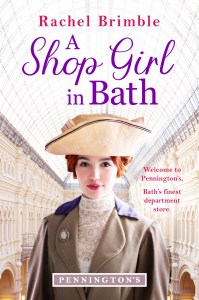
An Oldie but a Goodie: A Shop Girl in Bath by Rachel Brimble

Thanks so much for having me here today, Chelsey, and for the opportunity to tell your visitors a little bit about the first book in my Shop Girl series, A Shop Girl in Bath. The book was published five years ago today on July 1st 2018, and it is so wonderful to be celebrating all its past and (hopefully!) future sales 😊

The book is set in Bath’s finest Edwardian department store and opens in January 1910. It is a story of female empowerment, family drama and, of course, romance! The heroine is Elizabeth Pennington, the eager heiress of Pennington’s who is passionate, ambitious and desperate to wrench the reins of the store from her father who would much prefer to be passing Pennington’s onto a son rather than a daughter.

When he finally relents and hands over the running of Pennington’s to Elizabeth, she is determined to bring the store into the new decade and encourages the store’s shop girls to embrace their own aspirations and dreams. Not long after she takes over, our hero and master glove maker Joseph Carter enters the store in a bid to secure a contract for his collection of gloves. From there, Elizabeth and Joseph become a business dream team and romance blossoms along the way with plenty of drama and intrigue to keep the reader turning the pages! 

A Shop Girl in Bath was inspired by my love of the British period dramas Mr Selfridge and The Paradise. I adored these shows and if your visitors did too, I am sure they will enjoy this series. After the shows finished, I had a nagging compulsion to create a department store series of my own but focus almost entirely on the ambitions and personal lives of the women. The series goes on to encapsulate the growing opportunities for women as well as major Edwardian events such as the fight for the Vote and even a shop girl travelling aboard the fated Titanic for New York…

I am lucky enough to be able to write full-time and treat my writing as a job the same as any other, working from 8.30am – 5.30pm with a lunch break in between. I am naturally disciplined, but I think my commitment (I will often squeeze in a couple of hours or so on the weekends, too!) comes from my absolute love for writing. I am a plotter at heart and spend a lot of time getting to know my characters and writing a chapter plan before I begin the actual writing. Once I’ve started the first draft, I write from beginning to end without looking back. The hard work comes in the following drafts, but the first draft is my opportunity to have fun!

People have often asked me how I have managed to be so prolific over my career having written 29 books in sixteen years and it is very much due to my writing process. However, in January 2022, I embarked on a history degree so my writing time has definitely been drastically reduced! I have gone from writing two and half books a year to one and a half. On top of that, I am a firm believer in the joy of paying things forward whenever you can, so I also run a First Chapter Critique service for aspiring romance and women’s fiction writers. The writer sends me the first 3,500 words of their novel and I fully critique the pages as well as providing them with a 3-4 page report on characterization, dialogue, setting etc. specific to their story. If any of your visitors would like to know more, I invite them to visit my dedicated webpage at https://rachelbrimble.com/first-chapter-critique-service/ for all the details!

Rachel lives in a small town near Bath, England. She is the author of 29 novels including the Ladies of Carson Street trilogy, the Shop Girl series (Aria Fiction) and the Templeton Cove Stories (Harlequin). Her latest novel, Victoria & Violet was released 17th October 2022.

Rachel is a member of the Romantic Novelists Association as well as the Society of Authors and has thousands of social media followers all over the world.

To sign up for her newsletter (a guaranteed giveaway every month!), click here: https://bit.ly/3zyH7dt

Follow Rachel on her website: https://bit.ly/3wH7HQs

1910 – A compelling tale of female empowerment in Bath’s leading department store. Perfect for the fans of the TV series Mr Selfridge and The Paradise.

Elizabeth Pennington should be the rightful heir of Bath’s premier department store through her enterprising schemes and dogged hard work. Her father, Edward Pennington, believes his daughter lacks the business acumen to run his empire and is resolute a man will succeed him.

Determined to break from her father’s iron-clad hold and prove she is worthy of inheriting the store, Elizabeth forms an unlikely alliance with ambitious and charismatic master glove-maker Joseph Carter. United they forge forward to bring Pennington’s into a new decade, embracing woman’s equality and progression whilst trying not to mix business and pleasure.

Can this dream team thwart Edward Pennington’s plans for the store? Or will Edward prove himself an unshakeable force who will ultimately ruin both Elizabeth and Joseph?

A Shop Girl in Bath can be purchased here: https://geni.us/fl1Cxi