Elizabeth Wells Packard is not on the list of “25 of the Most Influential Women in American History” She’s not on the list of 41 women, 50, or even 125 women. But her name needs to be known. And you need to know what she did for you, your mothers, your wives, your sisters, and your daughters.
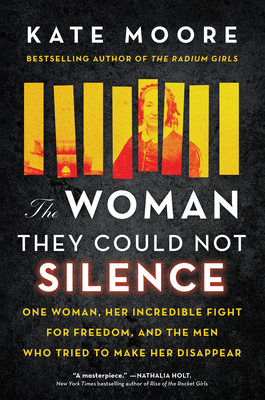
On a recent trip to Barnes & Noble, this title caught my eye:
After reading the blurb, I didn’t hesitate to purchase this gem of a biography. Kate Moore weaves an emotional and beautiful narrative of Elizabeth Packard’s strenuous life during the 1860s. A woman whose only crime was to have a different religious and political opinion from her husband. Such absurdity at the time was medically considered insane, imprisoning Elizabeth behind the walls of the Jacksonville Asylum. Elizabeth spent several years trying to get out, and once she was out, she was not done fighting. Her next goal was to get the laws changed that put her there. Ms. Moore writes in the style of narrative nonfiction, giving us the facts in the form of a story. My blood boiled for the majority of the book, but Elizabeth’s triumph made the emotional rollercoaster worth it.
So, let’s meet Elizabeth Wells Packard. (Note: Everything written below comes from what I learned in Kate Moore’s book. All credit for deeper research goes to her.)
Elizabeth married a man fourteen years her senior – which wasn’t a cause for raised eyebrows at the time, but certainly led to her husband’s erroneous belief that he could spend his marriage days controlling her.
Theophilus Packard was a preacher, which allowed Elizabeth a religious education. Shouldn’t the preacher’s wife know the Bible? In her studies, Elizabeth went beyond her husband’s teachings and explored other philosophies (this is at the tail end of the Second Great Awakening, afterall). Elizabeth thought it would be okay to share her new thoughts in her Bible Studies class. What Elizabeth didn’t know was Theophilus was receiving pressure from his financial backers to preach certain agendas in the wake of the looming Civil War. (Isn’t communication in marriage a beautiful thing?) Those agendas were the exact opposite of Elizabet’s new beliefs.
As tensions in their home rose, Elizabeth left her husband’s church, and began attending a church across town. This was the final straw for Theophilus. He locked Elizabeth in the nursery, and got two doctors to sign a certificate stating that Elizabeth was insane. On the day he planned to move her, he sent their 6 children on different errands and to different babysitters so they would not see their mother cartered off, and so the older ones could not come to her defense. He then brought in several trusted minions to manhandle Elizabeth out of her home, to the train station, and onto the train. Elizabeth was smart. She knew if she fought, then the unintelligent society she lived in would believe her insane. So she remained calm, stoic, and gave her kidnappers her dead weight as they carried her through the town.
Theophilus accompanied Elizabeth to the Jacksonville Asylum in Illinois, and after dropping her off, would not see her again for quite some time. Theophilius placed her in the hands of the resident doctor, Andrew McFarland.
Dr. McFarland was smarter than Theophilus. After meeting with Elizabeth, he led her to believe that he did not think her insane, and that she would be out in a few months. During those few months, Dr. McFarland met with Elizabeth every day, letting her talk herself into a deeper hole (unbeknownst to her).
According to Dr. McFarland, Elizabeth was not insane due to her religious beliefs. She was insane because she hated her husband. A sane woman would obey her husband. A sane woman would love her husband. A sane woman would forgive her husband for putting her in an asylum and agree to obey him in order to be released from the asylum. Elizabeth would do no such thing, so she remained there for about three years.
During her time there, Dr. McFarland tried to break her by preventing her letters being delivered (both written to and by her), taking away her nice clothes, books, and writing supplies, and eventually moving her to the worst part of the hospital for women: 8th Ward. While in 8th Ward, Elizabeth experienced emotional abuse from the staff, and physical abuse from specific patients (these were the only patients that Elizabeth truly believed were insane). She also witnessed horrible physical abuse given to the other patients.
Elizabeth was really good at making friends. And so, over time she was able to convince staff members to sneak her reading and writing materials into her new room. And during this time she wrote two full length books. One was all about the sins of Dr. McFarland, the other about the problems of her modern-day mental health system, religion, and women’s rights.
Elizabeth requested a meeting with the Board of Trustees, and was surprisingly granted a presentation with them. Dr. McFarland came, and so did Theophilus. But just like with the other patients and staff, Elizabeth won the Board over, and they commanded Dr. McFarland to release her within the next few months. Her release date came and went, but Elizabeth continued to write and pester Dr. McFarland.
Eventually, Dr. McFarland admitted she was more bothersome inside the Jacksonville Asylum than he could handle, and he released her. Theophilus dropped her off with her cousin and forbade her from visiting him and their children. Elizabeth planned to do no such thing, and took out a loan from her friends to take a train to her hometown. She walked right into her old house, and it was a giant mess. Her only daughter was forced to become a homemaker at 11 years old, and is now a traumatized 14 year old. Theophilus had brainwashed their children against her, and they would only obey their father. Elizabeth became an invisible nuisance in her own home.
Theophilus locked her in the nursery again, and she discovered he’s preparing her a place in another asylum, this time, for life. If she enters those doors, she isn’t coming out until she is dead. Her friends got the legal help that was denied her three years prior, and her sanity was officially on trial in the county court.
This is one of the most amazing court cases I’ve ever read. And I can’t do it justice. Just read the book. In the end, Elizabeth won. She won against all those men who wanted to lock her away for life. BUT she is only free in the state of Illinois, and Theophilus still has legal control over their children. Ever the sore loser, Theophilus took off with their children and moved to Massachusetts.
Elizabeth would then spend the next several years lobbying state government after state government to get the laws changed across the country. After another showdown with Dr. McFarland, she was successful. And because of Elizabeth Packard, women cannot be placed in asylums just because their husbands wish it. Because of Elizabeth Packard, women received a huge step in progress to their legal rights over their mental health and personal property. Because of Elizabeth Packard, the treatment of mental health patients started the process of improving.
Elizabeth would get reunited with her children, and begrudgingly, her husband. They never divorced, but they also remained in separate dwellings for the rest of their lives. They stayed cordial in order to both have access to their children. The two books Elizabeth wrote while imprisoned got published and she lived off the sales of those popular volumes and the charity of her adult children. She is an amazing example of determination, passion, and perseverance.
Have you read about Elizabeth Packard before? What are your thoughts on her accomplishments? What other biographies would you recommend? Let me know in the comments!


 Chelsey M. Ortega