What YA Stories Can Teach Us: The Haunted Purse
I’m currently reading the Junie B. Jones series to my 6 year old (I know the title says YA, I have a point, I promise), and my adult eyes view Junie B. in a whole new light. It makes me sad that almost every adult in her life is so impatient with her and jumps to punishment right away instead of finding the root cause of Junie B’s behavior. There are two adults who treat her well and actually listen to her: Principal, and Grampa Frank Miller, but talking about those two is for a different post.
Like with fiction’s funniest kindergartener, I’ve had a different reading experience with YA stories now that I’m a parent and I teach high school. And I’ve started to see three common messages in the recent YAs I’ve read: how adults treat teenagers is important, see something-say something, and honesty really is the best policy.
As I dive into these lessons, I would like to use The Haunted Purse by Kimberly Baer to dive deeper into these themes.
First, let’s get you on board with the plot and characters of The Haunted Purse.
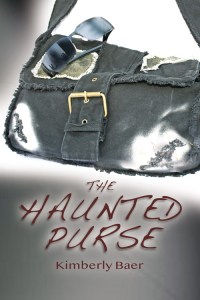
Libby Dawson is our main character. She is a 15-year-old Sophomore, and her story begins during the second half of the school year. She just purchased a new (to her) purse from her local thrift store, and her purse keeps making things disappear. After she sweats for an hour or so, her purse will magically return it. This Mary Poppins purse causes problems between Libby and her Physics teacher, and Libby and her mom. On the flip side, the purse also helps her overcome her bullies and protects her from an assault the school’s heartthrob has planned for her.
Libby eventually figures out that the purse is not magic, it’s haunted. The ghost of the previous owner has possessed the purse, and she wants Libby to solve her disappearance and murder. One big problem: this is a cold case from over twenty years ago.
Libby’s best friend, Toni, gets to witness the purse in action and happily becomes Libby’s sidekick in solving the case. The two girls put themselves in dangerous situations, leading to Toni getting grounded for the rest of the summer, and now Libby has to finish the case by herself – which ends up being more dangerous than Toni’s ridiculous idea that got her grounded.
Now that you’ve got a feel for the story, let’s dive deeper into our three messages.
How educational professionals treat each student is important.
The opening scene is Libby losing her position as her Physics teacher’s “favorite student”. An essay is due, and Libby has to tell her teacher, “My purse ate my homework.” Her teacher doesn’t believe her, and embarasses her in front of the whole class. At the end of the class period, the purse returns the essay to Libby, and she tells her teacher she found it and asks if she can turn it in. Her teacher says yes, but the damage is done. She stops treating Libby with respect and compassion. Libby is the narrator for her story and informs the reader that this teacher is obsessed with being the fun teacher for the popular kids, plus has a few prized academic students. Libby used to be one of those prized academic students, but after this one mistake, she’s now a peasant, especially since the popular kids already bully Libby.
I had a teacher like that in high school. Not to the extent of bullying students, but he was focused on keeping the popular kids entertained, and it caused him to let the rest of us fall through the cracks.
In another scene, Libby is planning the rest of her high school career with her school counselor, and he is very condescending about Libby’s socioeconomic status. He basically tells her that her only chance of going to college is to be a straight A student so she can get scholarships. While what he said was factually true, Libby already knew that about herself, his delivery was so gross and judgmental.
So, the takeaway from these two scenes is that teenagers – and young people in general – are very aware of their surroundings. They can absolutely tell how adults feel about them. And adults who have a stewardship role over minors need to be a safe person.
See something, Say something.
A big part of Libby’s character arc is that she is “the girl who raised herself.” Libby’s mom, Misty, had her when she was a teenager, and Libby has never known her biological father. Misty did not want to be a mom that young, and resented Libby for taking away her young adult years. So when she meets a man who claims he doesn’t like kids (at least, that’s what Misty tells Libby – I have my own theory), Misty moves in with him and leaves Libby in their apartment. Misty stops by occasionally to give Libby money for groceries, rent, and other bills; but other than that, Libby is literally living by herself. The entire apartment complex knows this, and no one does anything about it. Libby doesn’t want to end up in foster care, so she is fine with everyone else’s silence. But no one caring about her whereabouts is going to be a problem when she finds herself at the mercy of the villain.
Obviously, the plot would not have gone the way it did if one of Libby’s neighbors called social services the minute Misty abandoned her daughter. But in real life, these kinds of situations are not okay.
Honesty really is the best policy.
Almost all of the characters lie at some point. Most of them are lies by omission. The one I want to highlight, I’ll have to be vague on because it’s part of the resolution. So one of the characters who was close to the ghost when they were alive blames themself for the victim’s disappearance. They knew the ghost (when she was alive) was doing something they weren’t supposed to, and kept their secret for them. Twenty years later, they’ve still kept that information a secret because they feel so awful. Like most blame plotlines, if they’d confided in at least one other person, they would have learned everything was all right, and they weren’t responsible.
We all need at least one person whom we can be completely honest with.
So with these common lessons in YA stories (and let’s be honest, most stories), the plots would not be as developed and the stories would be over too quickly if these types of mistakes weren’t made. But the lessons learned from them are great for real life.
And this is one of the many reasons that The Haunted Purse is a worthy 5 star read. The story is intriguing, the characters are realistic and relatable, and the lessons learned are applicable.
Have you read The Haunted Purse? What were your thoughts on it? What other stories like it would you recommend? Let me know in the comments!


 Chelsey M. Ortega