December Newsletter

Subscribe to continue reading
Subscribe to get access to the rest of this post and other subscriber-only content.
Subscribe to get access to the rest of this post and other subscriber-only content.
Subscribe to get access to the rest of this post and other subscriber-only content.
The greatest pop hits of 2006 bring me back to working in a Snowie Shack on the corner of Center Street and Geneva Road. For some reason, anything by Alanis Morisett, The Cranberries, and the Pina Colada Song remind me of working at Mervyn’s. And a catchy cha cha or samba is going to bring me back to the competition floor.
Music has always been a part of my life, and specific songs are nostalgic for different eras in my life.

Writing Bondwitch was no different, and as part of celebrating my book’s birthday, I thought it’d be fun to share what songs inspired or helped me write specific scenes.
During the second act, Annamaria meets a pair of professional ballroom dancers who are also vampires. Kylie and Tyler have a YouTube channel, and invite Annamaria to join their dance routines. The routines I spent significant word count on went with a real song to help me describe the choreography. So, here are the songs that helped with the key dances:
The last song that goes with a specific scene is “Almost Lover” by A Fine Frenzy. This song goes with Annamaria’s dark night of the soul moment. In this scene, Annamaria is heartbroken because she has been betrayed by people she cares deeply about, and she thought they cared deeply for her. She’s literally chained up and has a decision to make that could lead to fatal consequences.
Other songs I listened to while working on Bondwitch:
Music plays a huge part in most people’s lives. Certain songs have inspired decisions and creations. And sometimes, we just need the background noise while we work.
What song has been important or inspirational for you?
Let me know in the comments!
Subscribe to get access to the rest of this post and other subscriber-only content.
Joi Lesin’s debut novel The Passenger came out last month, and I am excited to introduce her and her Paranormal Historical Romance to you.
Let’s start with what is The Passenger about?
Elizabeth Reilly is twice haunted. She not only keeps the memories of her late husband, a casualty of World War II, close to her heart but she also inherited the ability to communicate with the spirits of the dead from her mother.
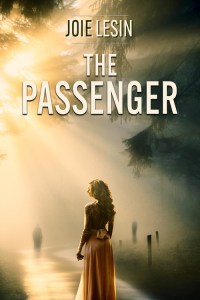
When she aids a dying man, Paolo Clemente, in his last moments of life, she launches on a journey that will forever change her life and the life of the family Paolo left behind. After befriending Paolo’s ghost, Elizabeth travels to California to help him find peace. There she meets his son, Giovanni, who has recently returned from the war in Europe. Gio, as he is known by those closest to him, is only just settling back into his post-war life. When Elizabeth arrives, bringing news of the father he never truly knew, Gio is suspicious of both Elizabeth and her story.
The Passenger is a historical paranormal romance that explores the themes of love, grief and discovering who we truly are. These things are set against the backdrop of paranormal historical and picturesque settings that transports the reader to another time and place. Add to that, the characters are forced navigate the challenges of long hidden family secrets, matters of the heart, and the supernatural.
For me, the setting is as much of a character as the people who populate the story. The Passenger takes place in Cana, a fictional town nestled somewhere in California’s wine country. It’s a town where there’s so much more than meets the eye.
To visit Cana, you must travel over winding roads bordered on both sides by green, rolling foothills and tall, sun filtering conifers surrounded by native plants. Along the way, the ancient trees part to reveal estates of all sizes. Here, a vineyard displays rows of grapes ripe for the picking. There, a ranch complete with cattle grazing the hillside. This is where you’ll find the vineyard Paolo Clemente bought after immigrating from Foggia, Italy to America.
History and the paranormal are my two favorite genres. What inspired this story?
The inspiration for Elizabeth, Paolo, and Gio’s story came to me when I was 16 years old. I was on the city bus on the way home from school playing the “What If” game, making up stories for random passengers.
On this particular day, I noticed a man sitting at the back of the bus who seemed a bit down on his luck. I wondered, what if he were alone in the world? What would happen if this man collapsed there on the bus? Would he die right there on that bus alone? What if I, or someone else, comforted him in his dying moments?
The tale blossomed from there until I finally sat down to write it 16 years later.
That’s amazing that such a seemingly small moment stuck with you for so long. How does that affect your writing schedule?
As a writer, I find I am a combination of a pantser and plotter—I puzzle together rather than plot my stories. For me this means I spend a significant amount of time thinking about the story. I tend to work out the story in my head like a problem that needs to be solved. This also means that part of my writing routine may look like I am just staring into the sky, but I am working hard—honestly.

All of my stories start with a single scene. Most of the time when that scene first comes to me, I don’t yet know the characters, but I see a moment in time. From there I treat it like a puzzle. I discover who the characters are by writing the opening and closing scenes. From there, I write to discover what has to happen to lead them from that opening to the single scene that birthed the story for me—and how to progress forward from that pivotal moment to the closing scene. Any plotting I do happens a scene or two at a time. It may not sound like it but it’s both organic and methodical for me.
I am, and have always been, a night owl. So, when I’ve gathered enough of the story elements together in my head, I sit down to write, usually, at night. Why? Because my creativity is most alive under the moonlight.
Welcome to the night writer’s club! When you aren’t writing, who are you?
Outside of writing, I am many things—a wife, mother, stepmother, daughter, sister, and friend. Until three years ago, I was also a Business Analyst, but now have the opportunity to focus on my writing full-time.
For grounding myself, I simply love to lose myself in books and always have—both reading and writing them.
For fun, I take pictures and share them on social media. I’m always on the lookout for a view that’s new to me. I’m also a novice ukelele player. By this I mean, I’ve been learning how to play for the last four years. My husband did restring my ukelele for lefthanded playing, so I think I should get the hang of it one day soon—maybe. Which leads me to say, aside from books, one of my biggest interests is music. I have an eclectic taste, but my favorite to listen to by far is indie rock—80s and current.
I think anyone who can play a musical instrument is awesome. What’s next in your writing career?
I am currently working on two projects at once.
The first is a story that takes up where The Passenger left off. Like its predecessor, Watch Over Me is a ghost story and answers some questions left open at the end of The Passenger. This paranormal romance takes place in 1968 and tells the continuing story of Elizabeth’s daughter, Bella. What was the inspiration? A scene of Bella running through the vineyard with someone—or something—in pursuit while the earth trembles.
I’m also working on a mermaid novel that explores the relationships between sisters, mothers, and daughters. I’m very excited about this story and cannot wait to share more about it.
First though, my ghosts are calling and want their stories told.
Minnesota-based author, Joie Lesin is a life-long fiction writer and the author of The Passenger. She has long been fascinated by anything otherworldly including ghosts. She loves to write a good ghost story—especially when it includes a touch of romance.
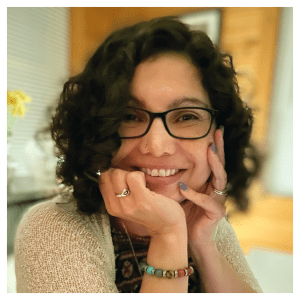
Originally from Massachusetts, at six years old, Joie moved to her mother’s birthplace, Minnesota. By eight, Joie lost her New England accent, however, it’s gradually returning as the years go by. She grew up in Minneapolis but now resides in St. Paul with her husband and their blended family—which includes a rambunctious grand-corgi.
Joie misses the ocean, but she often finds herself walking by one of Minnesota’s many lakes and travels to one of the coasts as often as she can. In fact, she considers California her home away from home. When she’s not writing, reading, or walking, you can find her listening to music. She absolutely loves music—especially live—and songs have sparked most of her story ideas.
Follow her at her website: https://www.jlesin.com/
She’s a 1940s ghost whisperer. He’s the son of a ghost.
Burdened with her empathic gift, Elizabeth Reilly wants to be free of it and fit in with normal people. Nevertheless, when the spirit of an old man asks for her help, she travels across the country to help him return home. Gio Clemente is still angry with his father who abandoned him as a child. To help the father pass on, Elizabeth must persuade Gio to let go of his anger. Though he resents her intrusion, they are both stunned to find themselves fighting a profound attraction. Elizabeth can accept his headstrong brand of love, but can Gio accept her gift—and believe in her?
The Passenger, a 1940s ghost story set in the California wine country, tells a tale of family connections, life-changing choices, and love—lost and found.
The Passenger is available now: https://www.jlesin.com/thepassenger
Subscribe to get access to the rest of this post and other subscriber-only content.
Back when I finished the first draft of Bondwitch, and googled “how to publish a book,” one of the deep dives I went into was beta readers and critique partners. So many authors I talked to online were adamant that I should not publish my book without other people looking at it first. But taking that step of trusting someone else with your writing is really scary when you are new to this world. And after four years of sharing my writing with others, I have a critique partner who is my ride or die. So, I wanted to share how we found each other. And hopefully my journey will help someone else who is in the early critique group trenches.
Get comfortable with someone else reading and commenting on your writing and vice versa.
Before I knew anything about alpha readers, beta readers, and critique partners, an acquaintance from high school was asking for beta readers on facebook. My husband is a gamer, and I knew that beta players got to play a game before its release or play an updated version before it was available to the general public; I figured that was something similar. I volunteered and read her story. Now that I know more than I did, I’m sad to say, I was not a good beta reader. After finishing her story I sent her an email that said something to the effect of, “I really enjoyed your story. The ending makes me want to know more. I noticed a few spelling and grammar issues.”
I’ve since learned how to be a better beta reader.
When my own story was ready, I sent it to this acquaintance and my brother. The acquaintance never told me if she finished or not, and my brother couldn’t get past chapter 10 – I would later learn the lingo that he is not my target audience. But based on what my brother did say about the beginning, I was able to figure out some slight changes to the plot and improvement in character development.
I did a year of researching, editing, and revising, and my next batch of beta readers were going to (hopefully) be strangers. A big worry that many new writers have is “What if one of my beta readers steals my work?” I had that same concern. U.S. copyright law is on your side. Even if you don’t get an official copyright ISBN, by simply writing your words down, you own them. (I know, actually taking such an issue to court is a whole other beast. But in my experience, you’re more likely to simply encounter people who will agree to read it and won’t, than steal your work.)
I decided that the only way to know if beta readers were worth it was to experience it. I got 15 people to express interest in reading my story. Of those 15, 3 finished: 2 cousins, and a stranger.
Many people will say to NOT use friends and family members as beta readers because they may not be honest with you. Well, these two cousins were absolutely honest, and their comments were very helpful. And that’s something you can try with friends/family beta readers. If their comments aren’t helpful, then don’t ask them for your next project. If they were, then you can.
During this time, I was also actively beta reading other writers’ work. Commenting on their stories was hard at first because I didn’t want to hurt their feelings. But I put myself in their shoes: Would I want only comments that said how awesome it was, or would I also want comments that could help me be a better writer? So I made sure to express my critiques in what I hoped was a helpful way, not a “this is terrible” type of tone.
Start by joining a larger group.
When I finished an early draft of Bondwitch: Hybrid, I learned that it’s even harder to find beta readers for a sequel when they haven’t read the first book. No one accepted the invitation to beta read except for the 3 who already read the first book. So, I needed to find a way to get more people looking at it before I sent it in to my publisher.
There are some online groups like Critique Circle and Writer’s Cooler (I think that’s what they’re called, it’s been a while). But just jumping in online was still really nerve wracking for me. Then the founder of TWRP sent an email out to all of the authors signed with them to let us know what her three favorite conferences to go to. One of those conferences is the Quills conference in Salt Lake City, Utah. Well, look at that, I’m 45 minutes south of there!
So I looked up the conference and discovered the organizers are the League of Utah Writers. And there are chapters all over the state. I looked through their list of chapters and found three that looked promising for what I was looking for. One of them meets at the library down the street from my house. I emailed the chapter president. She invited me to come to a meeting, and if I was comfortable, to bring an excerpt of 1500 words or less and bring at least 6 copies. We go around the table and read our stuff, and take notes on others, give them comments, etc. I felt right at home after the first meeting, and joined the League and that specific chapter right away.
Eight months later, a member of the group created an off-shoot group where we read the same person’s entire manuscript on our own time in a month, and then meet and deliver comments to help the person improve their story. I joined that as well and created some deeper friendships.
The connection needs to be organic.
My earliest memory of Megan was a couple months into joining Nebo Novelists. I don’t know if it was her first time attending, but it was her first time bringing something to read. She read the prologue to her debut novel, Swayed (which I’m so excited to review and interview her here on my blog once it’s officially published!). It was one of the best prologues I’ve ever read, and I told her so that night.
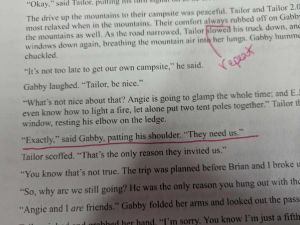
A few weeks later, so many people had come to the group meeting that we had to split into 2 groups, or not everyone would be able to get through their stuff. Megan immediately requested to be in the same group as me, and I had already been thinking the same thing! We both wanted to continue to read one another’s stories. From then on, we’ve always sat next to each other, and on the occasional night the group needs to split up, we stay together.
One thing that makes us such good writer friends and critique partners is that we both read and write romance. Since we understand the rules and expectations of the genre, we are the best at helping each other. In addition, we truly care about one another’s stories and success. I love Megan’s writing, characters, and plots. And she loves mine. But that love doesn’t prevent us from pointing out ways we can improve.
Create a system and schedule that works for both of you.
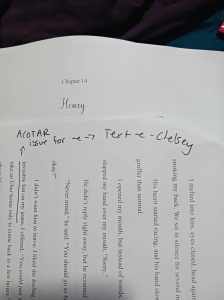
Our official partnership outside of group meetings started when Megan texted me follow up questions about some of my comments. That led to texts about plotting, foreshadowing, etc. Then she asked a question that I couldn’t answer in a text message because it was too long and I wasn’t the expert. But I had an hour long video clip that could help. I tried to email it to her, but my email couldn’t send that large of a file. So, I created a Google Folder and named it “Chelsey and Megan: Writing Buddies”.
Megan ran with it, and started uploading her manuscripts and notes from courses and seminars she’d taken. So then I uploaded my manuscripts. And now we read each other’s stuff well ahead of our bi-monthly group. She has been paramount in helping me edit episodes of The Wolf Whisperer for Kindle Vella. I have found a true friend in her. And I seriously cannot wait for her stuff to get published so I can tell you all about it!
I am honored to introduce AK Nevermore to you. She has three series to her name: The Price of Talent, The Maw of Mayhem, and The Dae Diaries. The second book in The Dae Diaries releases TODAY. And AK Nevermore is here to tell you all about it.
Hey all! AK Nevermore here. I write seat-of-your-pants urban fantasy, paranormal, and steamy dystopian romance. What do I mean by seat-of-your-pants? Whelp, I’m a total pantser and my books are fast-paced with plenty of unexpected twists and turns. They will definitely keep you guessing, so you’re gonna want to buckle in for the ride! And today, I am super excited to be sharing my latest release from The Wild Rose Press, Air & Darkness, with you.

Air & Darknessis the second installment in the Dae Diaries, but don’t let that stop you from taking it for a spin. You can absolutely jump right into this seriously quirky urban fantasy with a sassy take-no-prisoners heroine. The story follows Envy, a half-daemon who accidentally ends up becoming a goddess, much to everyone’s chagrin—including her own. Being a deity is definitely not all it’s cracked up to be, and in Air & Darkness, neither is motherhood. It’s all about baby-daddy drama going to Hell. Check it out:
A week past her due date and not in the mood for anything other than chocolate, the last thing Envy wants to deal with is some fairy demanding she chose a consort. Unfortunately, she can’t exactly tell the Gwinth to piss off without him releasing the wild hunt on humanity, and she’s in enough trouble after the whole sealing-the-veil-and-frying-portions-of-the-planet-thing.
It’s bad enough she’s not exactly on speaking terms with Kyle, Berk, and Morgana. Brennan’s way different since she released his fiend. So is she. Assimilating Lilith’s memories and powers are throwing her for a loop, and her own messy feelings on motherhood aren’t helping. Then, Brennan disappears after a devastating scandal surfaces, and everything Envy thought she knew comes crashing down…
When I wrote Air & Darkness, I definitely pulled on my personal experience and absolute bewilderment as a new mom. Things that were terrifying at the time are pretty funny in retrospect, and I tried to craft the story to highlight their absurdity.

I hope you’ll check it out, but if you need some more convincing, you can hang out with Envy out in One Night in Bliss, the free prequel. Not for nothin’ but it’s been reviewed as a “Hilarious, seriously f’d up good read…” and I kind of have to agree with them.
Then, if you want more Nevermore, stop by my website at: https://aknevermore.com/ There’s always something going on!
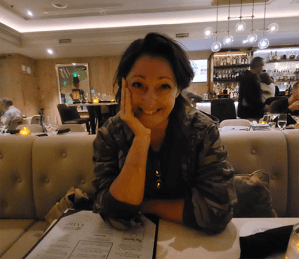
AK Nevermore writes Sci-fi & dark romantasy with spice. She enjoys operating heavy machinery, freebases coffee, and gives up sarcasm for Lent every year. A Jane-of-all-trades, she’s a certified chef, restores antiques, and dabbles in beekeeping when she’s not reading voraciously or running down the dream in her beat-up camo Chucks.
Unable to ignore the voices in her head, and unwilling to become medicated, she writes full time around a nest full of ravens. Her books explore dark worlds, perversely irreverent and profound, and always entertaining. AK belongs to a bunch of industry associations, volunteers for far too many committees, teaches creative writing, and on the rare occasion, sleeps.
I absolutely love hearing about personal stories and experiences that influence writers. I love that Ms. Nevermore used something as vulnerable as motherhood to craft her newest book. What personal experiences would you like turned into a book or a movie? Let us know in the comments!
Subscribe to get access to the rest of this post and other subscriber-only content.
At the beginning of this month, USA Today’s best selling author Liz Flaherty released Pieces of Blue. Normally a romance author, Liz has dipped her toes into women’s fiction with her latest release, and is here to share her thoughts on her recent writing and publishing journey.
Hi, everybody. Chelsey, thank you so much for having me here today.
I’m not sure when the term women’s fiction entered my consciousness. I don’t recall whose I read first or even if I liked it. The words Woman’s Journey had been bandied about most of the years I’d been writing romance, and I thought that’s what we should do with romance and women’s fiction—just make them into one huge glorious genre known as The Woman’s Journey.
The idea didn’t catch on.
But I read CurtissAnn Matlock’s Lost Highways and Robyn Carr’s Deep in the Valley and Cheryl Reavis’s Blackberry Winter and Elisabeth Ogilvie’s Bennett’s Island series. I kept thinking yes, this! They’re all women’s fiction, but they’re all love stories, too. They’re all women’s journeys and I’ve read most of them more than once. While I love the relationship that grows between the heroine and hero, I also enjoy the ones between girlfriends, between sisters, between work friends who are there for each other. The romance is important, but it’s not always most important.
Because it’s the story that’s important. The journey. How you feel when you finish reading. To a lesser degree, as a writer, how I feel when I finish writing is important, too.
Of course, none of that was in my mind at all when I got a two-word start that wouldn’t get off my mind and stay there. Then I had a trip back a skinny, curvy road to a small lake I’d never known existed but made me type Chapter One above those initial two words. Later still, Maggie North invited me on her journey. It took her a while, and writing it took me a while, but…gosh, I loved Maggie. And Sam. And her adoptive parents. And Pastor Cari Newland. Oh, and Ellie and the dachshund named Chloe, too.
Pieces of Blue has some romance, a setting I never wanted to leave, and, most of all, it has friends and family and community. Their dialogue was so much fun to write. The house—the Burl—is a character unto itself.
How did I feel when I finished writing it? Oh, good. Sorry it was over and slapping back thoughts that maybe it wasn’t over…maybe there was another story at Harper Loch. Or two.
We’ll see. In the meantime, it’s a story from the “huge glorious genre” I mentioned above. I hope you like it.
For all of her adult life, loner Maggie North has worked for bestselling author Trilby Winterroad, first as his typist, then as his assistant, and finally as his ghost writer. Throughout her first marriage, widowhood, remarriage, and divorce from an abusive husband, Trilby was the constant in her life.
When he dies, she inherits not only his dachshund, Chloe, but a house she didn’t know existed on a lake she’d never heard of. On her first visit, she falls in love with both the house and the lake. Within a few weeks, she’s met most of the 85 inhabitants of Harper Loch and surprisingly, become a part of the tiny community. Her life expands as does a new kind of relationship with her friend Sam Eldridge. She finally feels not only at home, but safe.
Until her ex-husband is released from prison. The fragile threads of her new life begin to fray, and that feeling of safety is about to shatter into a thousand pieces.
The drive took me farther into the country than I’d ever been—at least that I could remember. While the temperature didn’t drop, the wind did increase, blowing snow from the roadsides across in front of me in gusty swirls of white. I was surprised that Gladys, the elegant voice of my GPS, didn’t sound either confused or disdainful even when it took me three tries to see the little green sign that indicated Harper Loch Road.
Canopied by naked February trees and lined with animal-tracked snowbanks, the road was one and a half lanes wide. I hoped it would be wider when there was no snow, but I wouldn’t bet on it. It was hilly, with serpentine curves that reminded me of a Chutes and Ladders game board minus the ladders. Gladys didn’t enlighten me as to how far it was to the lake itself, and two miles in, I was starting to wonder if it was all a bad joke.
Trilby had been the master of bad jokes.
A barnwood sign at the side of the road encouraged me to Keep Right! I inched over, flinching when the snowbank brushed the side of my car, my pride and joy. Chloe looked my way, wide eyed.
Apparently, it was a popular meeting spot on the road, because I met a pickup immediately, going at least twice as fast as I was. The driver waved cheerfully and missed me by what I was certain was the hair’s breadth Trilby used to insist was purple prose if used in a book. I would have waved back, but my hands, white knuckled, didn’t want to let go of the steering wheel.
“Trilby,” I said, “what in the hell were you thinking?”
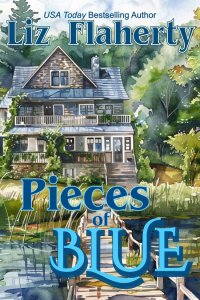
Pieces of Blue is available everywhere books are sold online:
https://books2read.com/FlahertyBlue

Liz Flaherty has spent the past several years enjoying not working a day job, making terrible crafts, and writing stories in which the people aren’t young, brilliant, or even beautiful. She’s decided (and has to re-decide most every day) that the definition of success is having a good time. Along with her husband of lo, these many years, kids, grands, friends, and the occasional cat, she’s doing just that.
She’d love to hear from you at lizkflaherty@gmail.com or please come and see her at https://linktr.ee/LizFlaherty
 Chelsey M. Ortega