March Newsletter 2024

Subscribe to continue reading
Subscribe to get access to the rest of this post and other subscriber-only content.
Subscribe to get access to the rest of this post and other subscriber-only content.
I recently enjoyed following a discussion among historical fiction authors about accuracy and research. Probably my favorite thing I learned is that the food the ton eats in regency novels is often inaccurate to real life. I learned that bacon and eggs was a lower-class breakfast, and chocolate wasn’t a commonly accepted dessert yet. And when authors make such errors, readers who are educated in the time period they love are going to get upset.
To be honest, learning that didn’t turn me off to any of the regency novels or authors I’ve read that have been inaccurate. As a high school history teacher, I don’t teach what type of food a specific socioeconomic class ate in a specific time period. I teach the impact people, events, and movements had on society and progress. And so it is those details that I’m hyper aware of when I read historical fiction. And yet, other people clearly do care about the minute details, which is completely valid. So, how does an author decide how much fiction to put into historical fiction?

Let’s use my favorite historical fiction author, Philippa Gregory, as an example. Readers either love her or hate her. I am in the camp that loves her. She makes a lot of risky moves with her historical accuracy, but I don’t always agree with all of them even though I love reading her books. Let’s take a look at The Other Boleyn Girl as our main example. (Mainly because I know both the book and historical facts very well.)
In several interviews, Ms. Gregory has stated that when she writes a royal court story, she has a timeline up on her wall that shows the movement of the court, so that she can put the characters in the right geographical location in the right month/season. From there, depending on who you talk to, things can get murky.
In The Other Boleyn Girl the 4 main deviants from other accepted sources are:
The birth order of the Boleyn children

Every historical source I have ever read puts Mary Boleyn as the oldest, Anne Boleyn as the middle child, and George Boleyn as the youngest. Philippa Gregory switches the characters around completely: George, Anne, Mary. I do understand why (I think) she did it. The relationship she created for the two sisters – Anne as a bossy bully and Mary as passively compliant (which she grows out of over twenty years) – works better for Anne being “the mean older sister”. Despite me understanding what is most likely her reasoning for doing this, it still bothers me.
Who fathered Mary’s children?
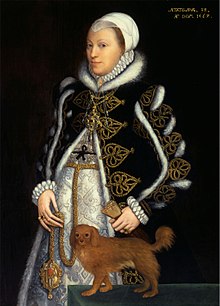
When Mary Boleyn became Henry VIII’s mistress, she was married to William Carey. She became pregnant during that time, and the court believed – as well as historians – that the king was the father of Mary’s oldest child, Catherine Carey. Surviving portraits of the oldest Carey child do hold similarities to other known Tudor children (according to those with the eye to see such details). According to historical sources, Henry had set Mary aside well before she became pregnant with her second child, Henry Carey. Historically, there was no doubt in anyone’s mind that William Carey was the only possible father to baby Henry. Philippa Gregory, however, made the decision to keep Mary as the king’s mistress longer than is accurate, and to make the father of her second child Henry VIII. Once again, there is a method to her madness. Later on, Anne adopts Henry so that she would be the “mother” of a biological son of the king, so he would be more inclined to marry her. But once again, the inaccuracy doesn’t sit well with me. The rest of the plot can continue as normal without this change.
Mary’s role in court

After Henry VIII set Mary aside, she’s a background character in the main historical record. We know she gave birth to a boy named Henry, and her first husband, William Carey died during one of the sweat summers (a type of plague disease that killed thousands of people every year). At some point after Princess Elizabeth was born, and during Anne’s unsuccessful pregnancies, Mary married a man well below her station, William Stafford. She kept her marriage a secret until her third pregnancy became too noticeable to hide (or perhaps, they married because she became pregnant). Queen Anne banished her own sister from court, and Mary’s remaining family followed their queen and shunned her. Mary moved to Calais, and that’s where they were living when Anne was beheaded for false accusations of adultery.
In The Other Boleyn Girl, Philippa Gregory condenses Mary’s banishment to less than twelve months, and she’s back at court as the queen’s sister. How does Ms. Gregory justify this very obvious discrepancy? An actual primary source states that during Anne’s last miscarriage, she let no one in her chambers besides her mother and her sister. Now, this sister could have been Jane Parker, George’s wife. But it was also well known that Jane and Anne didn’t like each other. In fact, Jane and George didn’t like each other. But still, how can Mary be at court if the historical record puts her in Calais? Or was it a misunderstanding on who was actually in the room? (Especially since this is a time where false accusations of adultery were being prepared.) Either way, Philippa Gregory has one source to validate her decision to keep Mary at court for the story.
And this is actually how she does it in all of her books. As long as one source records a guess, rumor, etc.; she can put it in her book and says that she is exploring what the story would look like if that source were true. Which, I think, is fine. Provided she justify it in her Q&A section she puts at the end of each book. And she does, most of the time.
George’s Sexuality
A major side plot in The Other Boleyn Girl is George Boleyn falling in love with Francis Weston, and embarking on a love affair with him. Once again, Philippa Gregory uses an obscure source that claims George’s pre-execution speech included an apology for sodomy. This claim can’t be combatted the way that the others were. Historians can’t discover the thoughts and feelings of long dead people. So, if a historical fiction author wants to make someone gay, they can do so.

Any other Philippa Gregory book is going to have similar changes. She uses the lack of perfect records to fill in the blanks with her own imaginings. She uses the very real beliefs of the time in witches to include spells, curses, and fortune telling. And she finds obscure (but real) claims to further dramatize an already dramatic era.
But even though she does her homework to justify the changes she makes, the real question is: Do you readers support these changes? Enough that she is still writing and selling books, and Starz is slowly turning her more popular books into mini-series. But the naysayers are still quite loud.
So, at the end of the day, if you’re going to write historical fiction, just know that any changes you make will be noticed by some while unnoticed or ignored by others. It’s still your choice to make, but it will affect your readership. As for me, I’m going to continue to read regency romances regardless of what the upper class eats; and I’m going to continue to enjoy Tudor era stories – though I will grumble internally when things are too wrong for my taste.
What’s your favorite time period for historical fiction? Let me know in the comments!
I’m excited to review another ARC (Advance Reader Copy – I get to read it before the official release date).

Out of Body by Kimberly Baer (which publishes TODAY) is a YA Paranormal-SciFi adventure about a 15 year-old girl named Abby who discovers she has the ability to leave her body during sleep time – or travel on the astral plane. Her cousin, and best friend, Logan has the same ability. This is so exciting for Abby because Logan moved away six months ago and she misses him terribly.
At first, Abby’s out of body experiences (OBE) allow her to help others: finding a lost pet, helping a neighbor call 9-1-1. Then she learns things she would rather not: her parents’ marriage is on the rocks, and the mean girls at school wrote nasty things about her in their yearbook. (I LOVED the Burn Book vibes in that scene.)
Abby is an introvert, and it turns out her social life was because of Logan. Once he moved away, her “friends” disappeared. Both her and Logan having OBEs gives her hope that she’ll get her best friend back. But Logan has been traveling on the astral plane longer, and already has other friends and adventure plans that don’t involve her.
She’s mostly fine being alone, but her mother is not okay with a socially inept daughter. Feeling pressure from her mom, Abby uses her OBEs to make drastic and dangerous decisions. These decisions blow up in her face, and the lessons she learned had a very Disney Channel feel that was nostalgic for me.
As both cousins make youthful mistakes, Abby will have to accept that her reality has some cracks, and she’ll need to trust the two people she (thinks) she hates the most.
Kimberly Baer has such a great imagination for the fantastical elements to this story. The dilemma Logan finds himself in really makes the reader question outside intervention in environmental factors such as evolution, species survival, and the food chain. Overall, a great read for teenagers and fans of YA literature.
And like some of my other reviews, Kimberly Baer agreed to an interview! Check it out below:
I think it’s amazing that you have published in multiple genres. Most writers I have conversed with feel it’s safer to stick with one genre. What has your experience been like?
I agree that it’s safer to stick with one genre; otherwise it’s hard to establish a target audience. My problem is that all of my story ideas come to me out of the blue, and they’re not all in the same genre. When an idea resonates with me, I feel compelled to write that story, regardless of the genre. But most of my recent ideas have fallen within the young adult genre, so that might be the one I “settle down” with.
I know what an out of body experience is, but I haven’t read any fiction involving it. Was there any trope or world building expectations already in place that you felt compelled to follow or not follow?
Nope. Before I started writing Out of Body, I’d never read a book about astral projection, either fiction or nonfiction. I did some research as I was writing, but the world-building comes primarily from my imagination. Assuming astral projection is a real thing, I probably stretched the limits of possibility—but, hey, that’s what fiction is all about, right?
Is this a standalone novel, or do Abby and Logan have more adventures in the works?
I’m not ruling out a sequel. Astral projection is a fascinating subject with endless plot possibilities, so there just might be at least one sequel.
What’s next for your writing career?
I have more story ideas than time to write them, so I’ll just keep tackling them one at a time!
As mentioned above, Out of Body released today. You can follow Kimberly and purchase her books here: https://www.kimberlybaer.com/
She was a widow with four children, ages sixteen to three, struggling to make ends meet after losing her husband in 1943. Edna Neely had grown up in a fine house, with a fur coat, and her own car at 16 but her world crashed when the stock market did. Everything was liquidated to pay her father’s debts when the banks failed.
He was a farmer, older than the average soldier, and the “kids” serving in his unit called him Pop. Until he joined the Army, because he didn’t wait to be drafted, Claude Roberts lived near the small farming community of Fillmore, Missouri. Fillmore has fat farmland; fertile fields raise some of the state’s finest corn and soybeans. Surrounding farms produce cattle and hogs for the livestock market. In my grandfather’s day, nearby St. Joseph, MO still ranked as the third largest packing site in the nation. He came from a large family but my grandmother was an only child.
After she married, my grandmother found a lifelong best friend in neighbor Margie Violett. The two young woman both had young children at home. They bonded over recipes, shared neighborhood gossip, and the age-old effort to understand the men they married.
After my grandmother was widowed, she joined the war effort. She volunteered her time at a local USO canteen and even though she hadn’t planned to find another husband, she was soon dating young men stationed at Rosecrans Field, an Army Air Corps based nearby. More than one proposed marriage but she declined, satisfied with her children and life.
Several of her cousins were away serving in the war and she wrote letters to each of them. When Margie suggested she add her Uncle Claude to her pen pal list, she did. Edna and Claude wrote numerous letters. She detailed her everyday life on the home front and he shared what he could of Army life in the Pacific Theater of war.
Despite the differences in location and background — she was raised in the shadow of the Missouri Capitol in Jefferson City, Missouri and he came from an Andrew County farm – they found common interests. My great-grandmother, Edna’s mother, also hailed from the Fillmore area. They poured out their hearts about music, life, and fell in love by letter.
When V-J Day came, the war ended and Claude would be coming home. They wrote about meeting in person but my grandmother never expected it to play out the way it did.
She woke up one winter morning to find a man, rolled up in his overcoat against the cold, on the porch asleep. It turned out to be Claude. When he’d gotten as far as St. Joe, he headed for the address he knew from the letters but since it was late at night, he decided to wait until morning. By the time my grandmother opened the door, he was nearly frozen.
Grandma invited him in, served him breakfast, and fell the rest of the way in love. They married a few months later and he became one of the best grandpas a child could have.
That’ s a real life love story. I write romance, from sweet to heat but I often draw on actual inspiration from my long relationship with my late husband or other family tales.

You can find my books on Amazon and elsewhere. https://www.amazon.com/stores/Lee-Ann-Sontheimer-Murphy/author/B004JPBM6I
And you can read my ramblings and writings on my blog here: https://leeannsontheimer.blogspot.com/
When I graduated from law school at the age of 28, I was fairly certain I would never get married. I had been on and off with my boyfriend for eight years, my parents had a terrible marriage, and I didn’t want to end up in an unhappy relationship. I had my career ahead of me, I had friends to hang out with, and I was fine by myself.
A few weeks before I was to start my job at a law firm, I met with the managing partner. He said he had good news and bad news. What did I want to hear first? I chose the bad news, which was that another new hire was starting two weeks before me and would be on the letterhead above me. The good news was that he was tall and good-looking.
I laughed that off and began my legal career as anticipated a few weeks later. I did meet the “tall, good-looking attorney” on my first day, since we worked at a small firm (17 lawyers at the time). He was very nice, very handsome, and perfectly tall (6’4” to my 5’9” plus heels). But I had a boyfriend (the on and off guy) and he had a girlfriend (who was very short).

We became friends, hung out on Friday nights for happy hour with our colleagues, and eventually broke up with our significant others due to relationship issues. We both worked late on week nights and started going out to get something to eat when we were famished—sometimes with others, sometimes on our own. It was all very platonic, but something was happening beneath the surface.
On a weekend ski trip with our friends, we somehow ended up in the same room together. My roommate had disappeared into someone else’s room, and he didn’t have a bed in the guys’ room. Although there were bunkbeds, we shared some hot kisses and a bed that night. It all became very romantic over the next few weeks, as we kept our attraction hidden at work, and would meet up clandestinely so no one would know.
Then he got cold feet. He told me we probably shouldn’t continue. We should just go back to being friends. I was devastated. I had fallen for him and didn’t want to be friends. And I told him just that. I said that, of course, I would be friendly at work. I was a professional after all. I told him I respected his decision, but I didn’t want to go back to hanging out. He said he understood and we left the restaurant with heavy hearts.
The very next night, he asked if I wanted to go get something to eat. Had he not heard me? I said no, and reminded him that I did want to revert to the best friends zone. He accepted it that night, but a few days later we were at a firm function. He kept coming over to me, engaging in small talk, sitting down next to me if I sat, following me if I moved to a different spot. Then he asked why I was being so icy.
I reminded him of our recent discussion. Sadness shrouded his eyes, but I could not back down. I had my heart to protect. A few nights later, he asked me to go out to dinner with him. He wanted to talk. Reluctantly, I agreed, despite my resolve. I was still crazy about him, and was willing to spend a few more hours together, hoping he would change his mind.

Although, he never said that in so many words, we spent that night and every night thereafter together—either at my place or his. We went on romantic vacations together, most notably Key West and Rio de Janeiro and married eighteen months later. And I’m still crazy about him today.
*****
I retired from the practice of law a few years ago, and now write full time. In several of my contemporary romance novels, the heroine is a lawyer, and a lawsuit pits the main characters against each other. My new release, “Island Detour,” (on pre-order and out on February 19th) does not follow suit. The main characters are teachers at an environmental school in the Florida Keys. Sunrise Island, a fictional island in the Keys, is based on Key West, which played an important role in my and my husband’s love story. We’ve gone there every year for the past thirty-seven years, and it is definitely one of my happy places.
Buy Links for Island Detour https://books2read.com/u/4D20y7
Meet Maria and follow her writing journey: https://mariaimbalzano.com/

May 16, 1938
Dear Albert,
The joke is on you this time. I bet a friend that you would never write to me twice in succession. As it happens, you did!

That was the start of a letter from Jean Morlach to Albert Patrick, my parents. Jean, known then as Gina Morlacci, had emigrated from Italy to the U.S. with her parents in 1921. Albert, whose family was already established in America, helped the Italians as they struggled to set down roots in Pennsylvania. Albert, born in 1915, and Gina/Jean, born in 1912, became best friends before they even had a common language.
You see, it was my turn but I was so darned busy with my hobby show that I neglected to write. You wrote again, thinking it was your turn. I’m so glad you did.
When Jean and Albert got engaged in 1939, it surprised absolutely no one except Jean’s parents. Still struggling to make a success of their Italian grocery, they’d expected that Jean, their oldest child, would stay at home to help. Jean and Albert had other ideas. Jean was so worried about her parents’ reaction that she wrote Albert about it. She was considering abandoning her devout Catholicism so her marriage to Albert could take place quietly and fast.
You know, I’ve been thinking (I do it sometimes) that perhaps we’d better marry in a Protestant church. I don’t mind.
Albert, who’d divided his growing up years between Florida and Pennsylvania, got an apartment in Tampa and set about furnishing it for his bride. Jean industriously, but on the sly, added to her stock of soft goods. Knowing nothing of the Florida climate, she worried about heating.
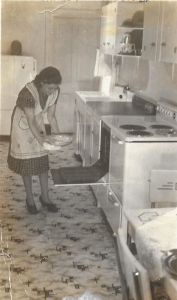
Are you getting gas in the house, or are you getting an oil stove? I just was wondering about it.
Last night, I embroidered for a while and made napkins. I have four sets, now.
When she wasn’t making linens, working at her new job as a grade school teacher, or slaving at her parents’ grocery, Jean longed for Albert.
It seems ages since I saw you last. You seem so very far away—almost unreal. There are ever so many things I’d like to talk over with you, but I guess they will keep. Only, I do miss you so very, very much.
In 1940, while World War Two loomed and Albert was sure he’d be drafted, Jean and Albert married, not in a Protestant church but in the vestry of a Catholic one. Jean’s parents were as angry as she’d feared. She fled with Albert to Florida, leaving her trousseau—all those embroidered linens—behind. The newlyweds had just enough time together in Florida to conceive their first child when Albert was drafted. He went off to train with the U.S. Air Force. The young airman was shocked by the unreadiness for War he saw in his first posting to Atlanta. He wrote Jean about it.
I don’t think these people realize a war is going on, so much waste and complaining. Several plants and a dairy are on strike, 325 fellows here just sentenced for draft evasion. There was an air raid drill the other day and officials complaining about poor cooperation from people.
War and loosening social mores were producing changes in American society, and not everyone was comfortable with them. Albert was appalled by local women. Or maybe his letter was an attempt to reassure his lonely bride back home that his eyes weren’t wandering.
The girls up here are awful. Their skirts are 3 to 4 inches above the knee and they smoke more cigarettes than men. More imitation blondes than I ever saw in my life. I’m not laying it on thick, it is the truth with no exaggeration.
Jean had her own complaints, mostly about her rowdy students. She’d gotten a job in a rural community outside Tampa, teaching eight grades in a one-room schoolhouse.
I’m just a bunch of nerves. You know it’s difficult to keep smiling all day in front of the students when I feel like throwing some of them out on their heads.
As difficult as those war years were, Jean and Albert were sustained by their love letters. Jean’s always closed like this one.
All my love to you alone.
Jean
Jean and Albert were married sixty-two years. After Albert’s death, Jean lived another nine years, but she was never truly happy. Her last utterance before her own passing was Albert’s name.

As Albert’s ended like this, from 1941.
I love you, sweetheart.
Your husband
Annie R McEwen is an award-winning author of historical romance, paranormal romance, and romantic suspense. Her Bound Trilogy from Harbor Lane Books launches on May 7, 2024 with Bound Across Time, a love story that transcends death itself. Annie also has upcoming titles from Bloodhound Books (UK) and The Wild Rose Press. For release dates, giveaways, Annie’s quirky blog, and more, go to www.anniermcewen. Be sure to Subscribe for her fun newsletter and a free Regency Romance story. While you’re at it, visit Annie on Instagram: https://www.instagram.com/anniermcewen/ and Facebook: https://facebook.com/Quillist/
Before we dive into this month’s newsletter, I’m sure you’ve noticed it is on a different platform. (And those of you who are subscribed to my blog, but not newsletter: Welcome to my newsletter! It’s switching over to my blog.) The company I used to send my newsletters through has decided to stop accepting gmail accounts and wants their users to have paid professional emails. Because of this, I have decided to move my newsletters over to my blog. However, this will be the only newsletter that is available to everyone. Just like the old newsletter, starting in March, you will need to be subscribed to this blog to receive the newsletter. All other blog posts will remain available to everyone.
How you subscribe to the blog:


I hope you all have a successful transfer. If not, or you have questions, please send me a message through my Contact page.
January is named for the Roman God, Janus; God of doorways, beginnings, and the rising and setting of the sun. And the new beginning I’m experiencing at work has reminded me why I love teaching English Language Development (formally called ESL). The majority of my ELD students are advanced, so the curriculum is more in line with a traditional English class. I now have 4 beginning students, and get to teach them the English language. I am loving it.
My daughters had a dance concert at the end of January. Being the dance mom that I am, I chaperoned 2 of the 4 shows, and bought a ticket for the other two. They were very happy up on stage, dancing their little hearts out. But it was also their last performance for the time being. One wants to switch to gymnastics, and the other is switching to soccer. When I was a kid, I experienced several different extracurriculars before I stuck with ballroom dance; so I’m excited to see all the different things my kids try.

I have started my final round of edits to Bondwitch: Hybrid, and when I’m finished, I’ll be pitching it to The Wild Rose Press! I also gave my first presentation at an author event hosted by the Santaquin Library in Santaquin, Utah. My topic was “The Three Publishing Pathways, and Why I Chose a Small Press”. It went better than I thought. I had a small audience, and a few people asked questions at the end. You can watch it below:
I’m also excited to say that Real Life Romance stories are returning to my blog for the month of February. Four guest authors will be sharing real love stories from their lives or their ancestors’ lives. Last year’s stories were beautiful, and this year’s stories will be just as great. The first one goes live tomorrow.
Out of the 4 books I read during the month of January, I recommend 3 of them:
The Nameless Luna by Hope Dwinell
Out of Body by Kimberly Baer
Alien Survivor: Stranded on Galatea by Juniper Leigh
I wish you a happy month of love.
Sincerely,
Chelsey M. Ortega
I read 88 books in 2023. And of those 88, I would like to highlight 24 of them (don’t worry, 21 of those are in 3 series).

Bridgerton: When He Was Wicked, It’s in His Kiss, On the Way to the Wedding
I finished the final three books of the Bridgerton series at the start of 2023. They were the perfect way to end the series. Julia Quinn got bolder with the three younger Bridgertons, and it paid off. Francesca is a widow who is fighting her feelings for her deceased husband’s cousin. Hyacinth is an independent woman who doesn’t want to fall in love, so when Lady Danbury’s grandson catches her eye, she doesn’t know what to do. And Gregory… Gregory, Gregory, he’s going to go after a young woman promised to someone else. Hyacinth’s and Gregory’s stories had action and danger that I loved.
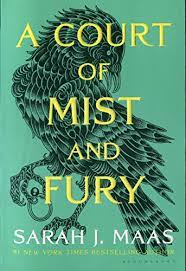
A Court of Thorns and Roses – A Court of Silver Flames
When your editor recommends a book to help with your writing, you follow through. When I finished the first draft of Bondwitch: Hybrid, I asked my editor for advice on a specific plot point. She recommended I read A Court of Thorns and Roses by Sarah J. Maas and the subsequent novels. I have never gobbled up a series so quickly. And a quick paragraph won’t do the series justice. Lucky for you, I already have a detailed analysis for each book right here on the blog. Check them out:
ACOTAR: Beauty and the Beast Meets the Goblet of Fire
Mist and Fury: A Perfect Redemption
Wings and Ruin: The Cost of War
Frost and Starlight: Diversity in Healing
Silver Flames: Overcoming Toxicity
I will say overall, the world building is superb; and Sarah J. Maas gives JK Rowling a run for her money when it comes to morally gray characters. Everyone is flawed. Everyone makes astronomical mistakes. Everyone lies and cheats and steals. And almost everyone earns their redemption.
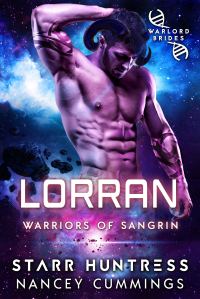
Warriors of Sangrin
This series I also wrote a deeper post on. This is a SciFi Romance series by Nancey Cummings. In this world, Earth was invaded by alien invaders called Suhlik. The Suhlik’s enemies, Mahdfel come to Earth’s aid… for a price. That price is in the form of brides as Mahdfel only produce sons, so they must mate with females from other planets. There are 11 stories in the main line and 3 side stories, so far. This series opened me up to alien romances, and I’m addicted.
The Alpha and Her Hunter

The is one of the best fated mate, werewolf stories I have ever read. The author, Lauren Rutherford, created a unique world building that worked so beautifully. Female werewolves are bigger, stronger, and the leaders of the packs. Hunters have their own powers that differentiate them from regular humans. And if you haven’t figured it out from the title, we have a Romeo and Juliet story going on. Forbidden love. My favorite trope. A female werewolf and a male hunter fall in love, and have to fight their families to be together. It ends on a cliffhanger, and I’m anxiously awaiting the sequel.
The King’s Curse

This was the final Plantagenet/Tudor book left for me to read by Philippa Gregory. It’s Margaret Pole’s turn to tell her story, and I’d venture to say that this is one of Gregory’s longer books in respect to how much time is covered (it’s still her typical 600-page novel). We jump into Margaret’s story around the time that Princess Katherine from Spain is arriving to marry Arthur, following her life to the day Margaret was executed. Her execution was confusing to the court and historians. Catherine Howard had recently been executed for adultery, and Margaret had not been close to being involved in that. The most probable reason is that Henry still felt threatened by her and her sons since they were the remaining York family, and could distantly claim the throne. I really enjoyed learning about Margaret’s life through Gregory’s historical fiction. She’s always been a side character with few notable moments in the other novels, and with The King’s Curse she gets to take center stage. I loved seeing a human side to her, rather than the perfect ally to Katherine and Mary that she is usually depicted as. Though she did stay loyal to Henry’s first family, she still had her own trials that she had to focus on and make difficult decisions to protect her name, family, and property. And now, it’s the end of an era. 15 years, and I’ve finally read about the main Plantagenet and Tudor women.
The Lycan Prince’s Huntress

This is the the prequel to a fated-mate-werewolf romance called Prince Reagan. In some omegaverse world building, there is a shifter called a lycan. Lycans are a more powerful version of werewolves. Depending on the author and their imagination, lycans can walk on their hindlegs in their wolf form (I kind of imagine Remus Lupin from Harry Potter, but more muscular), they live longer (or are full on immortal), they are the royal pack/family that regular werewolf packs have to bow down to, etc. The Lycan Prince’s Huntress can be found on the reading app Dreame. In this story, the FMC is the daughter of the head hunter; and their clan hunts werewolves and lycans. The MMC is the crowned prince of the Lycan Kingdom. And these two are fated mates. Forbidden love, enemies to lovers, Romeo and Juliet. And since those are my favorite tropes, I lapped this story right up. Also, it was an added bonus that the FMC wasn’t a sniveling weakling who becomes a jellied donut in the presence of her mate.
And those were my favorite books I read last year. What are your favorite books from 2023? Let me know in the comments!
If Sookie Stackhouse could talk to ghosts and spoke her mind the first time, you’d have Marni Legend, the star of Spirit in Tow by Terry Segan.
I originally went into this book blind, and was hooked on the first page, having no idea what kind of story I was getting myself into. Marni is in the over 40 club, a divorcee, and she can see and talk to ghosts. Spirits visit her for help with unfinished business so they can move on. Her newest client appears when she’s trying to go to her own mother’s funeral.

This opening scene shows us how her gift works. She can see and talk to ghosts when they make themselves known and visible to her. As her mother’s funeral gets underway, we learn that her brother can hear ghosts, just not see them. Her sister cannot see or hear ghosts, but believes they are there when her siblings talk to and about them. This is an inherited gift that Marni’s grandmother also had. Also, Marni and her sister being on the opposite ends of the ghost communicating spectrum has put them at odds for years, and there’s a lot of sister drama throughout the story.
Marni’s newest client is named Gus, and it took him a long time to figure he was dead, decades to be exact. So Marni gets the pleasure of solving a cold case. Gus is selfish, crass, and as emotional as an overgrown toddler. He also gets Marni tangled up in a crime ring. But Marni has been given this responsibility to see souls to the other side, so she is firm and patient with him as she tries to help him – God bless her.
While trying to help Gus figure out how he died, Marni meets a new paramour, Jake, who happens to be Gus’ older brother. Jake is the best written character, in my opinion. Every new scene with him gave me whiplash, but once again, in a good way. Terry Segan did an excellent job with him. She kept me changing my mind about him and guessing to the very end.
Marni also has the chance to rekindle her relationship with her high school sweetheart, Kendal; creating a love triangle between her, Kendal, and Jake. Both Marni, and Kendal were burned by their previous spouses. They know each other, they are comfortable with each other.
And I’m honored to end this review with a Q&A with Terry Segan herself.
I haven’t read very many ghost stories, so I had no preconceived expectations on world building. Can you walk us through your world building when it comes to what ghosts can and can’t do, who gets the gift, and how do ghosts find them?
Having read several books involving ghosts, I’ve noticed one thing each author does—set up their own set of rules. With so many paranormal stories available, I find it refreshing when a writer can add a new twist. The key is to remain consistent throughout the book or series. For my Marni Legend series, I wanted
the interaction between a ghost and the humans who see them to have a natural feel to the situation. Since I chose to have this as a family trait and occurring in every other generation, this enabled Marni to have knowledge of how to react. Since my character is in her late forties, this has given her decades of practice and self-assurance in her gift. In my books, the ghosts are able to recognize people possessing the ability to see them and vice versa. As far as finding the ghosts, the living come upon them in the general area of either their death or where their body lies.
As a reader, I found Gus extremely frustrating (but I DO love flawed characters, they keep the story full of promise). If I was Marni, I would have told him to take a hike and solve his own death. How did you create Gus as a character, and how did he influence the plot from your end as the writer?
Since I’m a pantser and not a plotter, I didn’t have a full picture of Gus’ character when I began. I knew there would be verbal sparring between Marni and Gus, and he would want to come off as a tough guy. I agree with you, Marni should have told him to take a hike more than once when he withheld important (read life- threatening) information on purpose as opposed to details he couldn’t remember. As his character developed throughout the book, I also wanted Marni to see his occasional soft side, that we know almost every tough guy has, despite trying to hide it. It’s those cracks in his armor that kept Marni wanting to solve his murder and free his soul. With Gus’ cast of associates still alive and kicking, it allowed
me as a writer to put Marni into a number of comical or dangerous situations that kept the story moving forward.
I see that your latest book, Manatee Soul, is a continuation of Marni’s adventures. How many adventures do you have planned for Marni and her siblings?
Manatee Soul has Marni and her sister, Gloria, going on a girls’ trip to Crystal River, Florida. While still told from Marni’s point of view, both sisters get equal appearance time. Right now, I don’t have a set number of books in mind. As long as I can conjure up fun storylines, I’ll keep the series going. I’ve begun writing the third Marni Legend book, and this one will feature her brother, Calvin, while Gloria takes a back seat. The story also returns to Marni’s hometown of Northport where there are plenty of stories to tell from past and present characters.
What’s next in your writing career?
To keep writing, of course! My next release is another stand alone entitled, Five Steps to Celestia. It comes out this spring and will take readers on the journey of a woman trying to piece together her past. After losing her memory twenty-two years prior, a little mysticism, a string of odd occurrences, and a menacing
stranger prompt her to remember—and not all of her past is hearts and sunshine. Look for it in May 2024.
I normally rotate through a few books at a time. But Spirit in Tow was so captivating, that I paused my other reading to finish this one. If you like murder mystery with a dash of paranormal, then I highly recommend Spirit in Tow.
Follow Terry at her website: https://terrysegan.com/
I would be remiss if I didn’t get at least one Christmas post up this holiday season. Life is super crazy right now between my day job, my kids’ extra curricular activities, and other duties. And with 2 days until Christmas, I really want to take a break from all of that and write. So I’m going to take the time to write about my favorite Christmas decoration: Nativity Scenes.

Nativity Scenes show the core of the Christmas season for those who are religious: the birth of Jesus Christ. According to the Smithsonian Magazine, the first Nativity scene was displayed in 1223 in Italy. St. Francis of Assisi set up a manger with hay, an ox, and a donkey in a cave and invited people to come and view the display. During the viewing, he preached about the birth of Christ. From there, Nativities spread, eventually including live performers as Mary, Joseph, shepherds, angels, and the wise men. My own family has the young children perform the Nativity each year.
Growing up, my mom had a frosted glass nativity set that sat in the center of the dining table every Christmas season. I thought it was so beautiful. It was my favorite decoration. I positioned it so the figurines faced me where I sat to eat. And as I studied those glass followers of Christ, I began to plan and dream.

I have envisioned and designed the perfect Halloween House and perfect Christmas House since I was a preteen. Now that I have been in my own home for four years, both are slowly coming to fruition.
The inside of my home will be covered in Nativity Scenes. All available space will one day sport a nativity scene, and no number is too many (though my husband may disagree with that second statement, but he just sighs and lets it happen). I currently have 21 and counting!

I enjoy a diverse style and size. I have “traditional” sets, themed sets (i.e. snowmen), large sets, and small sets. Each one makes me smile as I unbox them, and throughout the month look at them.
What’s your favorite Christmas (or other winter holiday) decoration? Let me know in the comments! And have a wonderful holiday season.
 Chelsey M. Ortega