My Top 5 Reads of 2024

On Goodreads I read 38 books in 2024. But when I count the 16 books not registered on Goodreads and the 4 unpublished books I beta read, I read 58 books in 2024. Regardless, I didn’t meet my Goodreads goal of 76 books. But that’s okay. My Goodreads goal is always one more than I read the previous year. So, that means my 2025 goal will be 39 books. 

Of those 58 books, here are my favorites: 
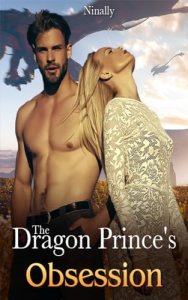
The Dragon Prince’s Obsession by Ninally is the sequel to The Dragon King’s Obsession. Both books are about dragon shifters falling in love with the enemy: humans. In this series world building, dragon shifters live high up in the mountains. Human hunters down the mountain hunt them, and have hunted female dragons almost to extinction. In the first book, dragons capture the daughter of the leader of the hunters, and the king of the dragons falls in love with her while she is their captive. Of course there’s lots of drama, witches get involved, and the final battle is epic. And then the sequel begins. 

New couple. New story. One of the best enemies-to-lovers I’ve ever read. Adela is a human servant in the king’s palace. She serves the king’s sister, Princess Lucille, and the queen, Mystique. Prince Mikhail is the king’s brother. Mikhail was one of the villains of the first book. He kidnapped Mystique and tried to kill her.

Adela stumbles across Mikhail being imprisoned by witches while she is on an unwilling adventure with the spoiled Lucille. In Lucille’s inability to see anyone other than herself, she returns to the palace safe and sound without Adela. Mikhail and Adela fight their way out, and Mikhail takes Adela to his palace. Because she saved his life, his dragon now owes her. Mikhail begrudgingly takes care of her as he fights his dragon’s attraction to her. He hates humans, but he also opens Adela’s eyes to how she is treated back at the main palace. Adela is “friends” with the royal women, but yet still has to serve them and sleep in cramped quarters with the other human servants. Adela also thinks she’s in love with the king’s right hand man, Blaze. Lucille and Blaze are secretly in love and having a secret affair. The problem, is that in order to keep her secret, Lucille encourages Adela’s crush on Blaze to hide her own feelings, knowing Blaze will never look at Adela like that. So, she’s setting Adela up for romantic failure for her own selfish agenda.

When Mikhail cracks everything open for Adela, she refuses to return to the king’s palace. Mikhail keeps her in his, where she is not a servant, but an equal resident. They grow closer and have one of the most delicious slow burns I’ve ever read. During her time there, Adela also discovers she is not truly human. Her mother was human, but her father was something else (which I’m not going to give away – read the book!). Her newfound abilities call evil witches to them, and she and Mikhail will have to literally fight for their survival and love.

It’s beautiful. It’s spicy. I LOVE this story.     

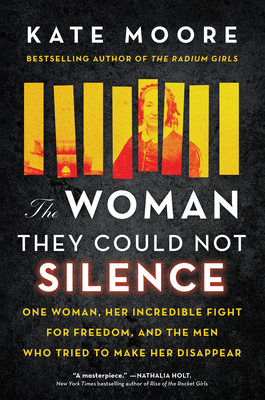
The Woman They Could Not Silence by Kate Moore is a biography of Elizabeth Packard, whose story takes place in the 1860s in Illinois. Elizabeth held different religious and political beliefs from her husband, who was a preacher. She vocalized them in public, and her husband responded by getting corrupted doctors to certify Elizabeth as insane, and locked her in an asylum. Kate’s research of Elizabeth’s experience teaches four main historical facts:

1. What was considered “insane” in the 1800s – Women could be diagnosed with insanity if they disagreed with their husbands, disobeyed their husbands, or stopped loving their husbands. Elizabeth was guilty of all three.

2. How deep male ownership of women was –  Several doctors who “diagnosed” Elizabeth with insanity never saw her in person. They listened to her husband’s description of her, and wrote a certificate of insanity! Also, Elizabeth couldn’t divorce her husband because he would automatically get their six children if she did.

3. Treatment of patients in asylums – Elizabeth women with less money and social status than her slapped, starved, choked, and drowned. When Elizabeth disobeyed her doctor, he took her possessions and moved her from her private room into a shared room. While the employees didn’t physically abuse Elizabeth, they allowed the more violent patients to do so instead.

4. The amount of research and lobbying needed to change the law – When Elizabeth was released from the asylum, she went to work to change the law so that some of the friends she’d made could also be released, and future women didn’t go through the same thing. It took her a decade, which included a nationally followed legal battle against her husband and doctor. She was successful in getting the laws changed across the state, which would end up saving her daughter in the future when she also suffered mental health problems in her adult years. 

Elizabeth Packard’s story is one that needs remembering for both mental health laws and feminist ideology. I have always enjoyed biographies about strong and powerful women, and Elizabeth makes it on that list. 
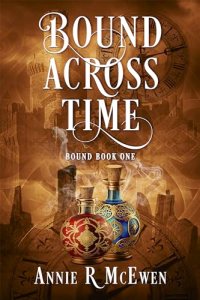
Bound Across Time by Annie R. McEwan was my first experience where an author reached out to me and offered me a free copy of their book to read and review. And it was amazing. Of course, Ms. McEwan got the royal treatment: an unboxing video, a blog post, and a YouTube review. 

Bound Across Time is the first of a paranormal time-travel romance series. Patrick O’Loinsigh died in the 1700s in Wales. His ghost as been stuck in the castle he perished in. In modern days, the first living person, Cece Gowdy can see him. She’s a witch and they embark on a passionate love affair. But loving a ghost comes with risk and danger. Cece is not made for Patrick’s limbo world, and Patrick isn’t made for Cece’s living world. They are going to have to rely on the help of other witches to fight against the magic of time that is separating them.

I always find magic system world building interesting, and the rules of magic for this world were really cool. This was also the first ghost-human relationship that followed the rules of the romance genre. The sequel, Bound to Happen will be released early this year!

The Haunted Purse by Kimberly Baer is my tried and true “don’t judge a book by its cover.” I thought the title sounded juvenile and the cover didn’t pull me in. Then it ended up being the book of the month for the book club I was in. I inhaled it.

Libby is a 15-year-old high school student who lives on her own while her mom dates around, pretending she doesn’t have a daughter. Libby purchases an old purse from the secondhand store. The purse makes things disappear, and provides extra things to the purse. As Libby gets used to her purse’s abilities, she notices a connection with some of the objects that appear. They are all connected to a 20-year-old cold case. Convinced that the purse holds the ghost of the missing girl, Libby puts on her detective hat and works to solve the case.

In addition to the murder mystery plot, there are three other themes that provide great lessons for young adult readers:

  1. How educational professionals treat each student is important – Libby’s math teacher bullies her, and her counselor looks down on her for being poor.
  2. See something, say something – A big part of what keeps the plot moving is teenagers keeping secrets. Obviously, the secrets need to exist for a great story, but in real life, keeping secrets like these are dangerous.
  3. Honesty really is the best policy – This connects with number 2. Teenage characters lying to adults helps the plot, but in real life, telling a trusted adult the truth can always help. 

The Haunted Purse is the best YA story I’ve read in a while.
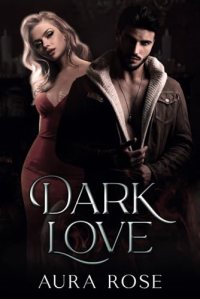
Dark Love by Aura Rose is the second in a fated mates romance trilogy. Each book features a different couple. The first book is called The Last Alpha. To be honest, I didn’t much care for the first one. Some authors who write fated mates stories use the mate bond in their plot to have a – what I call – justified cheating subplot. That is in The Last Alpha, and left a bad taste in my mouth for the rest of the book. Luckily, the end of the first book lets the reader know who the couple will be for Dark Love, and I was fully on board for their love story.

Madeline is a werewolf, Arius is a witch-vampire hybrid. Arius is not supposed to exist per the council’s rules, and they’ve been trying to kill him since he was born. Arius is also the son of the vampire king who tried to kill Madeline’s pack in the first book. So, she and Arius get a very steamy enemies-to-lovers and forbidden love arc – which, in my opinion, is the best combination of romance tropes. Trigger warning: Arius does kidnap Madeline at the beginning of the book, but he doesn’t torture or SA her.

Once Madeline and Arius accept the mate bond, they combine forces to take down the bigoted council so they can live in peace. Arius is my favorite book boyfriend

It ends on a pretty dramatic cliff-hanger. I’m about a third of the way through the third book, His Lost Tribrid. It’s also really good. Unfortunately, the platform it’s on (Dreame) has tripled their prices over the past year. So, I won’t be able to finish it there. So, I’ve subscribed to Aura Rose’s Amazon page, and as soon as it’s available on Amazon, I’ll buy it there and finish it. 

What notable books did you read in 2024? Share them in the comments!

Resolving Sociopolitical Issues in Fiction: One Reader’s Perspective

It’s very common in fantasy and science fiction for the authors to mirror real issues that human history has gone through or is currently going through. In ACOTAR, humans used to be slaves, and once freed, became segregated from their previous masters, the fae. The First Order in Star Wars is obviously the Third Reich. Voldemort in Harry Potter is clearly Hitler. House Elves are slaves. Every single creature that isn’t a wizard are all of the colonized nations around the world. A wizard and a no-maj not being allowed to marry mirrors U.S. anti-miscegenation laws. The list goes on. 

In each of those issues, the protagonist or one of the sidekicks fight against those issues. And enough progress is made that even if it’s not fully resolved by the end of the series, the reader is able to believe that it will be soon – or the main characters physically move away from the corruption to a new kingdom/world/etc.

So what happens when an author creates social injustices for their plot, but doesn’t resolve them by the end? 

I recently read a series that did just that.  

It was a paranormal romance series that had 10 books in it. The majority of the world-building centered around sexism. The female characters had no rights, and so their only way of a decent life is to accept a mate bond with a strong male. Children also had no rights until they shifted into their animal for the first time. And half-breeds (one human parent, one shifter parent) were the lowest of the low. 

The main character for the first three books leaves her community and tries to fit into the human world because of this. She gets sucked back into her old life, where she meets her fated mate. He also doesn’t agree with the traditional way of their species, so together, they create a refuge for others like them. So, things are looking good for a traditional fight-the-corruption plot line that I love in fantasy series.  

For the next three books, one of the side characters becomes the main character, and her love story commences. She and her fated mate spend three more books fighting the system, and win. They also create a second pack for outcast shifters to escape to. 

The final four books take place roughly fifteen years after the sixth book ended. And this is where the plot goes in a completely different direction. There were very strong hints at the end of the sixth book that things were changing drastically. So when chapter 1 of the seventh book started and things had not only failed to improve, but even regressed beyond the first book, I was confused. However, as I continued reading, I realized it’s okay if society got worse. The Force Awakens does the exact same thing, and I enjoyed that movie. The author had to come up with something for the main character to fight. But as I got to the end of the tenth and final book, there were no hints that the corruption was going to be defeated. And sadly, it wasn’t. The two love interests got off on a technicality within the corrupted legal system, and continued to live in that evil world. 

The series would have felt more complete, for me, if the corruption had truly been defeated and social and political change was evident – even if it wasn’t perfectly gone by the final sentence.

Now, I need to make a note here. I think that the author created an incredible world with relatable characters. I obviously was invested enough to read all ten books. The romance plots – which were the main plots – were well executed. And there were plenty of readers who loved the whole series. I think the author is a talented writer. They have a great imagination. I gave each individual book between 3-5 stars on Goodreads.

I also acknowledge that the end of this series is more realistic. To quote Anita Hill, “Progress isn’t measured in days. It’s measured in decades.” That being said, I don’t want fantasy to be realistic. I want the final battle to magically change everything (or put society on the first few steps of changing everything).  

This is similar to what I said in my historical fiction post. Some readers don’t care if the characters are eating chocolate too early for historical accuracy, while others care very deeply. Some readers will be fine if the characters don’t take down the corrupt system, while others will want to see exactly that.

So, my opinion is simply mine. This is a decision that all writers have to make. As they build worlds and create characters, writers need to figure out which plots need to be resolved by the end – or at least a hint of a resolution. 

For me, resolution is important.

I’d love to hear your thoughts. Do you think all – or close to all – the problems in a story need some type of resolution by the end? Let me know why or why not in the comments.  

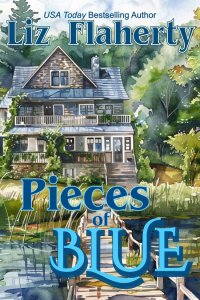
New Release: Pieces of Blue by Liz Flaherty

At the beginning of this month, USA Today’s best selling author Liz Flaherty released Pieces of Blue. Normally a romance author, Liz has dipped her toes into women’s fiction with her latest release, and is here to share her thoughts on her recent writing and publishing journey.


Hi, everybody. Chelsey, thank you so much for having me here today. 

I’m not sure when the term women’s fiction entered my consciousness. I don’t recall whose I read first or even if I liked it. The words Woman’s Journey had been bandied about most of the years I’d been writing romance, and I thought that’s what we should do with romance and women’s fiction—just make them into one huge glorious genre known as The Woman’s Journey. 

The idea didn’t catch on. 

But I read CurtissAnn Matlock’s Lost Highways and Robyn Carr’s Deep in the Valley and Cheryl Reavis’s Blackberry Winter and Elisabeth Ogilvie’s Bennett’s Island series. I kept thinking yes, this! They’re all women’s fiction, but they’re all love stories, too. They’re all women’s journeys and I’ve read most of them more than once. While I love the relationship that grows between the heroine and hero, I also enjoy the ones between girlfriends, between sisters, between work friends who are there for each other. The romance is important, but it’s not always most important. 

Because it’s the story that’s important. The journey. How you feel when you finish reading. To a lesser degree, as a writer, how I feel when I finish writing is important, too. 

Of course, none of that was in my mind at all when I got a two-word start that wouldn’t get off my mind and stay there. Then I had a trip back a skinny, curvy road to a small lake I’d never known existed but made me type Chapter One above those initial two words. Later still, Maggie North invited me on her journey. It took her a while, and writing it took me a while, but…gosh, I loved Maggie. And Sam. And her adoptive parents. And Pastor Cari Newland. Oh, and Ellie and the dachshund named Chloe, too. 

Pieces of Blue has some romance, a setting I never wanted to leave, and, most of all, it has friends and family and community. Their dialogue was so much fun to write. The house—the Burl—is a character unto itself. 

How did I feel when I finished writing it? Oh, good. Sorry it was over and slapping back thoughts that maybe it wasn’t over…maybe there was another story at Harper Loch. Or two.

We’ll see. In the meantime, it’s a story from the “huge glorious genre” I mentioned above. I hope you like it.


For all of her adult life, loner Maggie North has worked for bestselling author Trilby Winterroad, first as his typist, then as his assistant, and finally as his ghost writer. Throughout her first marriage, widowhood, remarriage, and divorce from an abusive husband, Trilby was the constant in her life.

When he dies, she inherits not only his dachshund, Chloe, but a house she didn’t know existed on a lake she’d never heard of. On her first visit, she falls in love with both the house and the lake. Within a few weeks, she’s met most of the 85 inhabitants of Harper Loch and surprisingly, become a part of the tiny community. Her life expands as does a new kind of relationship with her friend Sam Eldridge. She finally feels not only at home, but safe.

Until her ex-husband is released from prison. The fragile threads of her new life begin to fray, and that feeling of safety is about to shatter into a thousand pieces.

The drive took me farther into the country than I’d ever been—at least that I could remember. While the temperature didn’t drop, the wind did increase, blowing snow from the roadsides across in front of me in gusty swirls of white. I was surprised that Gladys, the elegant voice of my GPS, didn’t sound either confused or disdainful even when it took me three tries to see the little green sign that indicated Harper Loch Road.

Canopied by naked February trees and lined with animal-tracked snowbanks, the road was one and a half lanes wide. I hoped it would be wider when there was no snow, but I wouldn’t bet on it. It was hilly, with serpentine curves that reminded me of a Chutes and Ladders game board minus the ladders. Gladys didn’t enlighten me as to how far it was to the lake itself, and two miles in, I was starting to wonder if it was all a bad joke. 

Trilby had been the master of bad jokes.

A barnwood sign at the side of the road encouraged me to Keep Right! I inched over, flinching when the snowbank brushed the side of my car, my pride and joy. Chloe looked my way, wide eyed.

Apparently, it was a popular meeting spot on the road, because I met a pickup immediately, going at least twice as fast as I was. The driver waved cheerfully and missed me by what I was certain was the hair’s breadth Trilby used to insist was purple prose if used in a book. I would have waved back, but my hands, white knuckled, didn’t want to let go of the steering wheel.

“Trilby,” I said, “what in the hell were you thinking?”

Pieces of Blue is available everywhere books are sold online:

https://books2read.com/FlahertyBlue

https://a.co/d/eyEjPDA

Liz Flaherty has spent the past several years enjoying not working a day job, making terrible crafts, and writing stories in which the people aren’t young, brilliant, or even beautiful. She’s decided (and has to re-decide most every day) that the definition of success is having a good time. Along with her husband of lo, these many years, kids, grands, friends, and the occasional cat, she’s doing just that.

She’d love to hear from you at lizkflaherty@gmail.com or please come and see her at  https://linktr.ee/LizFlaherty 

What Catches a Reader’s Eye? A Reflection on how people find and choose books.

One day, during my sophomore year in high school, a classmate grabbed my arm and said, “I just finished the most amazing book, you have to read it!” That book was Twilight  by Stephenie Meyer. I trusted this classmate’s opinion, asked my mom for the book, and it ended up being my Easter present that year. I read it in one day, bought the second one and read that in one day. Then I had to wait a couple months for the third, but I was hooked. 

Two years prior to that, in eighth grade, a friend of mine found her mom’s copy of The Notebook by Nicholas Sparks, read it, and passed it around to the rest of our group. She had us write our names inside the front cover when we finished it to make it our own “sisterhood of the traveling pants”, but with a book. From there, I sought out other Nicholas Sparks’ books (Safe Haven is my favorite). 

That same year, I checked out a copy of A Dance for Three by Louise Plummer from the school library, and recommended it to my friend. She checked it out next and loved it so much, she made her mom hunt it down so she could own a copy. (And let me tell you, that book is hard to find in a traditional bookstore. This was 2004.)

What is the common denominator in those three tales? Word of mouth. Most of the books I have read, I came across via recommendation: a friend, a family member, maybe facebook ads, etc. And according to many blogs, podcasts, and seminars; word of mouth is still the best way to sell books. 

Even so, authors are also told that online reviews are important because the algorithms on those websites recommend books that have a lot of reviews. But even though that’s what the algorithm does, is that really how potential readers find books? And do readers read reviews before deciding whether to read a book or not? 

I created a Google Forms survey, and 76 people responded. Here are the results:

What helps you learn about and choose to buy a book? 

*Note: This was a “Check all that apply” question, so all numbers together will go beyond 76

Recommendations from family and friends58
Window shopping in brick and mortar bookstores 36
Online ads (i.e.facebook, instagram, etc.)18
“Also bought” on Amazon19
“Readers also liked” on Goodreads12
Searching a preferred genre/trope on Amazon27
Other25

Surveyors got to type something if they clicked other, and here are the common “others” summarized into general categories:

  • Book influencers/reviewers on Instagram, TikTok, and blogs
  • Websites like Bookbub
  • Libraries
  • Events like festivals
  • Book clubs
  • Gifts

So, like my own experiences, most people still rely on recommendations from trusted people. But a decent number of people are also using the internet in some capacity (Amazon, social media, etc.)

Forms response chart. Question title: Do you read the reviews on sites like Goodreads or Amazon BEFORE buying a book?. Number of responses: 76 responses.
Forms response chart. Question title: If you read the reviews, do they affect whether you buy the book or not?. Number of responses: 75 responses.

These next two responses totally threw me. Because I don’t read reviews before buying a book, I erroneously assumed most people were like me. And this has completely turned my marketing world upside down. 

Forms response chart. Question title: What number of stars do you personally think is a positive review? (check all that apply). Number of responses: 76 responses.

I was not surprised by these results. For me, 3 stars means that I enjoyed the book enough to finish, and I don’t regret spending my money on it. So I consider 3 stars a positive review. But at the same time, I know on the marketing side, you don’t choose a 3 star review to highlight. You choose 5 star reviews to highlight. 

At the end of the survey, I provided space to type anything they wished to add, since I often struggle with multiple choice, because I want to explain my answer. With respect to transparency, I did use AI to help me find commonalities in the 49 responses, and come up with categories based on those commonalities. AI discovered 5 categories, and as I went through them, I deleted two of AI’s category and created a two of my own, moving some of the responses around to the following:

Category 1: Preference for Cover, Blurb, and Initial Impressions – 14 people expressed this was important to them in selecting a book.
An attractive cover and a strong blurb on the back will get my attention. I’ll read a page or two (unless it’s by an author I’m already familiar with) to see if they can get my interest. It’s rare that I will read a review first.
By far the first thing that gets me to look at a book is the blurb and a cover, and from there, I will look at reviews or recommendations before I decide to buy.
Sometimes I get recommendations from word of mouth, but not often. 95% of the time, I’ll see an ad on FB or IG. If the blurb is interesting, I’ll click on it and go to the Amazon page and read through that. If it still seems worth getting, I’ll read the sample. If it still seems good, I’ll get it on Kindle Unlimited. If I absolutely love it, I’ll buy the ebook. Even rarer, I’ll buy the physical copy. Occasionally I’ll buy books not on KU, but that’s even more rare. That only happens when an author I already trust has a new release. And right now, that’s…. one, but used to be two. But I stopped liking that author’s books, so it seemed silly to spend money on a book when it was a “maybe I’ll like it.”
I usually choose a book based on the blurb, the cover, and the genre.
Cover and genre recognition are big factors for me – the “catch your eye” thing.
I read the synopsis or hook that is on the back or inside of the cover of the book to see what it’s about most of the time and if it captures my attention then I read it. A quick little summary of the story over reviews is usually what helps my decision more than book reviews. How I find out about the book is in all sorts of ways, wandering through bookstores, Amazon, Facebook, and every other way to find new books.
Most times it’s the blurb. If it reads like it’ll be an intriguing story, I’m in.
Cover and blurb is what usually leap out at me. Also read the first pages.
Excerpts on Facebook ads and catchy stock pics or video grab my attention.
Cover art then blurb.
I read a few reviews, but they don’t carry much weight. I mostly rely on the sample pages. If they grab me, I buy, if not I pass for now.
I usually read the jacket cover before buying.
I rarely read reviews because I like to make up my own mind. I look at the cover, read the blurb, read the author’s info, and read the first couple of pages.
If a book catches my eye, I read a page or two of the preview. If it intrigues me and is not full of typos, grammatical infelicities or clunky writing, I’ll buy it.
Category 2: Number of Stars Matters – 5 people explained how they use stars and averages to help them decide whether to read a book or not.
I would select a book with four stars and above. If there are a lot of reviews, I don’t pay attention to negative ones since it may just be a personal opinion.
If there’s a few 1 or 2 star reviews but the rest are 4 and up, I usually disregard the lower reviews. It’s simply the taste of the reader. I sometimes seek out books because of something I’ve heard or read in the media about a book or author. For instance, I recently read my first Emily Henry book because of an article I read online.
Sometimes reviews affect whether I will purchase a book, but if a book has been recommended by someone I know personally, that would have more weight, even if the reviews aren’t outstanding. I’m also more likely to look at the number of reviews and the average rating than to read individual reviews.
I use book reviews, but I don’t read them. Spoilers being what they are, I don’t want anything to color my expectations. If a book has a 3.5/4+ out of 5 stars, and a number of reviews north of 10, I’ll likely pick it up.
I think any number of stars is a positive review. It really depends on what the actual review says. After all, you can give a 5 star review, but then in the post, the reviewer can list more negative things they thought about the book than positive.
Category 3: Mixed Feelings or Limited Reliance on Reviews – 7 people shared their reluctance to trust reviews 100%.
I take all reviews with a grain of salt. I usually never agree with movie reviews. I do look at the reviewer’s bio information, if any, such as age and gender. I really try to take information from multiple sources.
I read the reviews, but if the blurb and book cover attract my attention, I will make up my mind based on what I think, not what a stranger says.
I rarely read reviews because everyone has different tastes and the people who write reviews tend to be the angry rude people. I don’t like to support that kind of negativity toward someone’s art. More often than not, I have a different opinion from the reviewers, so it does me no good to read them first.
I don’t always read reviews, especially if I’m familiar with the author’s work. Reviews are just opinions, and whether or not I buy a book depends on if it sounds interesting to me, and is the type of story I like to read.
I dislike and ignore the value of 1- or 2-star reviews without text. I think Amazon does a disfavor to authors when they allows this type of review since it pulls down your score with no reason why the book was rated so low. For example : “2 star – Clear filter – 1 total rating, 0 with reviews” – Are these trolls?
Reviews are all over the map. Often the text doesn’t match the number of stars I would think it merits. Some get low stars because the Reviewer has an axe to grind like doesn’t one of the characters because they are multiracial or something that has little to do with the quality of the story. I rely a lot more on friends and family recommendations.
I’ve worked in the publishing industry as a marketer and am wary of the techniques used to sell books, many of which are hollow and baseless, including book reviews. A positive book review is practically a given to most reviewers who receive a free copy.
Category 4: Looking for specific info. in reviews – 9 people said that the purpose of reading reviews is to look for specific good or negative hints on whether the book will be worth it.
I tend to read the actual review rather than just go by the star rating. I will disregard one or two negative reviews (there is always someone who likes to destroy an author’s confidence) but if there are a lot of negative reviews saying a similar thing, I will probably pass on it.
There are certain things that really bug me when I read books, and if reviews mention any of those things, I tend to avoid the book. Sloppy prose is one of those things. Most books I read nowadays are on Libby, but I will occasionally buy a book if I want to read it sooner than it will be available to check out.
I depend heavily on reviews to decide whether to try a book by an author unfamiliar to me. A well-written review will give me a general idea of the plot and tell me whether I would probably like the book. Even if the reviewer disliked it, a good review will explain lucidly exactly what the reviewer disliked — and it may be a feature that would appeal to me. For example, if a review complains about a story being too “slow,” with too much dialogue and not enough action, I know I’ll probably enjoy it.
I like when recommendations or reviews compare the books to other popular books or series that I may have read
I’ll look at reviews depending on how I found a book. If it’s an online recommendation I don’t know anything about, I’ll always read a review. If it’s the author or a friends recommendation, I’ll never read a review.
I read the reviews to see if they tick any of the boxes of my likes and dislikes. For instance, I won’t read/buy a book with a cliffhanger ending, and I’m leery of books with poor editing.
Book reviews give me a better idea of what the book is about. Blurbs aren’t always great.
Re reading reviews, I read them sometimes, but if I’m in a physical bookstore I wouldn’t. When reading a review, I don’t take it for being 100% accurate but allow for any bias I see creeping in. I like a reviewer who spells out what sort of reader would like a particular book and what sort might not.
I often read reviews after I’ve started reading a book, particularly one I either love or hate just to see if other people thought the same.
Category 5: Reliance on Recommendations or Familiarity -11 people explained they have specific trusted sources to help pick their next book.
I often take recommendations from the Today Show.
If I have read and enjoyed something else in that author’s backlist, I will often be on the lookout for a new release. I will sign up for their Bookbub or to follow them on Amazon.
There are certain authors I follow and their books are usually the first I gravitate toward. Also, many of the books I read are the next month’s selection for my book club. Before choosing a book, I read a few of the reviews, both the good and the bad, just to get other peoples’ opinions. What the reviewers liked/disliked may not be what I look for in a book, so I won’t not read a novel based solely on someone else’s rating. I then read the blurb and the first couple of pages and give a thumbs up or down based on how I like the book’s opening.
I sometimes read reviews from instagrammers with similar taste in books.
I am more likely to read a book based off recommendations of people I know than reviews, but I do read reviews periodically, and factor them into my considerations.
Authors I follow
I choose books when I see an across the board popularity
I don’t always read reviews, especially if I’m familiar with the author’s work. Reviews are just opinions, and whether or not I buy a book depends on if it sounds interesting to me, and is the type of story I like to read.
As a former librarian, many of the patrons I talked with chose books to read based upon book cover, familiarity with the author, recommendations by library staff and viewing displays in the library. As for reviews, I am somewhat cynical about Amazon and other larger online entities because many of the reviews appear to be a trade (I will give you a good review if you give my book a good review) or manipulated by larger publishers to get their books out there–to make money, of course.
I am generally searching books by favorite authors. I also tend toward books carried by my library. Ebooks there are acquired through Amazon.

Final Reflections

To be honest, I did not get the results I wanted and thought I would get. Reviews really are just as important as all the marketing articles and webinars have been telling me. But I think I needed this wakeup call. One of my weaknesses is I can get prideful and not accept information if it doesn’t match my personal life. I’m going to have to do some soul searching for my next marketing endeavor. 😂

What responses stuck out to you or surprised you?

Anything you connected with or feel like it didn’t match you?

How do you choose books?

Let me know in the comments! 

Meet Elizabeth Packard: Women’s Rights Activist

Elizabeth Wells Packard is not on the list of “25 of the Most Influential Women in American History” She’s not on the list of 41 women, 50, or even 125 women. But her name needs to be known. And you need to know what she did for you, your mothers, your wives, your sisters, and your daughters.

On a recent trip to Barnes & Noble, this title caught my eye:

After reading the blurb, I didn’t hesitate to purchase this gem of a biography. Kate Moore weaves an emotional and beautiful narrative of Elizabeth Packard’s strenuous life during the 1860s. A woman whose only crime was to have a different religious and political opinion from her husband. Such absurdity at the time was medically considered insane, imprisoning Elizabeth behind the walls of the Jacksonville Asylum. Elizabeth spent several years trying to get out, and once she was out, she was not done fighting. Her next goal was to get the laws changed that put her there. Ms. Moore writes in the style of narrative nonfiction, giving us the facts in the form of a story. My blood boiled for the majority of the book, but Elizabeth’s triumph made the emotional rollercoaster worth it.

So, let’s meet Elizabeth Wells Packard. (Note: Everything written below comes from what I learned in Kate Moore’s book. All credit for deeper research goes to her.)

Elizabeth married a man fourteen years her senior – which wasn’t a cause for raised eyebrows at the time, but certainly led to her husband’s erroneous belief that he could spend his marriage days controlling her. 

Theophilus Packard was a preacher, which allowed Elizabeth a religious education. Shouldn’t the preacher’s wife know the Bible? In her studies, Elizabeth went beyond her husband’s teachings and explored other philosophies (this is at the tail end of the Second Great Awakening, afterall). Elizabeth thought it would be okay to share her new thoughts in her Bible Studies class. What Elizabeth didn’t know was Theophilus was receiving pressure from his financial backers to preach certain agendas in the wake of the looming Civil War. (Isn’t communication in marriage a beautiful thing?) Those agendas were the exact opposite of Elizabet’s new beliefs.

As tensions in their home rose, Elizabeth left her husband’s church, and began attending a church across town. This was the final straw for Theophilus. He locked Elizabeth in the nursery, and got two doctors to sign a certificate stating that Elizabeth was insane. On the day he planned to move her, he sent their 6 children on different errands and to different babysitters so they would not see their mother cartered off, and so the older ones could not come to her defense. He then brought in several trusted minions to manhandle Elizabeth out of her home, to the train station, and onto the train. Elizabeth was smart. She knew if she fought, then the unintelligent society she lived in would believe her insane. So she remained calm, stoic, and gave her kidnappers her dead weight as they carried her through the town. 

Theophilus accompanied Elizabeth to the Jacksonville Asylum in Illinois, and after dropping her off, would not see her again for quite some time. Theophilius placed her in the hands of the resident doctor, Andrew McFarland.

Dr. McFarland was smarter than Theophilus. After meeting with Elizabeth, he led her to believe that he did not think her insane, and that she would be out in a few months. During those few months, Dr. McFarland met with Elizabeth every day, letting her talk herself into a deeper hole (unbeknownst to her). 

According to Dr. McFarland, Elizabeth was not insane due to her religious beliefs. She was insane because she hated her husband. A sane woman would obey her husband. A sane woman would love her husband. A sane woman would forgive her husband for putting her in an asylum and agree to obey him in order to be released from the asylum. Elizabeth would do no such thing, so she remained there for about three years. 

During her time there, Dr. McFarland tried to break her by preventing her letters being delivered (both written to and by her), taking away her nice clothes, books, and writing supplies, and eventually moving her to the worst part of the hospital for women: 8th Ward. While in 8th Ward, Elizabeth experienced emotional abuse from the staff, and physical abuse from specific patients (these were the only patients that Elizabeth truly believed were insane). She also witnessed horrible physical abuse given to the other patients. 

Elizabeth was really good at making friends. And so, over time she was able to convince staff members to sneak her reading and writing materials into her new room. And during this time she wrote two full length books. One was all about the sins of Dr. McFarland, the other about the problems of her modern-day mental health system, religion, and women’s rights.

Elizabeth requested a meeting with the Board of Trustees, and was surprisingly granted a presentation with them. Dr. McFarland came, and so did Theophilus. But just like with the other patients and staff, Elizabeth won the Board over, and they commanded Dr. McFarland to release her within the next few months. Her release date came and went, but Elizabeth continued to write and pester Dr. McFarland. 

Eventually, Dr. McFarland admitted she was more bothersome inside the Jacksonville Asylum than he could handle, and he released her. Theophilus dropped her off with her cousin and forbade her from visiting him and their children. Elizabeth planned to do no such thing, and took out a loan from her friends to take a train to her hometown. She walked right into her old house, and it was a giant mess. Her only daughter was forced to become a homemaker at 11 years old, and is now a traumatized 14 year old. Theophilus had brainwashed their children against her, and they would only obey their father. Elizabeth became an invisible nuisance in her own home. 

Theophilus locked her in the nursery again, and she discovered he’s preparing her a place in another asylum, this time, for life. If she enters those doors, she isn’t coming out until she is dead. Her friends got the legal help that was denied her three years prior, and her sanity was officially on trial in the county court. 

This is one of the most amazing court cases I’ve ever read. And I can’t do it justice. Just read the book. In the end, Elizabeth won. She won against all those men who wanted to lock her away for life. BUT she is only free in the state of Illinois, and Theophilus still has legal control over their children. Ever the sore loser, Theophilus took off with their children and moved to Massachusetts. 

Elizabeth would then spend the next several years lobbying state government after state government to get the laws changed across the country. After another showdown with Dr. McFarland, she was successful. And because of Elizabeth Packard, women cannot be placed in asylums just because their husbands wish it. Because of Elizabeth Packard, women received a huge step in progress to their legal rights over their mental health and personal property. Because of Elizabeth Packard, the treatment of mental health patients started the process of improving. 

Elizabeth would get reunited with her children, and begrudgingly, her husband. They never divorced, but they also remained in separate dwellings for the rest of their lives. They stayed cordial in order to both have access to their children. The two books Elizabeth wrote while imprisoned got published and she lived off the sales of those popular volumes and the charity of her adult children. She is an amazing example of determination, passion, and perseverance.

Have you read about Elizabeth Packard before? What are your thoughts on her accomplishments? What other biographies would you recommend? Let me know in the comments!   

How to Put a Ghost in a Romance: Bound Across Time

Four years ago, I learned the rules of romance writing. There are two very important requirements for a story to be considered a romance:

  1. The main plot must center around the relationship between the love interests.
  2. It must end with a Happily Ever After or Happy For Now. 

I struggled with rule #2 for about a year (check out how I overcame that in a previous blog post), but once accepted, I had a big question: How do you make this work with ghosts? If one half of the couple is a living person, and the other half is a ghost, how are they going to have an HEA?

Part of my confusion came from reading an incorrectly labeled paranormal romance. First off, the main plot was not the relationship with the (ghost) love interest; that ended up being the side plot. Second, the main character is not reunited with their ghost love interest until decades after the main story ends when they die of old age (think the reunited scene of Jack and Rose in Titanic). That didn’t really feel like an HEA to me. 

So, like the emotional teenager I sometimes act like, I stayed away from ghost stories until Bound Across Time by Annie R. McEwen fell into my lap. This is a paranormal romance worth reading.

Let’s start with our living character, our female main character: Celeste Gowdie (a.k.a. CeCe). CeCe’s mother died when she was young, and she was raised by her aunts in the U.S. state of Georgia. CeCe doesn’t know who her father is (this is important for one of the reveals toward the end). She studied history in college, and is working in St. Rhydian’s castle in Wales when the story begins. CeCe wants to be taken seriously as a real historian, but she ends up being the American tour guide who gets to research and share ghost stories to the patrons. 

Patrick O’Loinsigh is the bastard son of one of the historic Lords of the castle. He was born in Ireland in the 18th Century, educated in Paris, and forced to move to his father’s castle during his early adult years. His father used him to do his dirty work since Patrick wouldn’t be inheriting the title. Patrick is murdered by his half brother, and his spirit spends the next few centuries hanging out in the in-between waiting for the living soul who matches a prophecy meant to free him.

Patrick and CeCe have a meet-cute of epic proportions. Patrick lures CeCe to the top of the tallest tower by turning on a battery operated candle. CeCe can’t lock up the castle and go home until all lights are turned off. So after a literal hike, CeCe comes across a handsome man in 1700s clothing. Patrick scares CeCe so bad that she faints. 

It takes CeCe several days to believe Patrick that he is the ghost of the handsome man in the gallery of the castle’s historic inhabitants. At first she thinks he’s a loiter pretending to be Patrick O’Loinsigh. But when she finally believes him, she falls, and she falls hard. 

The local witch coven gets involved, CeCe’s aunts get involved because… family secrets! (That I’m not going to spoil.) Everyone wants CeCe to stay away from Patrick for her own good. Of course she doesn’t listen, and she embarks on a passionate and steamy love affair with Patrick. 

Well, it turns out that when a living person spends that kind of time with a ghost, their literal being starts to disappear. So now, CeCe and Patrick have a difficult decision to make: go their separate ways to save CeCe’s life, or research if magic can help them. 

And that’s where I’m going to leave you with this story, because you’re just going to have to read it yourself if you want to know how it ends. But the ending is soooooo worth the emotional turmoil that Ms. McEwen is going to put you through. 

These kinds of stories always have to have “rules of magic” and the rules of magic that Annie created were very cool. When Patrick and CeCe meet up, the room they are in reverts back to the way it was when Patrick was alive. When Patrick leaves, the room returns to its modern-day look and feel. When they are together, they are neither in the past nor present – though they are closer to the present, because humans could hear CeCe if they came by the room. 

There also appears to be two different “types” of magic. There’s a traditional witch who can cast spells and make potions and such. Then there are people born with “gifts”. CeCe is born with a gift that allows her to see and hear Patrick in the first place. (For more details on that, read the book!)


And to finish off this review, here is a Q&A with the author herself:

In your planning, what came first: a story about witches? Or a story about ghosts?

Door Number Three: a story about a castle! Because, when I conceived the book, I was living in a small Welsh town that is graced by a very old and beautiful castle. I spent a lot of time thinking about the people who passed through those halls and gardens. Were any of them still there? So, yes, I suppose the ghosts came first and everything else followed. 

What historical people, places and facts are true? What did you embellish or fill in the holes?

The town, the witches, the historian who’s forced to resort to ghost walks since history doesn’t sell, the castle, the stone circle a few miles out of town, the Welsh coast almost within sight of Ireland, the family who kept secrets, the work of people – archivists, admins, docents, conservationists – at an historic site: all those are fact-based, along with the many casually dropped references to and stories about the past as viewed by both a modern historian and a ghost who died in the mid-1700s. Beyond and embracing those is the truth of protagonist CeCe’s life and work; just like her, I’m a career historian who lived in a small Welsh town and met the astoundingly warm and quirky inhabitants, worked in the local castle, visited the stone circle. The things I changed were the ghost (whom I never met, more’s the pity) and the names and actions of both CeCe and the locals. Oh, and the color-changing cat! Always wanted one of those but, alas, mine have all been the single-color variety. 

I’m guessing Aiofe’s story is next? Do you also plan on going back in time and also telling Gabrielle’s story?

Bound to Happen (Book Two of the Bound Series) does indeed follow Aoife/Fee’s story. It involves a radical change in setting, from a tiny Welsh town to London and, specifically, Covent Garden, where Aoife has a grant to research playwrights and poets of the 1600s. She’s lured to an abandoned theater by some urban exploring chums and…Well, you’ll have to read the novel to see what happens then! But in addition to new and very different secondary characters – Aoife’s Ghana-born flatmate and her ancestor priestess Mom, along with some skeptical folks in the National Trust and Museum of London Archeology – characters from Book One re-appear, like Jana Smithbury-Tewkes (and her new color-changing feline, Rumpelstiltskin.) Through them, readers learn more about Fee’s Savannah family (still keeping secrets, as families do) and her life growing up with leathling-souler parents in 18th century Paris. As to Gabrielle Gowdie: while bits of her tale are woven into Bound to Happen, it’s in Boundless (Book Three of the series), that we hear from an aging Helene Gowdie (oldest of the original five sisters who included Gabrielle) about why and how the secret-keeping of Gowdie family began.

What’s next for your writing career?

More writing, more publishing! I’m contracted with four publishers (one in the UK, the rest US-based) for nine books, five of which are written, the rest in progress. I’m eager to push ahead with my series for the UK publisher, Bloodhound Books; it’s Victorian working class romance centered on the lives and loves of four women who work in a London corset workshop. If you liked Peaky Blinders, you’ll love The Corset Girls! I haven’t left paranormal romance behind, though; I’ve got a spine-chilling vampire romance story in Rowan Prose Publishing’s horror anthology coming out later this year. And I’m finishing a time travel historical romance set in 1910 Boston, New Orleans, and Wales. Several other WIPs are nudging me for attention, including a Regency romance comedy about the lengths to which an impoverished heiress will go to avoid an inconvenient marriage, an 1880s romance set in New Orleans’ back streets, and a novel of smuggling and love on the Kent coast in the 1740s. 


Annie R. McEwen has written a beautiful romance that brings past and present together in the most captivating of ways. She kept me guessing until the very end how the problems would get resolved. Very captivating and well-earned five stars

Learning to Love Flawed Characters

When I was going through my early-teens horror movie phase, I would constantly ask, “Why don’t the characters do xyz?”  My dad would always respond, “Because if they did, there wouldn’t be a movie.”

That’s how I’m starting to view flawed characters. Their flaws create drama, tension, and even plot points in the stories they star in. Even so, up until recently, I still expected some type of redemption or growth from a flawed character. That kind of expectation from a main character? Absolutely! But I also placed that same expectation on side characters, and it was affecting my ability to enjoy some great stories. 

My biggest struggle with this was the Beautiful Creatures series by Kami Garcia and Margaret Stohl. There are several characters whose flaws cause problems, and there’s no redemption or growth. The characters double down on their reasons for how they act, and Ethan and Lena are forced to accept it because they are young and have to obey the adults in their life. 

Years later, I read Spirit in Tow by Terry Segan, and her character named Gus drove me absolutely crazy. He caused a lot of problems, he was incredibly selfish, and he rarely apologized. Ms. Segan agreed to an interview when I was reviewing that book, and one of my questions was specifically about how she created Gus with all of his flaws and issues. One thing she said that stuck out to me was, “I… wanted Marni to see his occasional soft side, that we know almost every tough guy has, despite trying to hide it. It’s those cracks in his armor that kept Marni wanting to solve his murder and free his soul.” 

Occasional soft side. Cracks in his armor.

Characters need to have enough likable aspects, that their flaws can be, at the very least, tolerated.

And with this budding new view on flaws in fictional characters (and I do think it’s important to emphasize fictional – there are things that are okay in fiction that are not in real life, and that’s okay), I picked up Terry’s newest book: Five Steps to Celestia.

Joy lost her memory in a motorcycle accident 22 years ago. After her doctor is unable to find anything to identify her, he courts her, and they get married. Now she’s a widow, and comes across some mysterious seeds on a road trip with her bestie. Planting the seeds coincides with the arrival of some suspicious characters, and Joy’s memories start to crack open. As Joy learns about her past, she realizes that she was a different person than she is now, and she has a lot to answer for. And the big question: Which version of herself will Joy keep, or is it possible to blend her two lives?

Terry Segan does an excellent job of weaving an engaging story with enough mystery to keep the reader wanting more. And like her previous book, these characters are full of flaws.

Suzi is Joy’s best friend, and she starts out as your typical comedic elderly character. Suzi is on her 5th divorce when the story starts. She’s a terrible driver, a shopaholic, and a giant flirt with men young enough to be her grandsons (and they rarely want to flirt back). She’s loud, speaks her mind at inappropriate times, and won’t take no for an answer. Her flaws are going to cause a life-threatening climax that my younger self would have not been able to forgive had this book existed five years ago. But Suzi is also fiercely loyal. She will protect her loved ones with every fiber of her being. She has good internal radar when it comes to discerning who is and isn’t trustworthy. I honestly did not like her the majority of the book, but everything ended up coming together nicely in the end. 

Grace is Joy’s adopted daughter. Joy became Grace’s mother by marrying her father, the doctor who saved Grace’s life. Grace is married to a man who doesn’t deserve her, and her inability to kick him to the curb frustrates both the reader and Joy. But Joy has more patience than I do, and she allows her daughter to make her own choices – even if she disagrees with them. Grace’s decisions don’t put anyone else in danger the way that Suzi’s do, but it definitely caused some extra drama, that added to the tensions in the plot. 

Owen is Grace’s husband. He hurts Grace terribly and has a greedy and malicious plan that Suzi learns about from spying on him. He receives a couple of natural consequences from his actions, but none of those consequences come from Grace or Joy; and I really wanted those two women to deal out justice. *Sigh* But whether he gets the comeuppance I thought he deserved or not, doesn’t change the main plot. And because of that, I had to (begrudgingly) accept Joy’s realization: Grace is a grown woman who needs to make her own choices, and also needs her family for love and support. 

Silas is going to remain a bit more mysterious for this post. But what I will say is he likes to be in control, even if that means taking away others’ agency. Like with Owen, Silas has one consequence, but that consequence doesn’t make things better for Joy, our main character. And he doesn’t seem truly penitent. But his choices are important for the overall plot. His growth can’t happen until the end, if he was going to have growth. Joy chose to focus on other things, and doesn’t force him to change. Once again, I had to accept that this was Joy’s choice. 


When I finished reading Five Steps to Celestia, and I sat down to review it, I had to pause. I really was not happy with any of the four characters I just introduced you to. But did they make my reading experience unenjoyable? No. Did they cause an unsatisfactory ending? Again, no. So did the story deserve to lose a star or two because the characters are human? For the third time, no. And it’s with this realization that moving forward, I’ll be looking at books with imperfect characters differently and with more grace (pun intended).

Five Steps to Celestia released yesterday. Were you a lucky ARC reader like myself? What were your thoughts on the book?

Have you read any of Terry’s other books? What are your thoughts on those?

What books have you read that have helped you grow as a reader?

Let me know in the comments!