What Catches a Reader’s Eye? A Reflection on how people find and choose books.

One day, during my sophomore year in high school, a classmate grabbed my arm and said, “I just finished the most amazing book, you have to read it!” That book was Twilight  by Stephenie Meyer. I trusted this classmate’s opinion, asked my mom for the book, and it ended up being my Easter present that year. I read it in one day, bought the second one and read that in one day. Then I had to wait a couple months for the third, but I was hooked. 

Two years prior to that, in eighth grade, a friend of mine found her mom’s copy of The Notebook by Nicholas Sparks, read it, and passed it around to the rest of our group. She had us write our names inside the front cover when we finished it to make it our own “sisterhood of the traveling pants”, but with a book. From there, I sought out other Nicholas Sparks’ books (Safe Haven is my favorite). 

That same year, I checked out a copy of A Dance for Three by Louise Plummer from the school library, and recommended it to my friend. She checked it out next and loved it so much, she made her mom hunt it down so she could own a copy. (And let me tell you, that book is hard to find in a traditional bookstore. This was 2004.)

What is the common denominator in those three tales? Word of mouth. Most of the books I have read, I came across via recommendation: a friend, a family member, maybe facebook ads, etc. And according to many blogs, podcasts, and seminars; word of mouth is still the best way to sell books. 

Even so, authors are also told that online reviews are important because the algorithms on those websites recommend books that have a lot of reviews. But even though that’s what the algorithm does, is that really how potential readers find books? And do readers read reviews before deciding whether to read a book or not? 

I created a Google Forms survey, and 76 people responded. Here are the results:

What helps you learn about and choose to buy a book? 

*Note: This was a “Check all that apply” question, so all numbers together will go beyond 76

Recommendations from family and friends58
Window shopping in brick and mortar bookstores 36
Online ads (i.e.facebook, instagram, etc.)18
“Also bought” on Amazon19
“Readers also liked” on Goodreads12
Searching a preferred genre/trope on Amazon27
Other25

Surveyors got to type something if they clicked other, and here are the common “others” summarized into general categories:

  • Book influencers/reviewers on Instagram, TikTok, and blogs
  • Websites like Bookbub
  • Libraries
  • Events like festivals
  • Book clubs
  • Gifts

So, like my own experiences, most people still rely on recommendations from trusted people. But a decent number of people are also using the internet in some capacity (Amazon, social media, etc.)

Forms response chart. Question title: Do you read the reviews on sites like Goodreads or Amazon BEFORE buying a book?. Number of responses: 76 responses.
Forms response chart. Question title: If you read the reviews, do they affect whether you buy the book or not?. Number of responses: 75 responses.

These next two responses totally threw me. Because I don’t read reviews before buying a book, I erroneously assumed most people were like me. And this has completely turned my marketing world upside down. 

Forms response chart. Question title: What number of stars do you personally think is a positive review? (check all that apply). Number of responses: 76 responses.

I was not surprised by these results. For me, 3 stars means that I enjoyed the book enough to finish, and I don’t regret spending my money on it. So I consider 3 stars a positive review. But at the same time, I know on the marketing side, you don’t choose a 3 star review to highlight. You choose 5 star reviews to highlight. 

At the end of the survey, I provided space to type anything they wished to add, since I often struggle with multiple choice, because I want to explain my answer. With respect to transparency, I did use AI to help me find commonalities in the 49 responses, and come up with categories based on those commonalities. AI discovered 5 categories, and as I went through them, I deleted two of AI’s category and created a two of my own, moving some of the responses around to the following:

Category 1: Preference for Cover, Blurb, and Initial Impressions – 14 people expressed this was important to them in selecting a book.
An attractive cover and a strong blurb on the back will get my attention. I’ll read a page or two (unless it’s by an author I’m already familiar with) to see if they can get my interest. It’s rare that I will read a review first.
By far the first thing that gets me to look at a book is the blurb and a cover, and from there, I will look at reviews or recommendations before I decide to buy.
Sometimes I get recommendations from word of mouth, but not often. 95% of the time, I’ll see an ad on FB or IG. If the blurb is interesting, I’ll click on it and go to the Amazon page and read through that. If it still seems worth getting, I’ll read the sample. If it still seems good, I’ll get it on Kindle Unlimited. If I absolutely love it, I’ll buy the ebook. Even rarer, I’ll buy the physical copy. Occasionally I’ll buy books not on KU, but that’s even more rare. That only happens when an author I already trust has a new release. And right now, that’s…. one, but used to be two. But I stopped liking that author’s books, so it seemed silly to spend money on a book when it was a “maybe I’ll like it.”
I usually choose a book based on the blurb, the cover, and the genre.
Cover and genre recognition are big factors for me – the “catch your eye” thing.
I read the synopsis or hook that is on the back or inside of the cover of the book to see what it’s about most of the time and if it captures my attention then I read it. A quick little summary of the story over reviews is usually what helps my decision more than book reviews. How I find out about the book is in all sorts of ways, wandering through bookstores, Amazon, Facebook, and every other way to find new books.
Most times it’s the blurb. If it reads like it’ll be an intriguing story, I’m in.
Cover and blurb is what usually leap out at me. Also read the first pages.
Excerpts on Facebook ads and catchy stock pics or video grab my attention.
Cover art then blurb.
I read a few reviews, but they don’t carry much weight. I mostly rely on the sample pages. If they grab me, I buy, if not I pass for now.
I usually read the jacket cover before buying.
I rarely read reviews because I like to make up my own mind. I look at the cover, read the blurb, read the author’s info, and read the first couple of pages.
If a book catches my eye, I read a page or two of the preview. If it intrigues me and is not full of typos, grammatical infelicities or clunky writing, I’ll buy it.
Category 2: Number of Stars Matters – 5 people explained how they use stars and averages to help them decide whether to read a book or not.
I would select a book with four stars and above. If there are a lot of reviews, I don’t pay attention to negative ones since it may just be a personal opinion.
If there’s a few 1 or 2 star reviews but the rest are 4 and up, I usually disregard the lower reviews. It’s simply the taste of the reader. I sometimes seek out books because of something I’ve heard or read in the media about a book or author. For instance, I recently read my first Emily Henry book because of an article I read online.
Sometimes reviews affect whether I will purchase a book, but if a book has been recommended by someone I know personally, that would have more weight, even if the reviews aren’t outstanding. I’m also more likely to look at the number of reviews and the average rating than to read individual reviews.
I use book reviews, but I don’t read them. Spoilers being what they are, I don’t want anything to color my expectations. If a book has a 3.5/4+ out of 5 stars, and a number of reviews north of 10, I’ll likely pick it up.
I think any number of stars is a positive review. It really depends on what the actual review says. After all, you can give a 5 star review, but then in the post, the reviewer can list more negative things they thought about the book than positive.
Category 3: Mixed Feelings or Limited Reliance on Reviews – 7 people shared their reluctance to trust reviews 100%.
I take all reviews with a grain of salt. I usually never agree with movie reviews. I do look at the reviewer’s bio information, if any, such as age and gender. I really try to take information from multiple sources.
I read the reviews, but if the blurb and book cover attract my attention, I will make up my mind based on what I think, not what a stranger says.
I rarely read reviews because everyone has different tastes and the people who write reviews tend to be the angry rude people. I don’t like to support that kind of negativity toward someone’s art. More often than not, I have a different opinion from the reviewers, so it does me no good to read them first.
I don’t always read reviews, especially if I’m familiar with the author’s work. Reviews are just opinions, and whether or not I buy a book depends on if it sounds interesting to me, and is the type of story I like to read.
I dislike and ignore the value of 1- or 2-star reviews without text. I think Amazon does a disfavor to authors when they allows this type of review since it pulls down your score with no reason why the book was rated so low. For example : “2 star – Clear filter – 1 total rating, 0 with reviews” – Are these trolls?
Reviews are all over the map. Often the text doesn’t match the number of stars I would think it merits. Some get low stars because the Reviewer has an axe to grind like doesn’t one of the characters because they are multiracial or something that has little to do with the quality of the story. I rely a lot more on friends and family recommendations.
I’ve worked in the publishing industry as a marketer and am wary of the techniques used to sell books, many of which are hollow and baseless, including book reviews. A positive book review is practically a given to most reviewers who receive a free copy.
Category 4: Looking for specific info. in reviews – 9 people said that the purpose of reading reviews is to look for specific good or negative hints on whether the book will be worth it.
I tend to read the actual review rather than just go by the star rating. I will disregard one or two negative reviews (there is always someone who likes to destroy an author’s confidence) but if there are a lot of negative reviews saying a similar thing, I will probably pass on it.
There are certain things that really bug me when I read books, and if reviews mention any of those things, I tend to avoid the book. Sloppy prose is one of those things. Most books I read nowadays are on Libby, but I will occasionally buy a book if I want to read it sooner than it will be available to check out.
I depend heavily on reviews to decide whether to try a book by an author unfamiliar to me. A well-written review will give me a general idea of the plot and tell me whether I would probably like the book. Even if the reviewer disliked it, a good review will explain lucidly exactly what the reviewer disliked — and it may be a feature that would appeal to me. For example, if a review complains about a story being too “slow,” with too much dialogue and not enough action, I know I’ll probably enjoy it.
I like when recommendations or reviews compare the books to other popular books or series that I may have read
I’ll look at reviews depending on how I found a book. If it’s an online recommendation I don’t know anything about, I’ll always read a review. If it’s the author or a friends recommendation, I’ll never read a review.
I read the reviews to see if they tick any of the boxes of my likes and dislikes. For instance, I won’t read/buy a book with a cliffhanger ending, and I’m leery of books with poor editing.
Book reviews give me a better idea of what the book is about. Blurbs aren’t always great.
Re reading reviews, I read them sometimes, but if I’m in a physical bookstore I wouldn’t. When reading a review, I don’t take it for being 100% accurate but allow for any bias I see creeping in. I like a reviewer who spells out what sort of reader would like a particular book and what sort might not.
I often read reviews after I’ve started reading a book, particularly one I either love or hate just to see if other people thought the same.
Category 5: Reliance on Recommendations or Familiarity -11 people explained they have specific trusted sources to help pick their next book.
I often take recommendations from the Today Show.
If I have read and enjoyed something else in that author’s backlist, I will often be on the lookout for a new release. I will sign up for their Bookbub or to follow them on Amazon.
There are certain authors I follow and their books are usually the first I gravitate toward. Also, many of the books I read are the next month’s selection for my book club. Before choosing a book, I read a few of the reviews, both the good and the bad, just to get other peoples’ opinions. What the reviewers liked/disliked may not be what I look for in a book, so I won’t not read a novel based solely on someone else’s rating. I then read the blurb and the first couple of pages and give a thumbs up or down based on how I like the book’s opening.
I sometimes read reviews from instagrammers with similar taste in books.
I am more likely to read a book based off recommendations of people I know than reviews, but I do read reviews periodically, and factor them into my considerations.
Authors I follow
I choose books when I see an across the board popularity
I don’t always read reviews, especially if I’m familiar with the author’s work. Reviews are just opinions, and whether or not I buy a book depends on if it sounds interesting to me, and is the type of story I like to read.
As a former librarian, many of the patrons I talked with chose books to read based upon book cover, familiarity with the author, recommendations by library staff and viewing displays in the library. As for reviews, I am somewhat cynical about Amazon and other larger online entities because many of the reviews appear to be a trade (I will give you a good review if you give my book a good review) or manipulated by larger publishers to get their books out there–to make money, of course.
I am generally searching books by favorite authors. I also tend toward books carried by my library. Ebooks there are acquired through Amazon.

Final Reflections

To be honest, I did not get the results I wanted and thought I would get. Reviews really are just as important as all the marketing articles and webinars have been telling me. But I think I needed this wakeup call. One of my weaknesses is I can get prideful and not accept information if it doesn’t match my personal life. I’m going to have to do some soul searching for my next marketing endeavor. 😂

What responses stuck out to you or surprised you?

Anything you connected with or feel like it didn’t match you?

How do you choose books?

Let me know in the comments! 

Meet Elizabeth Packard: Women’s Rights Activist

Elizabeth Wells Packard is not on the list of “25 of the Most Influential Women in American History” She’s not on the list of 41 women, 50, or even 125 women. But her name needs to be known. And you need to know what she did for you, your mothers, your wives, your sisters, and your daughters.

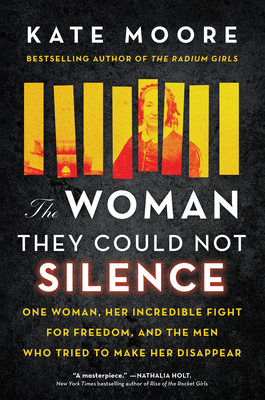
On a recent trip to Barnes & Noble, this title caught my eye:

After reading the blurb, I didn’t hesitate to purchase this gem of a biography. Kate Moore weaves an emotional and beautiful narrative of Elizabeth Packard’s strenuous life during the 1860s. A woman whose only crime was to have a different religious and political opinion from her husband. Such absurdity at the time was medically considered insane, imprisoning Elizabeth behind the walls of the Jacksonville Asylum. Elizabeth spent several years trying to get out, and once she was out, she was not done fighting. Her next goal was to get the laws changed that put her there. Ms. Moore writes in the style of narrative nonfiction, giving us the facts in the form of a story. My blood boiled for the majority of the book, but Elizabeth’s triumph made the emotional rollercoaster worth it.

So, let’s meet Elizabeth Wells Packard. (Note: Everything written below comes from what I learned in Kate Moore’s book. All credit for deeper research goes to her.)

Elizabeth married a man fourteen years her senior – which wasn’t a cause for raised eyebrows at the time, but certainly led to her husband’s erroneous belief that he could spend his marriage days controlling her. 

Theophilus Packard was a preacher, which allowed Elizabeth a religious education. Shouldn’t the preacher’s wife know the Bible? In her studies, Elizabeth went beyond her husband’s teachings and explored other philosophies (this is at the tail end of the Second Great Awakening, afterall). Elizabeth thought it would be okay to share her new thoughts in her Bible Studies class. What Elizabeth didn’t know was Theophilus was receiving pressure from his financial backers to preach certain agendas in the wake of the looming Civil War. (Isn’t communication in marriage a beautiful thing?) Those agendas were the exact opposite of Elizabet’s new beliefs.

As tensions in their home rose, Elizabeth left her husband’s church, and began attending a church across town. This was the final straw for Theophilus. He locked Elizabeth in the nursery, and got two doctors to sign a certificate stating that Elizabeth was insane. On the day he planned to move her, he sent their 6 children on different errands and to different babysitters so they would not see their mother cartered off, and so the older ones could not come to her defense. He then brought in several trusted minions to manhandle Elizabeth out of her home, to the train station, and onto the train. Elizabeth was smart. She knew if she fought, then the unintelligent society she lived in would believe her insane. So she remained calm, stoic, and gave her kidnappers her dead weight as they carried her through the town. 

Theophilus accompanied Elizabeth to the Jacksonville Asylum in Illinois, and after dropping her off, would not see her again for quite some time. Theophilius placed her in the hands of the resident doctor, Andrew McFarland.

Dr. McFarland was smarter than Theophilus. After meeting with Elizabeth, he led her to believe that he did not think her insane, and that she would be out in a few months. During those few months, Dr. McFarland met with Elizabeth every day, letting her talk herself into a deeper hole (unbeknownst to her). 

According to Dr. McFarland, Elizabeth was not insane due to her religious beliefs. She was insane because she hated her husband. A sane woman would obey her husband. A sane woman would love her husband. A sane woman would forgive her husband for putting her in an asylum and agree to obey him in order to be released from the asylum. Elizabeth would do no such thing, so she remained there for about three years. 

During her time there, Dr. McFarland tried to break her by preventing her letters being delivered (both written to and by her), taking away her nice clothes, books, and writing supplies, and eventually moving her to the worst part of the hospital for women: 8th Ward. While in 8th Ward, Elizabeth experienced emotional abuse from the staff, and physical abuse from specific patients (these were the only patients that Elizabeth truly believed were insane). She also witnessed horrible physical abuse given to the other patients. 

Elizabeth was really good at making friends. And so, over time she was able to convince staff members to sneak her reading and writing materials into her new room. And during this time she wrote two full length books. One was all about the sins of Dr. McFarland, the other about the problems of her modern-day mental health system, religion, and women’s rights.

Elizabeth requested a meeting with the Board of Trustees, and was surprisingly granted a presentation with them. Dr. McFarland came, and so did Theophilus. But just like with the other patients and staff, Elizabeth won the Board over, and they commanded Dr. McFarland to release her within the next few months. Her release date came and went, but Elizabeth continued to write and pester Dr. McFarland. 

Eventually, Dr. McFarland admitted she was more bothersome inside the Jacksonville Asylum than he could handle, and he released her. Theophilus dropped her off with her cousin and forbade her from visiting him and their children. Elizabeth planned to do no such thing, and took out a loan from her friends to take a train to her hometown. She walked right into her old house, and it was a giant mess. Her only daughter was forced to become a homemaker at 11 years old, and is now a traumatized 14 year old. Theophilus had brainwashed their children against her, and they would only obey their father. Elizabeth became an invisible nuisance in her own home. 

Theophilus locked her in the nursery again, and she discovered he’s preparing her a place in another asylum, this time, for life. If she enters those doors, she isn’t coming out until she is dead. Her friends got the legal help that was denied her three years prior, and her sanity was officially on trial in the county court. 

This is one of the most amazing court cases I’ve ever read. And I can’t do it justice. Just read the book. In the end, Elizabeth won. She won against all those men who wanted to lock her away for life. BUT she is only free in the state of Illinois, and Theophilus still has legal control over their children. Ever the sore loser, Theophilus took off with their children and moved to Massachusetts. 

Elizabeth would then spend the next several years lobbying state government after state government to get the laws changed across the country. After another showdown with Dr. McFarland, she was successful. And because of Elizabeth Packard, women cannot be placed in asylums just because their husbands wish it. Because of Elizabeth Packard, women received a huge step in progress to their legal rights over their mental health and personal property. Because of Elizabeth Packard, the treatment of mental health patients started the process of improving. 

Elizabeth would get reunited with her children, and begrudgingly, her husband. They never divorced, but they also remained in separate dwellings for the rest of their lives. They stayed cordial in order to both have access to their children. The two books Elizabeth wrote while imprisoned got published and she lived off the sales of those popular volumes and the charity of her adult children. She is an amazing example of determination, passion, and perseverance.

Have you read about Elizabeth Packard before? What are your thoughts on her accomplishments? What other biographies would you recommend? Let me know in the comments!   
How to Put a Ghost in a Romance: Bound Across Time

Four years ago, I learned the rules of romance writing. There are two very important requirements for a story to be considered a romance:

  1. The main plot must center around the relationship between the love interests.
  2. It must end with a Happily Ever After or Happy For Now. 

I struggled with rule #2 for about a year (check out how I overcame that in a previous blog post), but once accepted, I had a big question: How do you make this work with ghosts? If one half of the couple is a living person, and the other half is a ghost, how are they going to have an HEA?

Part of my confusion came from reading an incorrectly labeled paranormal romance. First off, the main plot was not the relationship with the (ghost) love interest; that ended up being the side plot. Second, the main character is not reunited with their ghost love interest until decades after the main story ends when they die of old age (think the reunited scene of Jack and Rose in Titanic). That didn’t really feel like an HEA to me. 

So, like the emotional teenager I sometimes act like, I stayed away from ghost stories until Bound Across Time by Annie R. McEwen fell into my lap. This is a paranormal romance worth reading.

Let’s start with our living character, our female main character: Celeste Gowdie (a.k.a. CeCe). CeCe’s mother died when she was young, and she was raised by her aunts in the U.S. state of Georgia. CeCe doesn’t know who her father is (this is important for one of the reveals toward the end). She studied history in college, and is working in St. Rhydian’s castle in Wales when the story begins. CeCe wants to be taken seriously as a real historian, but she ends up being the American tour guide who gets to research and share ghost stories to the patrons. 

Patrick O’Loinsigh is the bastard son of one of the historic Lords of the castle. He was born in Ireland in the 18th Century, educated in Paris, and forced to move to his father’s castle during his early adult years. His father used him to do his dirty work since Patrick wouldn’t be inheriting the title. Patrick is murdered by his half brother, and his spirit spends the next few centuries hanging out in the in-between waiting for the living soul who matches a prophecy meant to free him.

Patrick and CeCe have a meet-cute of epic proportions. Patrick lures CeCe to the top of the tallest tower by turning on a battery operated candle. CeCe can’t lock up the castle and go home until all lights are turned off. So after a literal hike, CeCe comes across a handsome man in 1700s clothing. Patrick scares CeCe so bad that she faints. 

It takes CeCe several days to believe Patrick that he is the ghost of the handsome man in the gallery of the castle’s historic inhabitants. At first she thinks he’s a loiter pretending to be Patrick O’Loinsigh. But when she finally believes him, she falls, and she falls hard. 

The local witch coven gets involved, CeCe’s aunts get involved because… family secrets! (That I’m not going to spoil.) Everyone wants CeCe to stay away from Patrick for her own good. Of course she doesn’t listen, and she embarks on a passionate and steamy love affair with Patrick. 

Well, it turns out that when a living person spends that kind of time with a ghost, their literal being starts to disappear. So now, CeCe and Patrick have a difficult decision to make: go their separate ways to save CeCe’s life, or research if magic can help them. 

And that’s where I’m going to leave you with this story, because you’re just going to have to read it yourself if you want to know how it ends. But the ending is soooooo worth the emotional turmoil that Ms. McEwen is going to put you through. 

These kinds of stories always have to have “rules of magic” and the rules of magic that Annie created were very cool. When Patrick and CeCe meet up, the room they are in reverts back to the way it was when Patrick was alive. When Patrick leaves, the room returns to its modern-day look and feel. When they are together, they are neither in the past nor present – though they are closer to the present, because humans could hear CeCe if they came by the room. 

There also appears to be two different “types” of magic. There’s a traditional witch who can cast spells and make potions and such. Then there are people born with “gifts”. CeCe is born with a gift that allows her to see and hear Patrick in the first place. (For more details on that, read the book!)


And to finish off this review, here is a Q&A with the author herself:

In your planning, what came first: a story about witches? Or a story about ghosts?

Door Number Three: a story about a castle! Because, when I conceived the book, I was living in a small Welsh town that is graced by a very old and beautiful castle. I spent a lot of time thinking about the people who passed through those halls and gardens. Were any of them still there? So, yes, I suppose the ghosts came first and everything else followed. 

What historical people, places and facts are true? What did you embellish or fill in the holes?

The town, the witches, the historian who’s forced to resort to ghost walks since history doesn’t sell, the castle, the stone circle a few miles out of town, the Welsh coast almost within sight of Ireland, the family who kept secrets, the work of people – archivists, admins, docents, conservationists – at an historic site: all those are fact-based, along with the many casually dropped references to and stories about the past as viewed by both a modern historian and a ghost who died in the mid-1700s. Beyond and embracing those is the truth of protagonist CeCe’s life and work; just like her, I’m a career historian who lived in a small Welsh town and met the astoundingly warm and quirky inhabitants, worked in the local castle, visited the stone circle. The things I changed were the ghost (whom I never met, more’s the pity) and the names and actions of both CeCe and the locals. Oh, and the color-changing cat! Always wanted one of those but, alas, mine have all been the single-color variety. 

I’m guessing Aiofe’s story is next? Do you also plan on going back in time and also telling Gabrielle’s story?

Bound to Happen (Book Two of the Bound Series) does indeed follow Aoife/Fee’s story. It involves a radical change in setting, from a tiny Welsh town to London and, specifically, Covent Garden, where Aoife has a grant to research playwrights and poets of the 1600s. She’s lured to an abandoned theater by some urban exploring chums and…Well, you’ll have to read the novel to see what happens then! But in addition to new and very different secondary characters – Aoife’s Ghana-born flatmate and her ancestor priestess Mom, along with some skeptical folks in the National Trust and Museum of London Archeology – characters from Book One re-appear, like Jana Smithbury-Tewkes (and her new color-changing feline, Rumpelstiltskin.) Through them, readers learn more about Fee’s Savannah family (still keeping secrets, as families do) and her life growing up with leathling-souler parents in 18th century Paris. As to Gabrielle Gowdie: while bits of her tale are woven into Bound to Happen, it’s in Boundless (Book Three of the series), that we hear from an aging Helene Gowdie (oldest of the original five sisters who included Gabrielle) about why and how the secret-keeping of Gowdie family began.

What’s next for your writing career?

More writing, more publishing! I’m contracted with four publishers (one in the UK, the rest US-based) for nine books, five of which are written, the rest in progress. I’m eager to push ahead with my series for the UK publisher, Bloodhound Books; it’s Victorian working class romance centered on the lives and loves of four women who work in a London corset workshop. If you liked Peaky Blinders, you’ll love The Corset Girls! I haven’t left paranormal romance behind, though; I’ve got a spine-chilling vampire romance story in Rowan Prose Publishing’s horror anthology coming out later this year. And I’m finishing a time travel historical romance set in 1910 Boston, New Orleans, and Wales. Several other WIPs are nudging me for attention, including a Regency romance comedy about the lengths to which an impoverished heiress will go to avoid an inconvenient marriage, an 1880s romance set in New Orleans’ back streets, and a novel of smuggling and love on the Kent coast in the 1740s. 


Annie R. McEwen has written a beautiful romance that brings past and present together in the most captivating of ways. She kept me guessing until the very end how the problems would get resolved. Very captivating and well-earned five stars. 

Learning to Love Flawed Characters

When I was going through my early-teens horror movie phase, I would constantly ask, “Why don’t the characters do xyz?”  My dad would always respond, “Because if they did, there wouldn’t be a movie.”

That’s how I’m starting to view flawed characters. Their flaws create drama, tension, and even plot points in the stories they star in. Even so, up until recently, I still expected some type of redemption or growth from a flawed character. That kind of expectation from a main character? Absolutely! But I also placed that same expectation on side characters, and it was affecting my ability to enjoy some great stories. 

My biggest struggle with this was the Beautiful Creatures series by Kami Garcia and Margaret Stohl. There are several characters whose flaws cause problems, and there’s no redemption or growth. The characters double down on their reasons for how they act, and Ethan and Lena are forced to accept it because they are young and have to obey the adults in their life. 

Years later, I read Spirit in Tow by Terry Segan, and her character named Gus drove me absolutely crazy. He caused a lot of problems, he was incredibly selfish, and he rarely apologized. Ms. Segan agreed to an interview when I was reviewing that book, and one of my questions was specifically about how she created Gus with all of his flaws and issues. One thing she said that stuck out to me was, “I… wanted Marni to see his occasional soft side, that we know almost every tough guy has, despite trying to hide it. It’s those cracks in his armor that kept Marni wanting to solve his murder and free his soul.” 

Occasional soft side. Cracks in his armor.

Characters need to have enough likable aspects, that their flaws can be, at the very least, tolerated.

And with this budding new view on flaws in fictional characters (and I do think it’s important to emphasize fictional – there are things that are okay in fiction that are not in real life, and that’s okay), I picked up Terry’s newest book: Five Steps to Celestia.

Joy lost her memory in a motorcycle accident 22 years ago. After her doctor is unable to find anything to identify her, he courts her, and they get married. Now she’s a widow, and comes across some mysterious seeds on a road trip with her bestie. Planting the seeds coincides with the arrival of some suspicious characters, and Joy’s memories start to crack open. As Joy learns about her past, she realizes that she was a different person than she is now, and she has a lot to answer for. And the big question: Which version of herself will Joy keep, or is it possible to blend her two lives?

Terry Segan does an excellent job of weaving an engaging story with enough mystery to keep the reader wanting more. And like her previous book, these characters are full of flaws.

Suzi is Joy’s best friend, and she starts out as your typical comedic elderly character. Suzi is on her 5th divorce when the story starts. She’s a terrible driver, a shopaholic, and a giant flirt with men young enough to be her grandsons (and they rarely want to flirt back). She’s loud, speaks her mind at inappropriate times, and won’t take no for an answer. Her flaws are going to cause a life-threatening climax that my younger self would have not been able to forgive had this book existed five years ago. But Suzi is also fiercely loyal. She will protect her loved ones with every fiber of her being. She has good internal radar when it comes to discerning who is and isn’t trustworthy. I honestly did not like her the majority of the book, but everything ended up coming together nicely in the end. 

Grace is Joy’s adopted daughter. Joy became Grace’s mother by marrying her father, the doctor who saved Grace’s life. Grace is married to a man who doesn’t deserve her, and her inability to kick him to the curb frustrates both the reader and Joy. But Joy has more patience than I do, and she allows her daughter to make her own choices – even if she disagrees with them. Grace’s decisions don’t put anyone else in danger the way that Suzi’s do, but it definitely caused some extra drama, that added to the tensions in the plot. 

Owen is Grace’s husband. He hurts Grace terribly and has a greedy and malicious plan that Suzi learns about from spying on him. He receives a couple of natural consequences from his actions, but none of those consequences come from Grace or Joy; and I really wanted those two women to deal out justice. *Sigh* But whether he gets the comeuppance I thought he deserved or not, doesn’t change the main plot. And because of that, I had to (begrudgingly) accept Joy’s realization: Grace is a grown woman who needs to make her own choices, and also needs her family for love and support. 

Silas is going to remain a bit more mysterious for this post. But what I will say is he likes to be in control, even if that means taking away others’ agency. Like with Owen, Silas has one consequence, but that consequence doesn’t make things better for Joy, our main character. And he doesn’t seem truly penitent. But his choices are important for the overall plot. His growth can’t happen until the end, if he was going to have growth. Joy chose to focus on other things, and doesn’t force him to change. Once again, I had to accept that this was Joy’s choice. 


When I finished reading Five Steps to Celestia, and I sat down to review it, I had to pause. I really was not happy with any of the four characters I just introduced you to. But did they make my reading experience unenjoyable? No. Did they cause an unsatisfactory ending? Again, no. So did the story deserve to lose a star or two because the characters are human? For the third time, no. And it’s with this realization that moving forward, I’ll be looking at books with imperfect characters differently and with more grace (pun intended).

Five Steps to Celestia released yesterday. Were you a lucky ARC reader like myself? What were your thoughts on the book?

Have you read any of Terry’s other books? What are your thoughts on those?

What books have you read that have helped you grow as a reader?

Let me know in the comments!
Mean Girls in the Paranormal: Out of Body

I’m excited to review another ARC (Advance Reader Copy – I get to read it before the official release date).

Out of Body by Kimberly Baer (which publishes TODAY) is a YA Paranormal-SciFi adventure about a 15 year-old girl named Abby who discovers she has the ability to leave her body during sleep time – or travel on the astral plane. Her cousin, and best friend, Logan has the same ability. This is so exciting for Abby because Logan moved away six months ago and she misses him terribly. 

At first, Abby’s out of body experiences (OBE) allow her to help others: finding a lost pet, helping a neighbor call 9-1-1. Then she learns things she would rather not: her parents’ marriage is on the rocks, and the mean girls at school wrote nasty things about her in their yearbook. (I LOVED the Burn Book vibes in that scene.) 

Abby is an introvert, and it turns out her social life was because of Logan. Once he moved away, her “friends” disappeared. Both her and Logan having OBEs gives her hope that she’ll get her best friend back. But Logan has been traveling on the astral plane longer, and already has other friends and adventure plans that don’t involve her. 

She’s mostly fine being alone, but her mother is not okay with a socially inept daughter. Feeling pressure from her mom, Abby uses her OBEs to make drastic and dangerous decisions. These decisions blow up in her face, and the lessons she learned had a very Disney Channel feel that was nostalgic for me.   

As both cousins make youthful mistakes, Abby will have to accept that her reality has some cracks, and she’ll need to trust the two people she (thinks) she hates the most.

Kimberly Baer has such a great imagination for the fantastical elements to this story. The dilemma Logan finds himself in really makes the reader question outside intervention in environmental factors such as evolution, species survival, and the food chain. Overall, a great read for teenagers and fans of YA literature.

And like some of my other reviews, Kimberly Baer agreed to an interview! Check it out below:


I think it’s amazing that you have published in multiple genres. Most writers I have conversed with feel it’s safer to stick with one genre. What has your experience been like?

I agree that it’s safer to stick with one genre; otherwise it’s hard to establish a target audience. My problem is that all of my story ideas come to me out of the blue, and they’re not all in the same genre. When an idea resonates with me, I feel compelled to write that story, regardless of the genre. But most of my recent ideas have fallen within the young adult genre, so that might be the one I “settle down” with.

I know what an out of body experience is, but I haven’t read any fiction involving it. Was there any trope or world building expectations already in place that you felt compelled to follow or not follow?

Nope. Before I started writing Out of Body, I’d never read a book about astral projection, either fiction or nonfiction. I did some research as I was writing, but the world-building comes primarily from my imagination. Assuming astral projection is a real thing, I probably stretched the limits of possibility—but, hey, that’s what fiction is all about, right?

Is this a standalone novel, or do Abby and Logan have more adventures in the works?

I’m not ruling out a sequel. Astral projection is a fascinating subject with endless plot possibilities, so there just might be at least one sequel.

What’s next for your writing career?

I have more story ideas than time to write them, so I’ll just keep tackling them one at a time!


As mentioned above, Out of Body released today. You can follow Kimberly and purchase her books here: https://www.kimberlybaer.com/

Favorite Reads from 2023

I read 88 books in 2023. And of those 88, I would like to highlight 24 of them (don’t worry, 21 of those are in 3 series).

Bridgerton: When He Was Wicked, It’s in His Kiss, On the Way to the Wedding

I finished the final three books of the Bridgerton series at the start of 2023. They were the perfect way to end the series. Julia Quinn got bolder with the three younger Bridgertons, and it paid off. Francesca is a widow who is fighting her feelings for her deceased husband’s cousin. Hyacinth is an independent woman who doesn’t want to fall in love, so when Lady Danbury’s grandson catches her eye, she doesn’t know what to do. And Gregory… Gregory, Gregory, he’s going to go after a young woman promised to someone else. Hyacinth’s and Gregory’s stories had action and danger that I loved. 

A Court of Thorns and Roses – A Court of Silver Flames

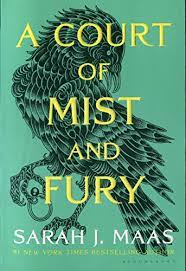
When your editor recommends a book to help with your writing, you follow through. When I finished the first draft of Bondwitch: Hybrid, I asked my editor for advice on a specific plot point. She recommended I read A Court of Thorns and Roses by Sarah J. Maas and the subsequent novels. I have never gobbled up a series so quickly. And a quick paragraph won’t do the series justice. Lucky for you, I already have a detailed analysis for each book right here on the blog. Check them out:

ACOTAR: Beauty and the Beast Meets the Goblet of Fire

Mist and Fury: A Perfect Redemption

Wings and Ruin: The Cost of War

Frost and Starlight: Diversity in Healing

Silver Flames: Overcoming Toxicity

I will say overall, the world building is superb; and Sarah J. Maas gives JK Rowling a run for her money when it comes to morally gray characters. Everyone is flawed. Everyone makes astronomical mistakes. Everyone lies and cheats and steals. And almost everyone earns their redemption. 

Warriors of Sangrin

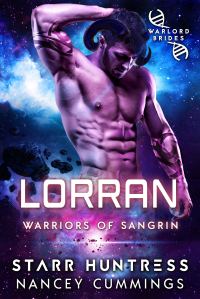
This series I also wrote a deeper post on. This is a SciFi Romance series by Nancey Cummings. In this world, Earth was invaded by alien invaders called Suhlik. The Suhlik’s enemies, Mahdfel come to Earth’s aid… for a price. That price is in the form of brides as Mahdfel only produce sons, so they must mate with females from other planets. There are 11 stories in the main line and 3 side stories, so far. This series opened me up to alien romances, and I’m addicted. 

The Alpha and Her Hunter

The is one of the best fated mate, werewolf stories I have ever read. The author, Lauren Rutherford, created a unique world building that worked so beautifully. Female werewolves are bigger, stronger, and the leaders of the packs. Hunters have their own powers that differentiate them from regular humans. And if you haven’t figured it out from the title, we have a Romeo and Juliet story going on. Forbidden love. My favorite trope. A female werewolf and a male hunter fall in love, and have to fight their families to be together. It ends on a cliffhanger, and I’m anxiously awaiting the sequel.   

The King’s Curse

This was the final Plantagenet/Tudor book left for me to read by Philippa Gregory. It’s Margaret Pole’s turn to tell her story, and I’d venture to say that this is one of Gregory’s longer books in respect to how much time is covered (it’s still her typical 600-page novel). We jump into Margaret’s story around the time that Princess Katherine from Spain is arriving to marry Arthur, following her life to the day Margaret was executed. Her execution was confusing to the court and historians. Catherine Howard had recently been executed for adultery, and Margaret had not been close to being involved in that. The most probable reason is that Henry still felt threatened by her and her sons since they were the remaining York family, and could distantly claim the throne. I really enjoyed learning about Margaret’s life through Gregory’s historical fiction. She’s always been a side character with few notable moments in the other novels, and with The King’s Curse she gets to take center stage. I loved seeing a human side to her, rather than the perfect ally to Katherine and Mary that she is usually depicted as. Though she did stay loyal to Henry’s first family, she still had her own trials that she had to focus on and make difficult decisions to protect her name, family, and property. And now, it’s the end of an era. 15 years, and I’ve finally read about the main Plantagenet and Tudor women.  

The Lycan Prince’s Huntress

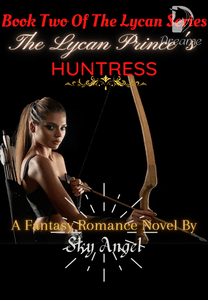
This is the the prequel to a fated-mate-werewolf romance called Prince Reagan. In some omegaverse world building, there is a shifter called a lycan. Lycans are a more powerful version of werewolves. Depending on the author and their imagination, lycans can walk on their hindlegs in their wolf form (I kind of imagine Remus Lupin from Harry Potter, but more muscular), they live longer (or are full on immortal), they are the royal pack/family that regular werewolf packs have to bow down to, etc. The Lycan Prince’s Huntress can be found on the reading app Dreame. In this story, the FMC is the daughter of the head hunter; and their clan hunts werewolves and lycans. The MMC is the crowned prince of the Lycan Kingdom. And these two are fated mates. Forbidden love, enemies to lovers, Romeo and Juliet. And since those are my favorite tropes, I lapped this story right up. Also, it was an added bonus that the FMC wasn’t a sniveling weakling who becomes a jellied donut in the presence of her mate. 

And those were my favorite books I read last year. What are your favorite books from 2023? Let me know in the comments! 

If Sookie Stackhouse Could Talk to Ghosts: Spirit in Tow

If Sookie Stackhouse could talk to ghosts and spoke her mind the first time, you’d have Marni Legend, the star of Spirit in Tow by Terry Segan.

I originally went into this book blind, and was hooked on the first page, having no idea what kind of story I was getting myself into. Marni is in the over 40 club, a divorcee, and she can see and talk to ghosts. Spirits visit her for help with unfinished business so they can move on. Her newest client appears when she’s trying to go to her own mother’s funeral. 

This opening scene shows us how her gift works. She can see and talk to ghosts when they make themselves known and visible to her. As her mother’s funeral gets underway, we learn that her brother can hear ghosts, just not see them. Her sister cannot see or hear ghosts, but believes they are there when her siblings talk to and about them. This is an inherited gift that Marni’s grandmother also had. Also, Marni and her sister being on the opposite ends of the ghost communicating spectrum has put them at odds for years, and there’s a lot of sister drama throughout the story. 

Marni’s newest client is named Gus, and it took him a long time to figure he was dead, decades to be exact. So Marni gets the pleasure of solving a cold case. Gus is selfish, crass, and as emotional as an overgrown toddler. He also gets Marni tangled up in a crime ring. But Marni has been given this responsibility to see souls to the other side, so she is firm and patient with him as she tries to help him – God bless her.   

While trying to help Gus figure out how he died, Marni meets a new paramour, Jake, who happens to be Gus’ older brother. Jake is the best written character, in my opinion. Every new scene with him gave me whiplash, but once again, in a good way. Terry Segan did an excellent job with him. She kept me changing my mind about him and guessing to the very end.  

Marni also has the chance to rekindle her relationship with her high school sweetheart, Kendal; creating a love triangle between her, Kendal, and Jake. Both Marni, and Kendal were burned by their previous spouses. They know each other, they are comfortable with each other. 

And I’m honored to end this review with a Q&A with Terry Segan herself.


I haven’t read very many ghost stories, so I had no preconceived expectations on world building. Can you walk us through your world building when it comes to what ghosts can and can’t do, who gets the gift, and how do ghosts find them?

Having read several books involving ghosts, I’ve noticed one thing each author does—set up their own set of rules. With so many paranormal stories available, I find it refreshing when a writer can add a new twist. The key is to remain consistent throughout the book or series. For my Marni Legend series, I wanted
the interaction between a ghost and the humans who see them to have a natural feel to the situation. Since I chose to have this as a family trait and occurring in every other generation, this enabled Marni to have knowledge of how to react. Since my character is in her late forties, this has given her decades of practice and self-assurance in her gift. In my books, the ghosts are able to recognize people possessing the ability to see them and vice versa. As far as finding the ghosts, the living come upon them in the general area of either their death or where their body lies.

As a reader, I found Gus extremely frustrating (but I DO love flawed characters, they keep the story full of promise). If I was Marni, I would have told him to take a hike and solve his own death. How did you create Gus as a character, and how did he influence the plot from your end as the writer?

Since I’m a pantser and not a plotter, I didn’t have a full picture of Gus’ character when I began. I knew there would be verbal sparring between Marni and Gus, and he would want to come off as a tough guy. I agree with you, Marni should have told him to take a hike more than once when he withheld important (read life- threatening) information on purpose as opposed to details he couldn’t remember. As his character developed throughout the book, I also wanted Marni to see his occasional soft side, that we know almost every tough guy has, despite trying to hide it. It’s those cracks in his armor that kept Marni wanting to solve his murder and free his soul. With Gus’ cast of associates still alive and kicking, it allowed
me as a writer to put Marni into a number of comical or dangerous situations that kept the story moving forward.

I see that your latest book, Manatee Soul, is a continuation of Marni’s adventures. How many adventures do you have planned for Marni and her siblings?

Manatee Soul has Marni and her sister, Gloria, going on a girls’ trip to Crystal River, Florida. While still told from Marni’s point of view, both sisters get equal appearance time. Right now, I don’t have a set number of books in mind. As long as I can conjure up fun storylines, I’ll keep the series going. I’ve begun writing the third Marni Legend book, and this one will feature her brother, Calvin, while Gloria takes a back seat. The story also returns to Marni’s hometown of Northport where there are plenty of stories to tell from past and present characters.

What’s next in your writing career?

To keep writing, of course! My next release is another stand alone entitled, Five Steps to Celestia. It comes out this spring and will take readers on the journey of a woman trying to piece together her past. After losing her memory twenty-two years prior, a little mysticism, a string of odd occurrences, and a menacing
stranger prompt her to remember—and not all of her past is hearts and sunshine. Look for it in May 2024.


I normally rotate through a few books at a time. But Spirit in Tow was so captivating, that I paused my other reading to finish this one. If you like murder mystery with a dash of paranormal, then I highly recommend Spirit in Tow. 

Follow Terry at her website: https://terrysegan.com/

Powerful Women in Winter Solstice in the Crystal Castle

“Well behaved women rarely make history.”

Princess Gabrielle is not well behaved. She is a skilled archer, can fight any man with her own sword, and gallops across the French countryside to her heart’s content. The ladies of Paris cannot fathom such a lifestyle, nor do they think it’s acceptable for a princess and future queen to be acting in such a manner. 

But it’s this unladylike behavior that will allow Gabrielle to save her own life, twice. In a time when Gabrielle must obey her father, and then her future husband, she is determined to forge her own destiny, and that destiny lies in the arms of Basiten; the Master of Horse, and her combat trainer turned personal guard. 

“Behind every successful man there stands a woman.”

Bastien has two women other than Gabrielle working behind the scenes to ensure that he wins Gabrielle’s hand in marriage, and the kingdom of Finistere. His mother, Laudine, uses her Winter Solstice wish for her son rather than herself. Then we have Beatrice, Gabrielle’s great aunt, and a powerful socialite in Paris. Beatrice will play an important role protecting Bastien’s legal right to marry Gabrielle.

If I’m going to read historical fiction, I want to read about powerful women – or at least women who created their own power in a world trying to stop them. Jennifer Ivy Walker does this masterfully with her female characters, particularly with Gabrielle and Beatrice in Winter Solstice in the Crystal Castle. 

Gabrielle is the only child of the King of Finistere. But since this is medieval France, she can’t inherit her father’s throne on her own. The king’s health is failing, and he needs to choose his daughter’s husband, who will also be his successor. One particularly unsavory nobleman wants Gabrielle for nefarious reasons, and in order to stop him, King Guillemin plans a tournament; where the winner will be given Gabrielle’s hand and Guillemin’s kingdom. But Gabrielle can only imagine marrying one person: Bastien, her father’s master of horse. Bastien has trained Gabrielle in archery and hand-to-hand combat; and the only thing keeping them apart is Bastien’s lack of a noble title. Luckily, a moment of foul play from another contender provides Bastien with the opportunity to be ennobled, and eligible for Gabrielle’s hand. But will the official documents arrive in time?  

And for the second half of this review, I’m pleased to announce that the author herself, Jennifer Ivy Walker agreed to an interview!


What time period is this supposed to take place in?

This trilogy is set in the HIgh Middle Ages in medieval France.

And can you explain how the politics and culture worked in multiple smaller kingdoms dotting the area that is now modern-day France? How does that fit into your story?

During the Middle Ages, there were many separate kingdoms and duchies in France.  The region of Brittany was separate from the rest of France until 1532, well after my trilogy takes place.

Lancelot makes an appearance in the first chapter. He is the only character I am familiar with. Who else is based on European mythology? Are there any characters that are based on historical figures?

Nearly all of the characters in my trilogy come from the original medieval French legend of Tristan et Yseult (Tristan and Isolde in English). The characters of King Marke of Cornwall, King Hoël of France, Prince Kaherdin, Lady Gargeolaine, and the Morholt all come from that French legend as well. Some of the characters, such asViviane (the Lady of the Lake) and Morgane la Fée come from French versions of Arthurian legend.

I know that you are a French teacher. Is the French used in the book modern-day or medieval?

I used modern French with medieval phrases and terminology, for authentic medieval French would be even more difficult to understand than medieval English. (Imagine reading Shakespeare, but in French!) 

The second book in your Wild Rose and the Sea Raven series is titled The Lady of the Mirrored Lake. Is Viviane that lady? And if so, should your books be read in a specific order?

No, Viviane is the Lady of the Lake–le Lac de Diane in the enchanted Forest of Brocéliande. My protagonist and heroine Issylte becomes the Lady of the Mirrored Lake (Le Miroir aux Fées–the lake known as the Fairy Mirror) when she becomes a Priestess of the Tribe of Dana (the Goddess of the Earth). Yes, the books should be read in chronological order since they are a continuing trilogy and not stand alone novels.

What are you currently working on? And what’s next to be released from you?

I have three new releases:  Winter Solstice in the Crystal Castle–a stand alone novel that involves many of the characters introduced in my trilogy. It’s a medieval romance between a fiery French princess descended from Viking Valkyrie and the chivalrous knight who suffers an impossible love for her.

I also have two contemporary novellas which are steamy romances set in modern-day France. Amour in Avignon (releasing November 29th!)  is a Cyrano de Bergerac inspired love story set in the south of France during the world-famous Festival of Theater in Avignon. 

Flames of Flamenco (releasing December 27th) is a fiery romance set in Montmartre– the bohemian heart of Paris–between a skilled artist who melts the frozen heart of the American heroine with the flames of his passionate flamenco dance. 

I have also written a World War II historical romance,The Witch of the Breton Woods, which will be published in early 2024. It’s the story of a reclusive, traumatized young woman who heals and shelters a wounded American paratrooper, keeping him hidden from the Gestapo and la Milice–the local French paramilitary organization that collaborates with the Nazis. She introduces her soldier to the underground French Resistance (of which she is a member) and together, they join forces with the Allies to fight in the Battle of Saint-Malo.

I have just completed another stand alone spinoff of my trilogy, entitled A Celtic Yuletide Carol, which I hope will be published for the holiday season in 2024. And I am currently working on a Viking trilogy set in Normandy during the tenth century–the ancestors of my French Viking princess from Winter Solstice in the Crystal Castle. I have also outlined another three book series introducing the next generation of characters from The Wild Rose and the Sea Raven trilogy. I hope to write those three books in 2024.


I rate Winter Solstice in the Crystal Castle 5 stars. If you like medieval folklore and romance check out not only Winter Solstice, but Jennifer’s other books as well.