Should you repeat a writers conference?

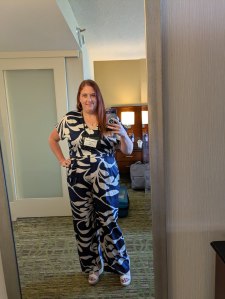
In June 2023, I took the opportunity to attend my first educator’s conference with my administrators and several other teachers. The conference was in Austin, Texas. I’d never been to Texas before, so that in and of itself was motivation enough to accept an everything-but-meals-and-activities paid trip. About halfway through the conference, one of my colleagues said that he’d attended this exact conference with his previous school a few years prior, and the sessions and keynotes were the exact same. So he spent the week picking sessions he didn’t pick last time, or just enjoying himself in a city he’d never been to. Six months later, that same conference came to Salt Lake City, Utah – an hour north of us. Those of us who went to Austin saw no reason to attend again. So, the teachers who didn’t go to Austin, went to the Salt Lake sessions.

An editing software that I use hosts several online conferences each year for different genres. I religiously attended for a couple of years, and I noticed that they had the same presenters teach the same session for the topics of marketing, plotting, and different world building and editing programs. After the third repeat, I stopped attending those sessions.   

With that being my introduction to conferences, I struggled in deciding if attending the Quills Conference two years in a row would be worth it. 

It was.

First of all, the sessions were completely different. There were new presenters that were not there last year, and returning presenters taught completely different classes – or different enough, that it didn’t feel like a repeat. 

The networking opportunities were different as well. In fact, if my memory serves me correctly, there were more networking opportunities this year. 

Some things remained the same: pitches with agents and editors, headshots with a professional photographer, and banquets featuring three keynotes speakers (though the keynote speakers were different).

Overall, I learned plenty of new information, connected with new writers, reconnected with writers I only get to see at the Quills and Pre-Quills, and had an enjoyable break from my normal life. 

So, yes, attending the Quills Conference year after year is totally worth it. I look forward to having it be part of my summer travels each year. 

What writers conferences have you attended that you would recommend to others? Tell us in the comments!

May 2025 Newsletter

Everyone says that March is the longest month of the school year for students and teachers. But I actually think April is. After spring break, there are no more holidays or teacher work days. My kids also have a million end of the year performances – though I do love attending those and watching my little performers. 

What do you think? Is March or April the “longest” month of the school year?

Writing News

A couple of months ago, I finished writing my first short story. It took me two years! Short stories are hard because you have to write a complete story with fewer words. And everything I attempt always turns into a full length novel. And I finished just in time to submit it to an anthology whose theme matches my story’s. A few days ago, I received an email from the publisher that they want to include my story in their anthology! As details get hammered out, I will be sharing them here in the newsletter.

The Wolf Whisperer and the Warrior won the Fiction from the Heartland contest put on by Mid-America Romance Authors! I know in the last newsletter I said being a finalist was exciting enough, but I am so thrilled to have won. It really helped with some imposter syndrome I’ve been feeling recently. A literary agent was the judge for the final three stories, and so, this makes me think that maybe I could get this traditionally published. I haven’t made any concrete decisions yet. I still think that because it’s a fated mates werewolf romance it has the potential to do well on a reading app. Plus, having some stories available for free is nice for readers. *sigh* Decisions. Decisions. (In Dakota Fanning’s Jane voice in the Twilight series.)

Book Reviews

I’ve been rereading a lot of favorites, but here are the new ones for the month:

Killing the Witches: The Horror of Salem Massachusetts by Bill O’Reilly is unfortunately not what it’s advertised. There are three sections: 1. The Salem Witch Trials, 2. A short biography of Benjamin Franklin, 3. The event that inspired the movie The Exorcist. Each section on its own was an interesting read. But from cover to cover as a comprehensive claim? The sections don’t connect. I would have loved if the author fleshed out the Afterward and made that part of the book instead of the Revolutionary War stuff and The Exorcist stuff. 3 stars.

Because of Miss Bridgerton by Julia Quinn is the first of the Bridgerton prequels. Billie Bridgerton, the FMC, is the oldest Bridgerton of Edmund’s generation, making her the aunt of the OG Bridgertons. She helps run Aubrey Hall and is jealous that Edmund will one day inherit it instead of her. George Rokesby and his siblings have grown up with the Bridgertons, and he’s always seen Billie as too free spirited, until one day, he realizes he loves her free spirit. This is one of the slowest slow burns I’ve ever read. And the payoff was so worth it. Billie’s version of “not like other girls” is refreshing and it’s more about going after her dreams than trying to be different. George is a better heir than Anthony, hands down.

Dear reader, be patient. It takes a while to get to their first kiss, but I promise, after that, it’s amazing. 5 stars.

I’m chugging along on my ACOTAR series reread reviews on TikTok. My latest is Ch. 22-28 of A Court of Mist and Fury.

@chelseym.ortega

ACOMAF Ch. 22-28. Sorry for the long video, but these chapters have to go together! #booktok #acomaf #archeronsisters

♬ original sound – Chelsey M. Ortega

Hang in there. It’s almost summer.

Sincerely,

Chelsey M. Ortega

4 Writing Tips from the Pre-Quills Conference

The last weekend of March, I attended the Pre-Quills Conference put on by the League of Utah Writers. It’s a one day conference whose sessions are geared toward beginner writers. And I honestly still consider myself a novice writer. I still have a lot to learn. There were four sessions, with three options per session. I attended a session on writing short stories, writing BIPOC characters with respect, Marketing for Beginners, and how to write a first Chapter. I want to share the highlights from each session with you.

Short Stories

The presenter for this session was Cassidy Ward. He writes science articles and short stories. He started the session by reading one of his short stories out loud, and then using the parts of that story as an example for what he taught us. (The short story in question is on his website here. Go read it. It’s amazing.)

I chose this class for session 1 because I have written a short story that I’m submitting to a contest, an anthology, and a magazine. Some of the feedback I’ve received in my critique group has really frustrated me, and I needed to better understand what I was doing wrong from an actual published short story author. 

Cassidy’s presentation was so wonderful. What he taught helped me see where I can improve, but I also got some validation in certain areas that I was convinced were okay despite my critique group’s comments. (I do think that a lot of their comments would have worked for critiquing a full-length novel. And to be fair that’s what I generally bring to the group.)

So, after spending way too much time on this introduction, here are the highlights from his class:

  • “Get words on the page and get rid of the ones that don’t work.”
  • Treat exposition like salt: enough to set the stage → as little as possible, as much as you need
  • Give the reader at least one character to root for
  • Every character should want something. The stakes don’t have to be huge, but they should feel huge → the reader should feel what the character feels.
  • Focus on feelings rather than events → zoom in one thing (i.e. 20 minutes of someone’s life)

BIPOC Characters

This session was taught by J.T. Moore. I didn’t take many notes because I was just enjoying listening to her. Ms. Moore’s presentation was about how representation is important, and should be done respectfully. And like with the short stories session, I had a personal reason to choose this session.

I have Black, Asian, Latino, and Gay characters in my stories (none of which were chosen for the sake of representation – I strongly believe that my characters are “alive” in a way, and they tell me who they are). And my beta readers have never picked up on my attempt at respectfully describing these characters, assuming everyone was white and straight. *sigh* So, I needed help from someone more knowledgeable than me.

This is what I learned from J.T. Moore:

  • Give your characters hobbies, personalities, and descriptions other than skin color
  • Give your characters unique and complicated back stories to inform who they are
  • In speculative fiction, your characters don’t have to reflect the current world
  • Still identify their race, just don’t use their race to be their only description and personality

Marketing 

Like most authors, marketing is my weak spot. So, any time there’s an opportunity for me to learn from someone successful to see if what they do works for me, I’m going to take it. 

Candace Thomas has successfully tapped into an engaging website, using influencers, and creating merchandise. I took a lot of notes, but I’m only going to share a few highlights – specifically the ones I’m in the process of applying to my marketing.

  • Have your most recent book be the landing page for your website
  • Make your newsletters short and sweet
  • Know which generation prefers your genre and what social media platforms they use (i.e. Gen Z loves Romantatsy and are mostly on Instagram and TikTok)
  • Make content that matches your books that isn’t “Buy my book!”
  • Utilize influencers (they do cost $$)
  • Create merchandise that brings people to your website (and hopefully buy your book as well)

First Chapters

Lindsay Hiller has won several first chapter contests, and now heads and judges first chapter contests. I picked her session because I’ve never placed in a first chapter contest, let alone won. And most readers who attempted The Wolf Whisperer and the Warrior when it was on Kindle Vella stopped after chapter 1. So, I clearly need some help. 

Lindsay broke it down into 3 main writing tips:

  1. Follow the 4 emotion beats: What is the character’s goal (both for the chapter and the whole story)? What are their motivations for those goals? What obstacle(s) will prevent them from meeting that goal (at least the smaller one)? And what are the stakes if they don’t reach their goal (at least the smaller one)?
  2. Organize the following aspects: Provide a setting, give the basics for character description, voice, and flaws, and create a hook to convince the reader to keep reading after chapter 1.
  3. Put it all together: Begin by introducing the character, describe the setting, and provide a status quo. Go into their goal and motivation. End with the inciting incident that launches the character and reader into the rest of the story. 

I am so grateful I got to attend this conference. (Last year I got sick and had to stay home and watch the virtual sessions, which really wasn’t the same as being there in person.) I’ve already started applying some of the lessons I learned, and I’m hopeful for positive results. 

Learning How to Read Novellas

Before I knew that there were more differences between a novel and a novella than just word count, a lot of my reviews of novellas read like this:

“The story ended too quickly for me.”

“I would have loved the resolution to have more details.”

“I wish the ___ plot was more drawn out.”

I read dozens like that. And then, one day, it hit me: these are meant to be short, which means the plotting is going to be structured differently than a full length novel. So, I googled “What is the difference between a novel and a novella.” Endless articles have already been written, so I’m just going to summarize three* of them:

  • Word count: A novel is 40,000+ words, a novella is 17,500-40,000 words (I don’t know where the 17,500 comes from or why it’s that specific. If you know, feel free to share in the comments!)
  • Characters, events, themes, and subplots: There are more of all of those in a novel than a novella. If there are any subplots, very little time is spent on them. In fact, it’s easier to not have a subplot. Character development happens for the protagonist only.
  • Plot and Pacing: A novella has a singular event that is the central crisis and focus of the plot, allowing it to be faster paced. A novel has several points of rising and falling action and interconnects subplots with the main plot.

*Sources: https://www.uobabylon.edu.iq/eprints/publication_10_21876_1383.pdf , https://kindlepreneur.com/novel-vs-novella/ , https://www.firstediting.com/blogs/difference-between-a-novel-and-a-novella/  

Now that I better understand the organization of a novella, I’ve had a much better experience reading them. And those authors are also getting better reviews from me! 😉 I also really enjoy reading a couple light hearted and spicy novellas in between the longer and darker fantasies I’ve been reading (ACOWAR I’m talking about you). And I’d like to share with you my favorite Novella series and authors:

  • Warriors of Sangrin (a.k.a. Madfhel Brides) by Nancey Cummings – First book: Paax
  • Tail and Claw by Nancey Cummings – First book: Have Tail Will Travel
  • Any of Carly Phillips’ series. So far I’ve read: Billionaire Bad Boys, Dare to Love, and The Knight Brothers series.
  • Any of Aurelia Skye’s series. 

I’ve read plenty of others, but those are my top three novella authors.

And in learning more about Novellas, I decided I want to be able to write some as well. So, I tried to write one, and *sigh* it turned into a 99,000 word novel. (It was The Wolf Whisperer) But I haven’t given up. I’m going to keep working on concise writing and shorter plots. And hopefully, one day, I’ll have some Novellas under my belt. 

Are you a fan of Novellas? What authors/series would you recommend? Let me know in the comments!

Resolving Sociopolitical Issues in Fiction: One Reader’s Perspective

It’s very common in fantasy and science fiction for the authors to mirror real issues that human history has gone through or is currently going through. In ACOTAR, humans used to be slaves, and once freed, became segregated from their previous masters, the fae. The First Order in Star Wars is obviously the Third Reich. Voldemort in Harry Potter is clearly Hitler. House Elves are slaves. Every single creature that isn’t a wizard are all of the colonized nations around the world. A wizard and a no-maj not being allowed to marry mirrors U.S. anti-miscegenation laws. The list goes on. 

In each of those issues, the protagonist or one of the sidekicks fight against those issues. And enough progress is made that even if it’s not fully resolved by the end of the series, the reader is able to believe that it will be soon – or the main characters physically move away from the corruption to a new kingdom/world/etc.

So what happens when an author creates social injustices for their plot, but doesn’t resolve them by the end? 

I recently read a series that did just that.  

It was a paranormal romance series that had 10 books in it. The majority of the world-building centered around sexism. The female characters had no rights, and so their only way of a decent life is to accept a mate bond with a strong male. Children also had no rights until they shifted into their animal for the first time. And half-breeds (one human parent, one shifter parent) were the lowest of the low. 

The main character for the first three books leaves her community and tries to fit into the human world because of this. She gets sucked back into her old life, where she meets her fated mate. He also doesn’t agree with the traditional way of their species, so together, they create a refuge for others like them. So, things are looking good for a traditional fight-the-corruption plot line that I love in fantasy series.  

For the next three books, one of the side characters becomes the main character, and her love story commences. She and her fated mate spend three more books fighting the system, and win. They also create a second pack for outcast shifters to escape to. 

The final four books take place roughly fifteen years after the sixth book ended. And this is where the plot goes in a completely different direction. There were very strong hints at the end of the sixth book that things were changing drastically. So when chapter 1 of the seventh book started and things had not only failed to improve, but even regressed beyond the first book, I was confused. However, as I continued reading, I realized it’s okay if society got worse. The Force Awakens does the exact same thing, and I enjoyed that movie. The author had to come up with something for the main character to fight. But as I got to the end of the tenth and final book, there were no hints that the corruption was going to be defeated. And sadly, it wasn’t. The two love interests got off on a technicality within the corrupted legal system, and continued to live in that evil world. 

The series would have felt more complete, for me, if the corruption had truly been defeated and social and political change was evident – even if it wasn’t perfectly gone by the final sentence.

Now, I need to make a note here. I think that the author created an incredible world with relatable characters. I obviously was invested enough to read all ten books. The romance plots – which were the main plots – were well executed. And there were plenty of readers who loved the whole series. I think the author is a talented writer. They have a great imagination. I gave each individual book between 3-5 stars on Goodreads.

I also acknowledge that the end of this series is more realistic. To quote Anita Hill, “Progress isn’t measured in days. It’s measured in decades.” That being said, I don’t want fantasy to be realistic. I want the final battle to magically change everything (or put society on the first few steps of changing everything).  

This is similar to what I said in my historical fiction post. Some readers don’t care if the characters are eating chocolate too early for historical accuracy, while others care very deeply. Some readers will be fine if the characters don’t take down the corrupt system, while others will want to see exactly that.

So, my opinion is simply mine. This is a decision that all writers have to make. As they build worlds and create characters, writers need to figure out which plots need to be resolved by the end – or at least a hint of a resolution. 

For me, resolution is important.

I’d love to hear your thoughts. Do you think all – or close to all – the problems in a story need some type of resolution by the end? Let me know why or why not in the comments.  

How I Found My Perfect Critique Partner

Back when I finished the first draft of Bondwitch, and googled “how to publish a book,” one of the deep dives I went into was beta readers and critique partners. So many authors I talked to online were adamant that I should not publish my book without other people looking at it first. But taking that step of trusting someone else with your writing is really scary when you are new to this world. And after four years of sharing my writing with others, I have a critique partner who is my ride or die. So, I wanted to share how we found each other. And hopefully my journey will help someone else who is in the early critique group trenches. 

Get comfortable with someone else reading and commenting on your writing and vice versa.

Before I knew anything about alpha readers, beta readers, and critique partners, an acquaintance from high school was asking for beta readers on facebook. My husband is a gamer, and I knew that beta players got to play a game before its release or play an updated version before it was available to the general public; I figured that was something similar. I volunteered and read her story. Now that I know more than I did, I’m sad to say, I was not a good beta reader. After finishing her story I sent her an email that said something to the effect of, “I really enjoyed your story. The ending makes me want to know more. I noticed a few spelling and grammar issues.”

I’ve since learned how to be a better beta reader.

When my own story was ready, I sent it to this acquaintance and my brother. The acquaintance never told me if she finished or not, and my brother couldn’t get past chapter 10 – I would later learn the lingo that he is not my target audience. But based on what my brother did say about the beginning, I was able to figure out some slight changes to the plot and improvement in character development. 

I did a year of researching, editing, and revising, and my next batch of beta readers were going to (hopefully) be strangers. A big worry that many new writers have is “What if one of my beta readers steals my work?” I had that same concern. U.S. copyright law is on your side. Even if you don’t get an official copyright ISBN, by simply writing your words down, you own them. (I know, actually taking such an issue to court is a whole other beast. But in my experience, you’re more likely to simply encounter people who will agree to read it and won’t, than steal your work.)

I decided that the only way to know if beta readers were worth it was to experience it. I  got 15 people to express interest in reading my story. Of those 15, 3 finished: 2 cousins, and a stranger. 

Many people will say to NOT use friends and family members as beta readers because they may not be honest with you. Well, these two cousins were absolutely honest, and their comments were very helpful. And that’s something you can try with friends/family beta readers. If their comments aren’t helpful, then don’t ask them for your next project. If they were, then you can. 

During this time, I was also actively beta reading other writers’ work. Commenting on their stories was hard at first because I didn’t want to hurt their feelings. But I put myself in their shoes: Would I want only comments that said how awesome it was, or would I also want comments that could help me be a better writer? So I made sure to express my critiques in what I hoped was a helpful way, not a “this is terrible” type of tone. 

Start by joining a larger group.

When I finished an early draft of Bondwitch: Hybrid, I learned that it’s even harder to find beta readers for a sequel when they haven’t read the first book. No one accepted the invitation to beta read except for the 3 who already read the first book. So, I needed to find a way to get more people looking at it before I sent it in to my publisher. 

There are some online groups like Critique Circle and Writer’s Cooler (I think that’s what they’re called, it’s been a while). But just jumping in online was still really nerve wracking for me. Then the founder of TWRP sent an email out to all of the authors signed with them to let us know what her three favorite conferences to go to. One of those conferences is the Quills conference in Salt Lake City, Utah. Well, look at that, I’m 45 minutes south of there!

So I looked up the conference and discovered the organizers are the League of Utah Writers. And there are chapters all over the state. I looked through their list of chapters and found three that looked promising for what I was looking for. One of them meets at the library down the street from my house. I emailed the chapter president. She invited me to come to a meeting, and if I was comfortable, to bring an excerpt of 1500 words or less and bring at least 6 copies. We go around the table and read our stuff, and take notes on others, give them comments, etc. I felt right at home after the first meeting, and joined the League and that specific chapter right away.  

Eight months later, a member of the group created an off-shoot group where we read the same person’s entire manuscript on our own time in a month, and then meet and deliver comments to help the person improve their story. I joined that as well and created some deeper friendships. 

The connection needs to be organic.

My earliest memory of Megan was a couple months into joining Nebo Novelists. I don’t know if it was her first time attending, but it was her first time bringing something to read. She read the prologue to her debut novel, Swayed (which I’m so excited to review and interview her here on my blog once it’s officially published!). It was one of the best prologues I’ve ever read, and I told her so that night. 

A few weeks later, so many people had come to the group meeting that we had to split into 2 groups, or not everyone would be able to get through their stuff. Megan immediately requested to be in the same group as me, and I had already been thinking the same thing! We both wanted to continue to read one another’s stories. From then on, we’ve always sat next to each other, and on the occasional night the group needs to split up, we stay together.  

One thing that makes us such good writer friends and critique partners is that we both read and write romance. Since we understand the rules and expectations of the genre, we are the best at helping each other. In addition, we truly care about one another’s stories and success. I love Megan’s writing, characters, and plots. And she loves mine. But that love doesn’t prevent us from pointing out ways we can improve. 

Create a system and schedule that works for both of you.

Our official partnership outside of group meetings started when Megan texted me follow up questions about some of my comments. That led to texts about plotting, foreshadowing, etc. Then she asked a question that I couldn’t answer in a text message because it was too long and I wasn’t the expert. But I had an hour long video clip that could help. I tried to email it to her, but my email couldn’t send that large of a file. So, I created a Google Folder and named it “Chelsey and Megan: Writing Buddies”. 

Megan ran with it, and started uploading her manuscripts and notes from courses and seminars she’d taken. So then I uploaded my manuscripts. And now we read each other’s stuff well ahead of our bi-monthly group. She has been paramount in helping me edit episodes of The Wolf Whisperer for Kindle Vella. I have found a true friend in her.  And I seriously cannot wait for her stuff to get published so I can tell you all about it!

What Catches a Reader’s Eye? A Reflection on how people find and choose books.

One day, during my sophomore year in high school, a classmate grabbed my arm and said, “I just finished the most amazing book, you have to read it!” That book was Twilight  by Stephenie Meyer. I trusted this classmate’s opinion, asked my mom for the book, and it ended up being my Easter present that year. I read it in one day, bought the second one and read that in one day. Then I had to wait a couple months for the third, but I was hooked. 

Two years prior to that, in eighth grade, a friend of mine found her mom’s copy of The Notebook by Nicholas Sparks, read it, and passed it around to the rest of our group. She had us write our names inside the front cover when we finished it to make it our own “sisterhood of the traveling pants”, but with a book. From there, I sought out other Nicholas Sparks’ books (Safe Haven is my favorite). 

That same year, I checked out a copy of A Dance for Three by Louise Plummer from the school library, and recommended it to my friend. She checked it out next and loved it so much, she made her mom hunt it down so she could own a copy. (And let me tell you, that book is hard to find in a traditional bookstore. This was 2004.)

What is the common denominator in those three tales? Word of mouth. Most of the books I have read, I came across via recommendation: a friend, a family member, maybe facebook ads, etc. And according to many blogs, podcasts, and seminars; word of mouth is still the best way to sell books. 

Even so, authors are also told that online reviews are important because the algorithms on those websites recommend books that have a lot of reviews. But even though that’s what the algorithm does, is that really how potential readers find books? And do readers read reviews before deciding whether to read a book or not? 

I created a Google Forms survey, and 76 people responded. Here are the results:

What helps you learn about and choose to buy a book? 

*Note: This was a “Check all that apply” question, so all numbers together will go beyond 76

Recommendations from family and friends58
Window shopping in brick and mortar bookstores 36
Online ads (i.e.facebook, instagram, etc.)18
“Also bought” on Amazon19
“Readers also liked” on Goodreads12
Searching a preferred genre/trope on Amazon27
Other25

Surveyors got to type something if they clicked other, and here are the common “others” summarized into general categories:

  • Book influencers/reviewers on Instagram, TikTok, and blogs
  • Websites like Bookbub
  • Libraries
  • Events like festivals
  • Book clubs
  • Gifts

So, like my own experiences, most people still rely on recommendations from trusted people. But a decent number of people are also using the internet in some capacity (Amazon, social media, etc.)

Forms response chart. Question title: Do you read the reviews on sites like Goodreads or Amazon BEFORE buying a book?. Number of responses: 76 responses.
Forms response chart. Question title: If you read the reviews, do they affect whether you buy the book or not?. Number of responses: 75 responses.

These next two responses totally threw me. Because I don’t read reviews before buying a book, I erroneously assumed most people were like me. And this has completely turned my marketing world upside down. 

Forms response chart. Question title: What number of stars do you personally think is a positive review? (check all that apply). Number of responses: 76 responses.

I was not surprised by these results. For me, 3 stars means that I enjoyed the book enough to finish, and I don’t regret spending my money on it. So I consider 3 stars a positive review. But at the same time, I know on the marketing side, you don’t choose a 3 star review to highlight. You choose 5 star reviews to highlight. 

At the end of the survey, I provided space to type anything they wished to add, since I often struggle with multiple choice, because I want to explain my answer. With respect to transparency, I did use AI to help me find commonalities in the 49 responses, and come up with categories based on those commonalities. AI discovered 5 categories, and as I went through them, I deleted two of AI’s category and created a two of my own, moving some of the responses around to the following:

Category 1: Preference for Cover, Blurb, and Initial Impressions – 14 people expressed this was important to them in selecting a book.
An attractive cover and a strong blurb on the back will get my attention. I’ll read a page or two (unless it’s by an author I’m already familiar with) to see if they can get my interest. It’s rare that I will read a review first.
By far the first thing that gets me to look at a book is the blurb and a cover, and from there, I will look at reviews or recommendations before I decide to buy.
Sometimes I get recommendations from word of mouth, but not often. 95% of the time, I’ll see an ad on FB or IG. If the blurb is interesting, I’ll click on it and go to the Amazon page and read through that. If it still seems worth getting, I’ll read the sample. If it still seems good, I’ll get it on Kindle Unlimited. If I absolutely love it, I’ll buy the ebook. Even rarer, I’ll buy the physical copy. Occasionally I’ll buy books not on KU, but that’s even more rare. That only happens when an author I already trust has a new release. And right now, that’s…. one, but used to be two. But I stopped liking that author’s books, so it seemed silly to spend money on a book when it was a “maybe I’ll like it.”
I usually choose a book based on the blurb, the cover, and the genre.
Cover and genre recognition are big factors for me – the “catch your eye” thing.
I read the synopsis or hook that is on the back or inside of the cover of the book to see what it’s about most of the time and if it captures my attention then I read it. A quick little summary of the story over reviews is usually what helps my decision more than book reviews. How I find out about the book is in all sorts of ways, wandering through bookstores, Amazon, Facebook, and every other way to find new books.
Most times it’s the blurb. If it reads like it’ll be an intriguing story, I’m in.
Cover and blurb is what usually leap out at me. Also read the first pages.
Excerpts on Facebook ads and catchy stock pics or video grab my attention.
Cover art then blurb.
I read a few reviews, but they don’t carry much weight. I mostly rely on the sample pages. If they grab me, I buy, if not I pass for now.
I usually read the jacket cover before buying.
I rarely read reviews because I like to make up my own mind. I look at the cover, read the blurb, read the author’s info, and read the first couple of pages.
If a book catches my eye, I read a page or two of the preview. If it intrigues me and is not full of typos, grammatical infelicities or clunky writing, I’ll buy it.
Category 2: Number of Stars Matters – 5 people explained how they use stars and averages to help them decide whether to read a book or not.
I would select a book with four stars and above. If there are a lot of reviews, I don’t pay attention to negative ones since it may just be a personal opinion.
If there’s a few 1 or 2 star reviews but the rest are 4 and up, I usually disregard the lower reviews. It’s simply the taste of the reader. I sometimes seek out books because of something I’ve heard or read in the media about a book or author. For instance, I recently read my first Emily Henry book because of an article I read online.
Sometimes reviews affect whether I will purchase a book, but if a book has been recommended by someone I know personally, that would have more weight, even if the reviews aren’t outstanding. I’m also more likely to look at the number of reviews and the average rating than to read individual reviews.
I use book reviews, but I don’t read them. Spoilers being what they are, I don’t want anything to color my expectations. If a book has a 3.5/4+ out of 5 stars, and a number of reviews north of 10, I’ll likely pick it up.
I think any number of stars is a positive review. It really depends on what the actual review says. After all, you can give a 5 star review, but then in the post, the reviewer can list more negative things they thought about the book than positive.
Category 3: Mixed Feelings or Limited Reliance on Reviews – 7 people shared their reluctance to trust reviews 100%.
I take all reviews with a grain of salt. I usually never agree with movie reviews. I do look at the reviewer’s bio information, if any, such as age and gender. I really try to take information from multiple sources.
I read the reviews, but if the blurb and book cover attract my attention, I will make up my mind based on what I think, not what a stranger says.
I rarely read reviews because everyone has different tastes and the people who write reviews tend to be the angry rude people. I don’t like to support that kind of negativity toward someone’s art. More often than not, I have a different opinion from the reviewers, so it does me no good to read them first.
I don’t always read reviews, especially if I’m familiar with the author’s work. Reviews are just opinions, and whether or not I buy a book depends on if it sounds interesting to me, and is the type of story I like to read.
I dislike and ignore the value of 1- or 2-star reviews without text. I think Amazon does a disfavor to authors when they allows this type of review since it pulls down your score with no reason why the book was rated so low. For example : “2 star – Clear filter – 1 total rating, 0 with reviews” – Are these trolls?
Reviews are all over the map. Often the text doesn’t match the number of stars I would think it merits. Some get low stars because the Reviewer has an axe to grind like doesn’t one of the characters because they are multiracial or something that has little to do with the quality of the story. I rely a lot more on friends and family recommendations.
I’ve worked in the publishing industry as a marketer and am wary of the techniques used to sell books, many of which are hollow and baseless, including book reviews. A positive book review is practically a given to most reviewers who receive a free copy.
Category 4: Looking for specific info. in reviews – 9 people said that the purpose of reading reviews is to look for specific good or negative hints on whether the book will be worth it.
I tend to read the actual review rather than just go by the star rating. I will disregard one or two negative reviews (there is always someone who likes to destroy an author’s confidence) but if there are a lot of negative reviews saying a similar thing, I will probably pass on it.
There are certain things that really bug me when I read books, and if reviews mention any of those things, I tend to avoid the book. Sloppy prose is one of those things. Most books I read nowadays are on Libby, but I will occasionally buy a book if I want to read it sooner than it will be available to check out.
I depend heavily on reviews to decide whether to try a book by an author unfamiliar to me. A well-written review will give me a general idea of the plot and tell me whether I would probably like the book. Even if the reviewer disliked it, a good review will explain lucidly exactly what the reviewer disliked — and it may be a feature that would appeal to me. For example, if a review complains about a story being too “slow,” with too much dialogue and not enough action, I know I’ll probably enjoy it.
I like when recommendations or reviews compare the books to other popular books or series that I may have read
I’ll look at reviews depending on how I found a book. If it’s an online recommendation I don’t know anything about, I’ll always read a review. If it’s the author or a friends recommendation, I’ll never read a review.
I read the reviews to see if they tick any of the boxes of my likes and dislikes. For instance, I won’t read/buy a book with a cliffhanger ending, and I’m leery of books with poor editing.
Book reviews give me a better idea of what the book is about. Blurbs aren’t always great.
Re reading reviews, I read them sometimes, but if I’m in a physical bookstore I wouldn’t. When reading a review, I don’t take it for being 100% accurate but allow for any bias I see creeping in. I like a reviewer who spells out what sort of reader would like a particular book and what sort might not.
I often read reviews after I’ve started reading a book, particularly one I either love or hate just to see if other people thought the same.
Category 5: Reliance on Recommendations or Familiarity -11 people explained they have specific trusted sources to help pick their next book.
I often take recommendations from the Today Show.
If I have read and enjoyed something else in that author’s backlist, I will often be on the lookout for a new release. I will sign up for their Bookbub or to follow them on Amazon.
There are certain authors I follow and their books are usually the first I gravitate toward. Also, many of the books I read are the next month’s selection for my book club. Before choosing a book, I read a few of the reviews, both the good and the bad, just to get other peoples’ opinions. What the reviewers liked/disliked may not be what I look for in a book, so I won’t not read a novel based solely on someone else’s rating. I then read the blurb and the first couple of pages and give a thumbs up or down based on how I like the book’s opening.
I sometimes read reviews from instagrammers with similar taste in books.
I am more likely to read a book based off recommendations of people I know than reviews, but I do read reviews periodically, and factor them into my considerations.
Authors I follow
I choose books when I see an across the board popularity
I don’t always read reviews, especially if I’m familiar with the author’s work. Reviews are just opinions, and whether or not I buy a book depends on if it sounds interesting to me, and is the type of story I like to read.
As a former librarian, many of the patrons I talked with chose books to read based upon book cover, familiarity with the author, recommendations by library staff and viewing displays in the library. As for reviews, I am somewhat cynical about Amazon and other larger online entities because many of the reviews appear to be a trade (I will give you a good review if you give my book a good review) or manipulated by larger publishers to get their books out there–to make money, of course.
I am generally searching books by favorite authors. I also tend toward books carried by my library. Ebooks there are acquired through Amazon.

Final Reflections

To be honest, I did not get the results I wanted and thought I would get. Reviews really are just as important as all the marketing articles and webinars have been telling me. But I think I needed this wakeup call. One of my weaknesses is I can get prideful and not accept information if it doesn’t match my personal life. I’m going to have to do some soul searching for my next marketing endeavor. 😂

What responses stuck out to you or surprised you?

Anything you connected with or feel like it didn’t match you?

How do you choose books?

Let me know in the comments! 

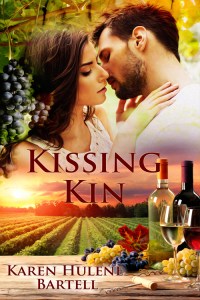
New Release: Kissing Kin by Karen Hulene Bartell

Maeve Jackson is starting over after a broken engagement—and mustering out of the Army. No job and no prospects, she spins out on black ice and totals her car.

When struggling vintner Luke Kaylor stops to help, they discover they’re distantly related. On a shoestring budget to convert his vineyard into a winery, he makes her a deal: prune grapevines in exchange for room and board.

But forgotten diaries and a haunted cabin kickstart a five-generational mystery with ancestors that have bones to pick. As carnal urges propel them into each other’s arms, they wonder: Is their attraction physical…or metaphysical?

The idea for Kissing Kin first came to me during 2020 because of the striking similarities between Covid and the Spanish Flu of 1918, but publishers convinced me no one wanted to read about pandemics. Time passed. 

Then I noticed a handmade cookbook my grandmother had constructed during the depression. It’s made of two cardboard flaps reinforced at the edges with duct tape and held together by two metal ring binders. That book inspired me. (I used some of its recipes in Kissing Kin, for instance, Simple Sponge Cake, Mother’s Soft Gingerbread, and…the treatment of chicken lice with nicotine-sulfate.)

The general tone of the cookbook, which was meant as a Christmas present during the 1930s, was chatty. It read more like a diary than a book of recipes, and it motivated me to begin writing Kissing Kin.

If wishes were fishes, Kissing Kin would be made into a movie. I realize that’s a longshot, but it never hurts to dream. On that note, Maeve, the female protagonist for my Kissing Kin dream cast would have to be Millie Bobby Brown because of her amazing acting range. With her talent, she could pull off being an M2 Bradley driver in Afghanistan and the unwitting spectator to specters. 

The male protagonist would have to be Timothée Chalamet. Not only is he a heartthrob, but he’s a versatile actor, whether the genre be drama, comedy, or action. I can see him as the struggling vintner, who makes Maeve a deal. On a shoestring budget to convert his vineyard into a winery, he offers her room and board in exchange for pruning grapevines.

And for your enjoyment, an excerpt:

Grandma’s bedtime stories echoed through my mind as I sped west on I-10. At an early age, family history had merged with myth until the name Fort Lincoln was as legendary as Avalon or Middle Earth.

But when the snow-covered peaks loomed closer, their reality was undeniable. Maybe her stories weren’t tall tales…

And what about her proverbs? “Idle hands are the devil’s workshop.” I winced. No job and no prospects. Mustering out after a five-year Army stint, I had to ask myself: What next? Where next?

Cody slipped into my thoughts, but I dismissed him, refusing to romanticize our breakup.

A troop of cavalry soldiers galloped toward me from the nineteenth century, but a second glance proved the images were metal cutouts–two-dimensional illusions that resembled an officer and guide leading two columns of cavalrymen.

The silhouettes evoked tales of my great-great-grandfather, Ben Williams. Beginning his military career as a scout, he’d been field promoted during combat, then commissioned as Second Lieutenant at Fort Lincoln.

I smiled, proud of our similar career paths. Maybe Grandma’s stories influenced me more than I realized.

Leaving the Interstate, I turned south. Road signs noted towns that sounded familiar from family stories but seemed as mythical as Camelot or Tintagel Castle.

Closer now, the mountains’ features came into view. No longer mere outlines on the horizon, each craggy palisade and butte towered over the highway. Fluffy hoarfrost transformed the landscape into an icy spectacle, with flaky, crystal shards overlaying each leaf and every blade of grass. A frozen fairyland! Just the way Grandma described it. Inspired by the raw beauty, I straightened my shoulders. Maybe I’m viewing my discharge the wrong way. Instead of adrift, maybe I’m free…

Kissing Kin can be purchased here: https://books2read.com/u/boXl10

Author of the Trans-Pecos, Sacred Emblem, Sacred Journey, and Sacred Messenger series, as well as Kissing Kin, Fox Tale, Wild Rose Pass, The Keys: Voice of the Turtle and more, Karen is a best-selling author, motivational keynote speaker, IT technical editor, wife, and all-around pilgrim of life. She writes multicultural, offbeat love stories steeped in the supernatural. Born to rolling-stone parents who moved annually, Bartell found her earliest playmates as fictional friends in books. Paperbacks became her portable pals. Ghost stories kept her up at night—reading feverishly. The paranormal was her passion. Novels offered an imaginative escape. An only child, she began writing her first novel at the age of nine, learning the joy of creating her own happy endings. Professor emeritus of the University of Texas at Austin, Karen resides in the Texas Piney Woods with her husband Peter and her mews—three rescued cats and a rescued *Cat*ahoula Leopard dog.98

Connect with Karen at her website: https://karenhulenebartell.com/